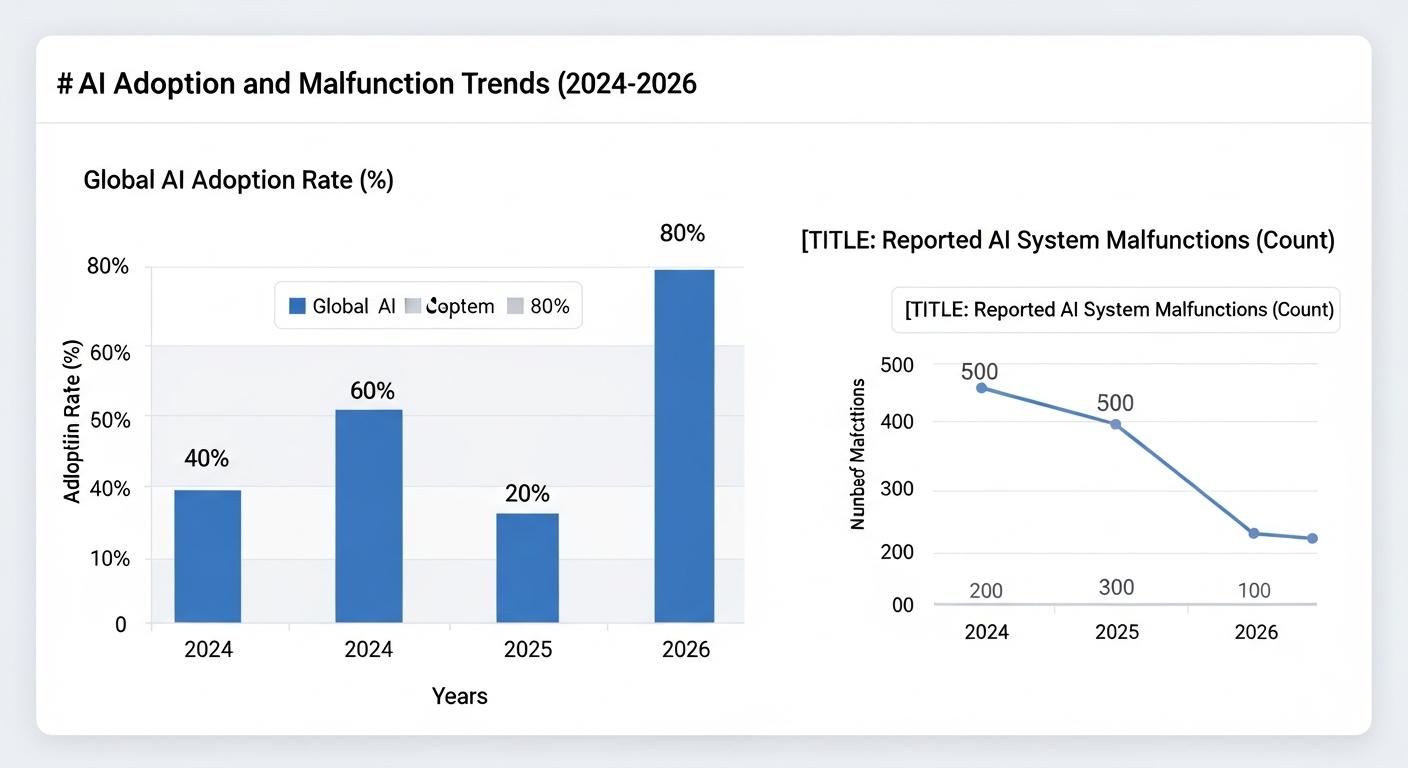
Google has published its 2026 Responsible AI Progress Report as regulators and customers intensify scrutiny of how major tech firms build and deploy artificial intelligence. According to the announcement from the company's Trust & Safety leadership, the document is intended to show how Google’s safety processes are woven into product development even as external oversight tightens. (Sources: Google, company blog; TechBuzz coverage).
The timing of the release is closely tied to an evolving regulatory landscape. Enforcement of the European Union’s AI Act is imminent, and lawmakers in Washington continue to debate a federal framework, creating a window in which corporate transparency can influence both market trust and regulatory outcomes. Google’s public positioning appears designed to reassure enterprise buyers and policymakers alike. (Sources: TechBuzz analysis; Google public policy page).
In the report itself Google lays out how its AI principles are operationalised across research and products, citing investments in testing, fairness assessments, robustness checks and auditability features. The company frames these practices as essential to delivering advanced capabilities such as proactive assistance and enhanced reasoning without sacrificing user privacy and safety. According to Google’s blog, these measures represent an evolution from early, principle-led statements to engineering and governance processes embedded in product lifecycles. (Sources: Google blog; PC Gamer summary).
The release follows a broader industry push toward documenting safety work. Competitors and partners have issued similar disclosures in recent quarters, and some firms have emphasised safety as a commercial differentiator. Industry coverage notes that these communications increasingly serve competitive and reputational purposes as much as they do ethical ones. (Sources: TechBuzz; PC Gamer).
Nonetheless, critics and civil-society groups maintain that transparency exercises often fall short of the granularity needed for independent verification. Watchdog organisations and researchers have pressed for quantified safety benchmarks, incident reporting and external audits rather than high-level descriptions, arguing that measured outcomes are necessary to judge whether safeguards are effective in practice. The debate centres on whether corporate reports offer substantive accountability or primarily manage legal and public-relations risk. (Sources: TechBuzz; Google blog).
The gap between safety rhetoric and operational pressure inside firms is another recurring concern. Reporting on workforce expectations at major AI labs highlights the intense pace of development and infrastructure scaling required to support next-generation models, raising questions about whether speed-of-shipment pressures can coexist comfortably with exhaustive safety reviews. That tension , between product velocity and caution , is visible across major labs. (Sources: TechRadar; TechBuzz).
Google also situates its AI work within a broader sustainability and infrastructure context, pointing to recent environmental and efficiency gains for its data centres and specialised hardware as part of the company’s effort to scale AI responsibly. Industry observers note that delivering vastly greater model capacity will depend on both energy-efficient hardware and continued investment in clean power, linking operational sustainability to any credible claim of long-term, responsible AI deployment. (Sources: Google 2025 Environmental Report; TechRadar).
Ultimately, the report’s significance will be judged by whether independent auditors, regulators and enterprise customers find the company’s disclosures detailed and verifiable enough to satisfy new legal obligations and procurement standards. As enforcement of formal rules approaches and organisations chart AI adoption strategies, public reports will be tested not only for rhetoric but for demonstrable practices that reduce real-world harms. (Sources: TechBuzz; NTT DATA global AI report).
Source Reference Map
Inspired by headline at: [1]
Sources by paragraph:
- Paragraph 1: [2], [1]
- Paragraph 2: [1], [4]
- Paragraph 3: [2], [5]
- Paragraph 4: [1], [5]
- Paragraph 5: [1], [2]
- Paragraph 6: [6], [1]
- Paragraph 7: [3], [6]
- Paragraph 8: [1], [7]
Source: Noah Wire Services