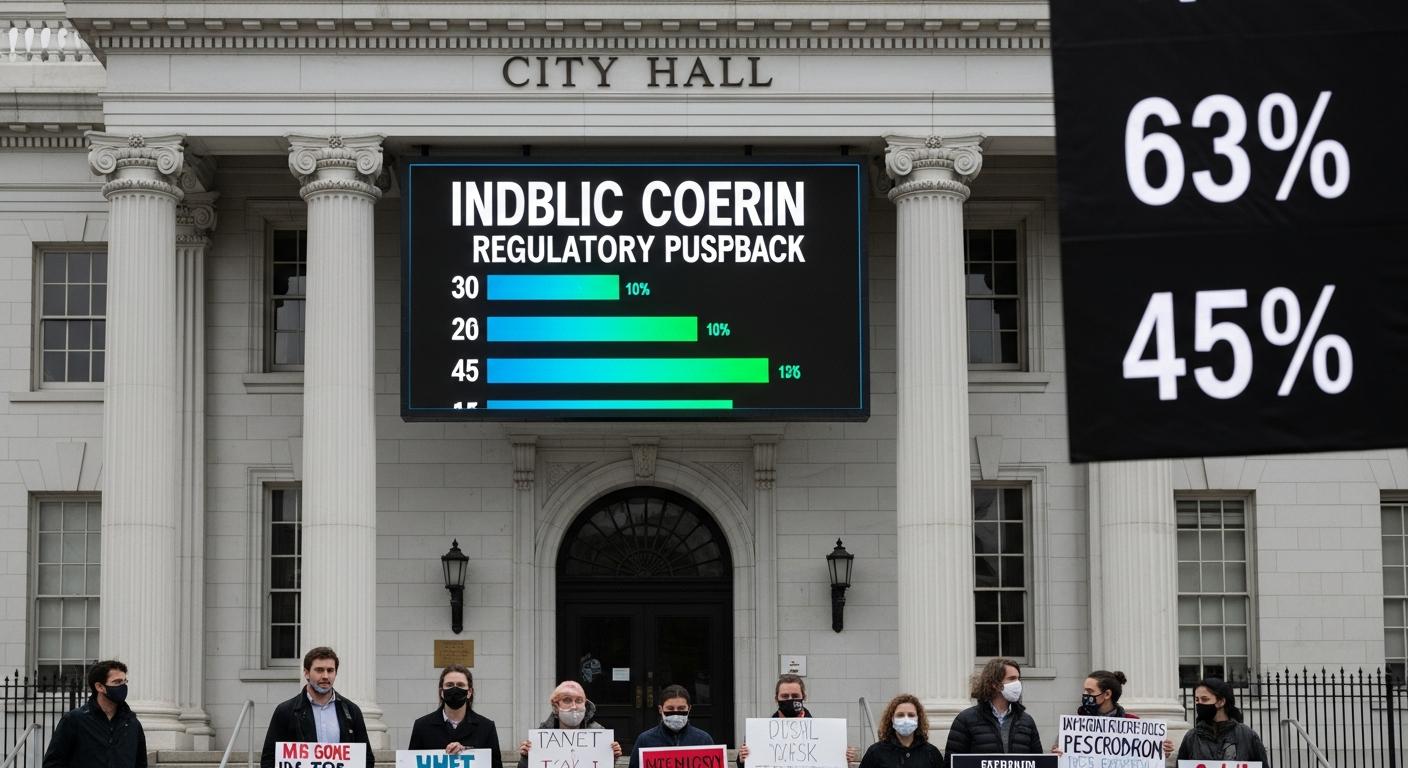
A rising, cross‑cutting backlash against artificial intelligence is crystallising across the United States as local communities, parents, activists and some politicians push back against the technology’s social and environmental costs. Grassroots campaigns have mobilised around a range of complaints, from the alleged harms of AI chatbots interacting with children to neighbourhood fights over the placement of energy‑hungry data centres, and such activism is increasingly translating into legislative pressure and consumer protest. According to the Financial Times, demonstrations have targeted major firms and contracts with government agencies while online campaigns such as “QuitGPT” urge users to boycott platforms whose founders are publicly aligned with partisan causes.
The industry’s political response has been to intensify lobbying and electoral spending to shape rules in its favour. According to The Guardian, major companies including Meta and OpenAI significantly stepped up political contributions and created vehicles to oppose regulation, with OpenAI increasing its lobbying outlays and Meta setting up a California Super PAC to resist new constraints. That surge in political investment underscores a strategic bet by firms that influencing policymakers can secure a deregulatory environment.
- Paragraph 2: [2]
That deregulatory strategy has collided with a patchwork of state lawmaking and local opposition. The Financial Times notes that more than 1,200 AI‑related bills were introduced at state level in 2025, reflecting widespread appetite among legislators to assert control where they can. Simultaneously, polling shows tangible public unease: a Morning Consult survey in October 2025 found 37% of voters favoured banning AI data centre construction in their communities, with concerns focused on environmental strain and resource use.
Industry defenders warn regulation risks stifling innovation and narrowing the market to incumbent players. A briefing paper from the Cato Institute argued that heavy‑handed rules can curtail free expression, entrench dominant firms and suppress alternative AI services that cater to different viewpoints. That argument feeds into a broader debate about whether oversight will preserve public interest or reinforce existing market power.
- Paragraph 4: [5]
At the same time, governments and regulators are moving toward sectoral controls aimed at specific harms. Legal analysis published by Skadden in January 2026 highlighted emergent legislative measures such as the GUARD Act, which would seek to prohibit AI companions for minors and impose penalties on companies that enable dangerous interactions, while multiple federal agencies are reviewing how chatbots and other applications fall under their mandates. Those developments illustrate a shift from generalist debate about “AI” to concrete rules addressing identifiable risks.
- Paragraph 5: [4]
The coalition opposing unfettered AI is notable for spanning conventional political divides. Progressive figures highlight corporate concentration and job dislocation, while some conservative commentators raise alarms about cultural power and surveillance. As the Financial Times observed, when elements of the left and right converge on scepticism of big tech, that convergence could generate potent political momentum capable of shaping national policy or consumer behaviour.
- Paragraph 6: [1]
International competition and alternative models for AI supply further complicate the picture. The rapid expansion of capabilities and investment, the so‑called AI boom, has produced new challengers overseas, such as Chinese chatbots that combine cost competitiveness with different regulatory trade‑offs; these foreign entrants have prompted scrutiny over censorship compliance and data practices. Industry claims that formal and informal restraint will undermine US competitiveness must be balanced against the public’s demand for accountability, trust and protection.
Whoever succeeds in fusing local environmental protests, child‑safety campaigns, creative‑industry objections and labour activism into a sustained regulation‑first movement will shape the terms under which AI is permitted to scale. For now, firms continue to argue that their tools are too strategically important to be constrained, but regulators and voters are signalling they will not leave oversight to companies alone. The outcome will determine whether the United States pursues an open market model driven by industry influence or a more regulated path intended to distribute the benefits and costs more visibly and accountably.
Source Reference Map
Inspired by headline at: [1]
Sources by paragraph:
- Paragraph 1: [1], [2]
- Paragraph 2: [2]
- Paragraph 3: [1], [3]
- Paragraph 4: [5]
- Paragraph 5: [4]
- Paragraph 6: [1]
- Paragraph 7: [6], [7])
- Paragraph 8: [1], [2], [5]
Source: Noah Wire Services