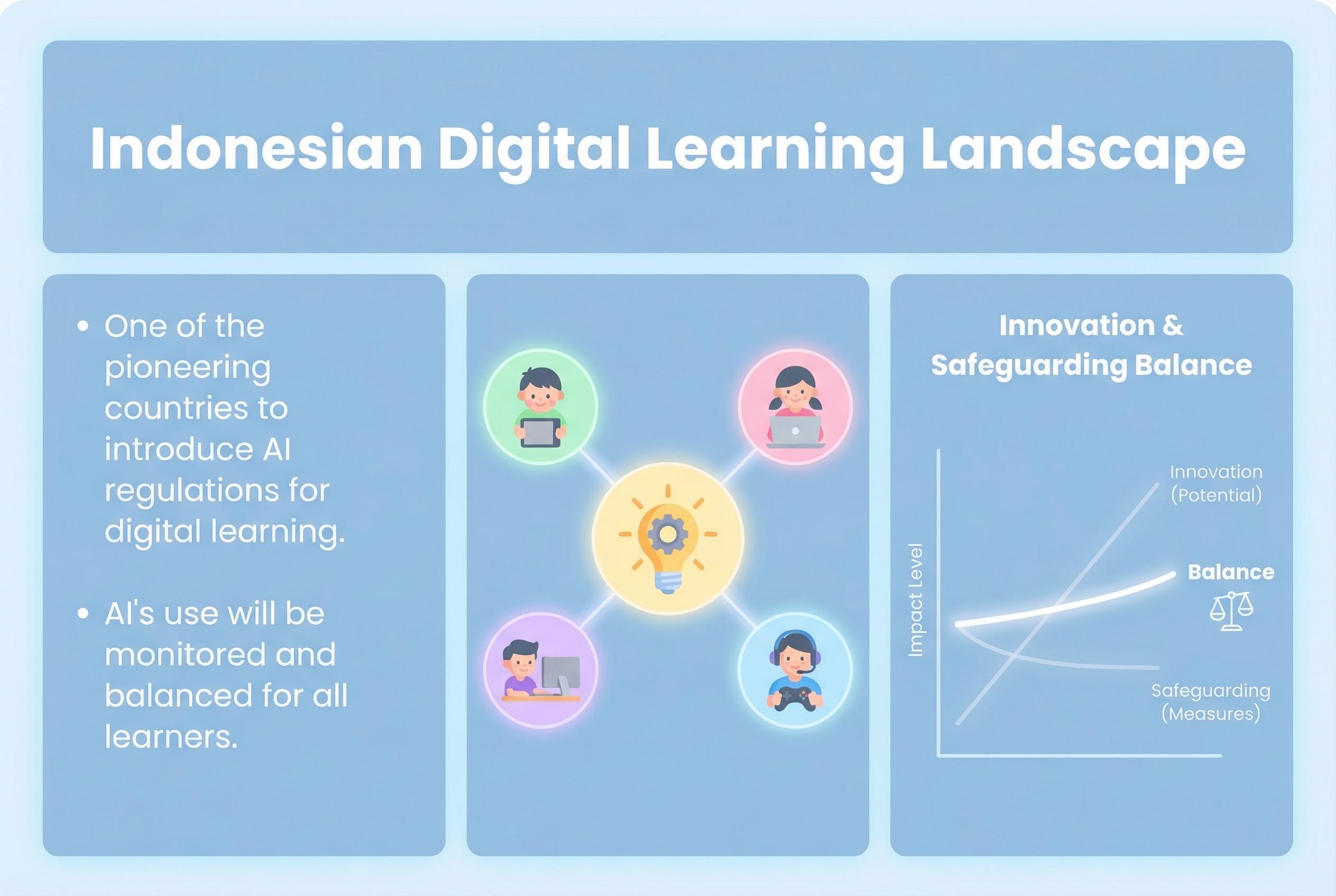
Indonesia’s government has issued a joint ministerial decree to govern the use of digital technology and artificial intelligence across the education system, from early childhood centres to universities, seeking to harness educational benefits while limiting potential harms. The measure, coordinated by the office of the Coordinating Minister for Human Development and Culture, was signed by seven cabinet ministers in Jakarta and sets common standards intended to guide schools and higher‑education institutions nationwide. According to Antara, the decree specifies minimum ages, permitted applications and recommended durations of use that vary by education level.
- Paragraph 1 sources: [2]
The policy frames a graduated approach: younger learners face tighter controls on screen time and on the kinds of digital content they may access, while older students will enjoy progressively greater flexibility as their capacity to understand and manage technology grows. Coordinating Minister Pratikno emphasised the need to align technology exposure with children’s developmental readiness and ability to interact responsibly with new tools.
- Paragraph 2 sources: [2]
In a clear restriction aimed at preserving assessment integrity and learning processes, the decree bars the use of instant, answer‑generating AI applications for students at primary and secondary levels unless those tools are specifically created for pedagogical purposes. Pratikno said the government expects educationally tailored AI to support structured lessons rather than replace student thinking.
- Paragraph 3 sources: [2]
The decree allows for targeted uses of AI where those applications are built to meet learning objectives. "For example, robotics simulations used in primary schools may incorporate AI because they are designed to meet educational objectives," Pratikno said, illustrating the distinction between general consumer AI and tools developed with classroom aims. The guidance thus preserves scope for technology that complements curricula while curtailing unregulated use.
- Paragraph 4 sources: [2]
The announcement comes as other arms of government are developing broader AI governance frameworks. According to The Jakarta Post, the Communications and Digital Ministry has been finalising a National AI Roadmap and ethics guidelines intended to steer AI adoption across ministries and state agencies, recognising that oversight, talent and investment are needed to manage rapid technological change. Those draft documents, the ministry says, will inform sectoral implementation and could be issued as presidential regulations.
- Paragraph 5 sources: [3]
Officials framed the new education decree as part of a wider effort to balance innovation with protection: encouraging educators and students to use digital tools where they enhance learning while imposing safeguards to reduce risks to children. The government says clearer rules are needed as AI becomes more accessible to teachers and pupils across Indonesia’s diverse schooling system.
- Paragraph 6 sources: [2]
Source Reference Map
Inspired by headline at: [1]
Sources by paragraph:
- Paragraph 1: [2]
- Paragraph 2: [2]
- Paragraph 3: [2]
- Paragraph 4: [2]
- Paragraph 5: [3]
- Paragraph 6: [2]
Source: Noah Wire Services