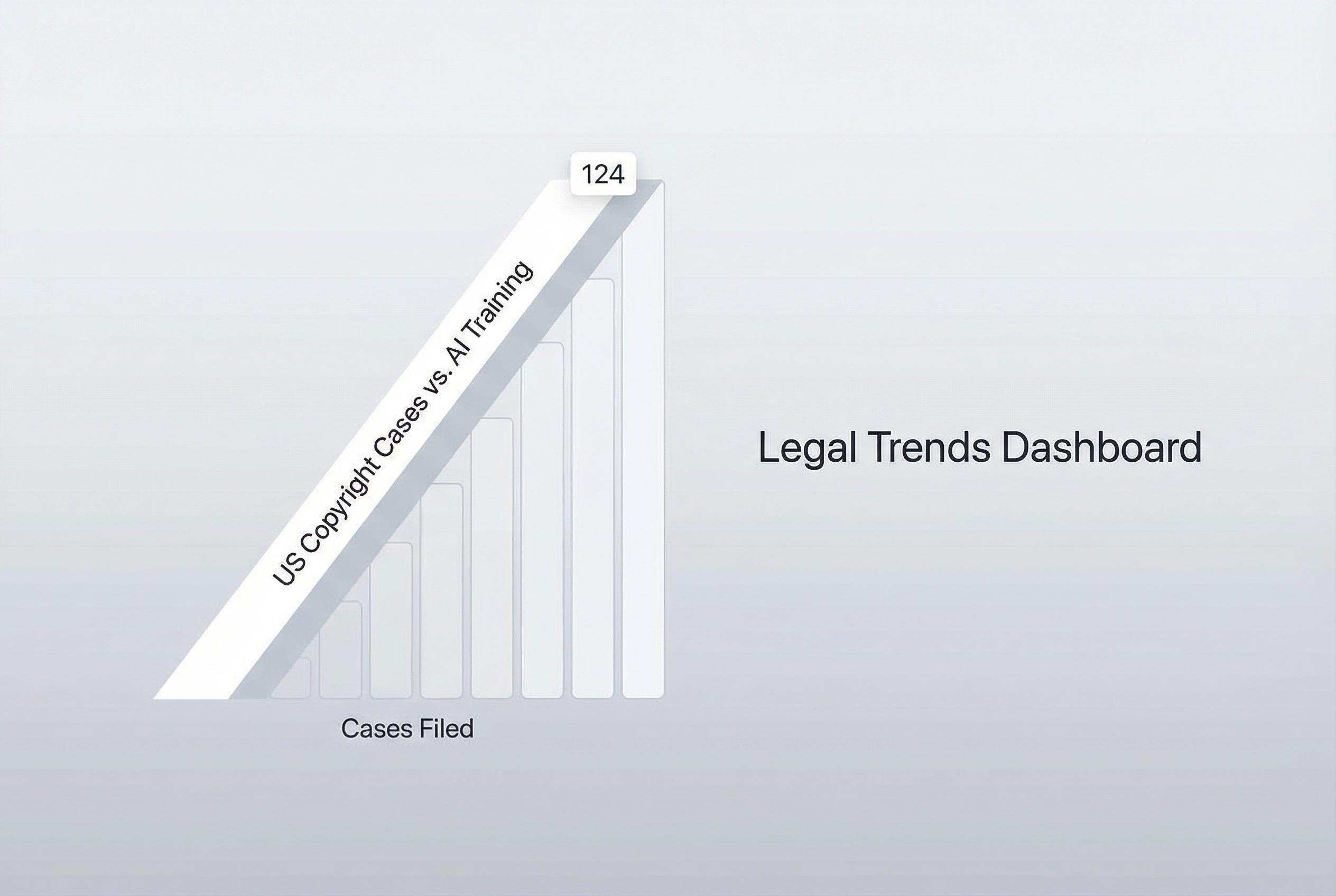
A new wave of litigation pushes the number of US copyright cases targeting artificial intelligence to over 100, as creators sue major tech firms over the use of their content in AI training, highlighting ongoing legal ambiguities.
A fresh wave of litigation has pushed the number of US copyright cases targeting artificial intelligence to 100, after a group of YouTube creators filed suit late last week against Apple, OpenAI and Amazon, according to MLex. The new claims add to an increasingly crowded docket in which rights holders are testing whether model training on copyrighted material can be justified as fair use.
The lawsuits are part of a broader scramble by creators and publishers to respond to a legal landscape that remains unsettled. With no clear appellate ruling on the central question, many copyright owners are now pursuing licensing discussions alongside litigation, hoping to secure compensation while the courts work through the first generation of AI disputes.
That shift reflects the uncertainty left by early district court rulings and by the Copyright Office’s recent guidance. In January, the office said works that use AI as a tool can still be protected if there is sufficient human authorship, while purely machine-generated output remains outside copyright protection. In separate commentary published in April 2025, the office also stressed that human creativity continues to matter at the core of copyright law.
The latest complaints underscore how quickly the conflict has widened beyond text and images to video. According to the allegations reported by Piracy Monitor, the plaintiffs, Ted Entertainment and Golfholics, say their YouTube content was scraped without permission to help train AI systems. As more creators turn to both the courts and licensing talks, the industry is being forced to confront a basic question that remains unanswered: who, if anyone, should pay when copyrighted works become training data.
Source Reference Map
Inspired by headline at: [1]
Sources by paragraph:
Source: Noah Wire Services
Noah Fact Check Pro
The draft above was created using the information available at the time the story first
emerged. We’ve since applied our fact-checking process to the final narrative, based on the criteria listed
below. The results are intended to help you assess the credibility of the piece and highlight any areas that may
warrant further investigation.
Freshness check
Score:
8
Notes:
The article reports on lawsuits filed on April 3, 2026, by YouTube creators against Apple, OpenAI, and Amazon, alleging unauthorized use of their videos for AI training. ([law360.com](https://www.law360.com/articles/2461742/youtube-creators-say-amazon-scrapes-videos-to-train-ai?utm_source=openai)) Similar lawsuits have been filed against other tech companies in recent months, indicating ongoing legal actions in this area. ([techcrunch.com](https://techcrunch.com/2026/01/26/youtubers-sue-snap-for-alleged-copyright-infringement-in-training-its-ai-models/?utm_source=openai))
Quotes check
Score:
7
Notes:
The article includes direct quotes from the lawsuits, such as allegations of 'unlawfully circumventing technological protection measures' and using videos to 'feed, train, improve, and commercialize' AI models. ([law360.com](https://www.law360.com/articles/2461742/youtube-creators-say-amazon-scrapes-videos-to-train-ai?utm_source=openai)) These quotes are consistent with the language used in similar lawsuits filed against other tech companies. ([techcrunch.com](https://techcrunch.com/2026/01/26/youtubers-sue-snap-for-alleged-copyright-infringement-in-training-its-ai-models/?utm_source=openai))
Source reliability
Score:
9
Notes:
The article is sourced from Law360, a reputable legal news outlet known for its coverage of intellectual property and technology law. ([law360.com](https://www.law360.com/articles/2461742/youtube-creators-say-amazon-scrapes-videos-to-train-ai?utm_source=openai))
Plausibility check
Score:
8
Notes:
The claims made in the article align with ongoing legal actions against tech companies for alleged unauthorized use of copyrighted content to train AI models. ([techcrunch.com](https://techcrunch.com/2026/01/26/youtubers-sue-snap-for-alleged-copyright-infringement-in-training-its-ai-models/?utm_source=openai))
Overall assessment
Verdict (FAIL, OPEN, PASS): PASS
Confidence (LOW, MEDIUM, HIGH): HIGH
Summary:
The article provides a timely and accurate report on recent lawsuits filed by YouTube creators against Apple, OpenAI, and Amazon over alleged unauthorized use of their videos for AI training. The claims are consistent with ongoing legal actions in this area, and the article is sourced from a reputable legal news outlet, allowing for independent verification of the information presented.