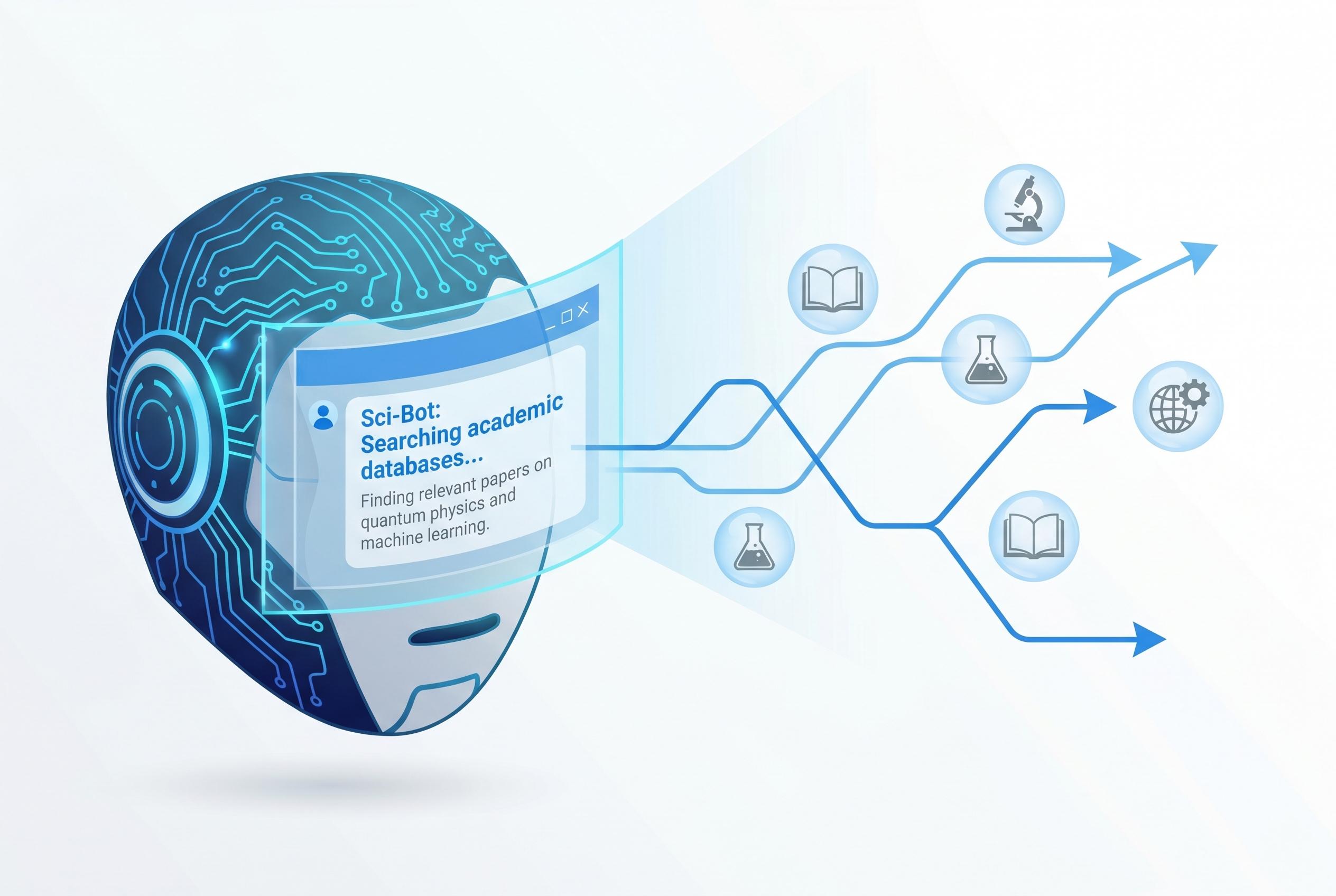
Sci-Hub has unveiled an artificial intelligence chatbot that searches its vast archive of pirated scientific papers and answers questions using the material it finds, adding a new layer to the long-running battle over access to academic research. The tool, called Sci-Bot, is still in an alpha stage and can handle only a single question at a time, with no follow-up conversation.
The launch underscores why Sci-Hub remains a live issue despite repeated court orders to shut it down. The site has continued to reappear under new domains, and its appeal has not disappeared even as more journals have shifted to open access. According to C&EN, about half of newly published studies are still behind paywalls, leaving researchers dependent on institutional subscriptions or other workarounds.
Alexandra Elbakyan, Sci-Hub’s founder, did not respond to requests for comment. But early testers say the new bot has clear strengths and obvious limits. Daniel Himmelstein, chief technology officer at the AI company RadOverlay, said Sci-Bot was able to answer his radiology question, though it seemed to miss more recent studies, likely because publishers have tightened their defences. He suggested that for some topics, absolute recency may matter less than breadth, but said he would still rely on his university library for newer work.
Himmelstein also pointed to Sci-Hub’s unusual advantage over mainstream research tools: it can search a much wider body of literature because it is not constrained by copyright law. He co-authored a 2017 analysis with bioinformatician Casey Greene that found Sci-Hub covered more than 90% of chemistry literature and almost all papers published by the American Chemical Society. Greene, who tested Sci-Bot with a question about ovarian cancer, said it appeared to draw on material up to around 2021 or 2022, but not on newer studies.
That gap may matter even as AI companies themselves face scrutiny over the sources they use. The Atlantic has reported that some major AI developers have used pirated datasets from Library Genesis, a sister site to Sci-Hub, to train chatbots, highlighting an awkward symmetry between the legal challenges facing commercial AI firms and the copyright fights that have dogged Sci-Hub for years. Greene called that contrast “deeply ironic”, arguing that the difference lies less in method than in motive.
Not all reactions to Sci-Bot have been dismissive. Abdelghani Maddi, a research engineer at CNRS and Sorbonne University, described it as promising and easy to use, while noting that it usually relies on a relatively small number of references and does not always select the most relevant papers. He said the answers were clear and largely accurate, but argued the tool would be more useful if it allowed follow-up questions, kept a search history, enabled easier sharing and went further in comparing methods and interpretations across studies.
The bot also arrives alongside a broader ecosystem around Sci-Hub. Last year, Elbakyan launched Sci-Net, a sister platform that lets researchers request missing papers from academics with library access, rewarding contributors with Sci-Hub tokens, a cryptocurrency introduced by supporters in late 2024. For now, Sci-Bot looks less like a polished replacement for established research tools than another experiment in Sci-Hub’s continuing attempt to work around the publishing system it has spent more than a decade challenging.
Source Reference Map
Inspired by headline at: [1]
Sources by paragraph:
- Paragraph 1: [2], [5]
- Paragraph 2: [2], [3]
- Paragraph 3: [2]
- Paragraph 4: [2], [4]
- Paragraph 5: [2]
- Paragraph 6: [2], [6]
Source: Noah Wire Services