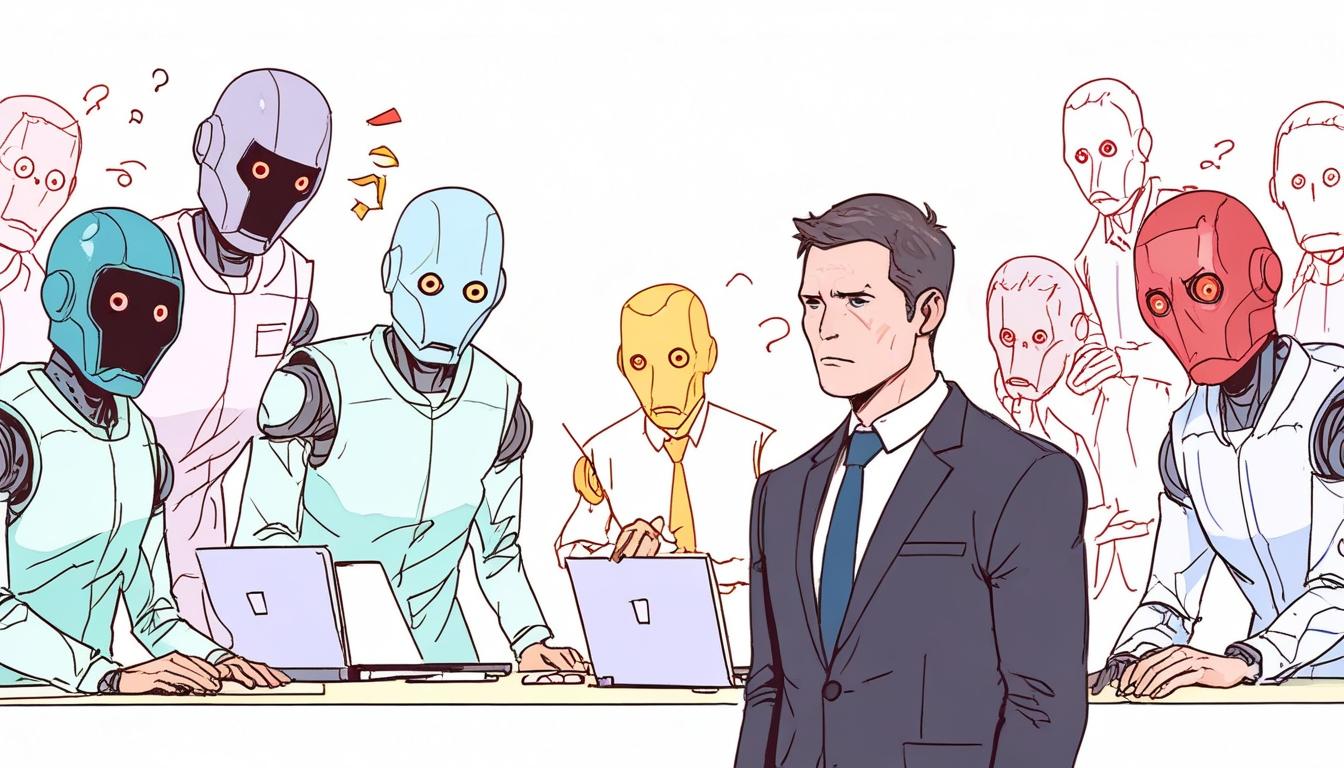
A recent report from organisational planning platform Orgvue has revealed significant challenges and uncertainties faced by UK businesses in adopting artificial intelligence (AI) technologies within their workforce strategies. According to the findings, 39% of UK businesses have made redundancies attributed to AI adoption, yet more than half of these companies (55%) now regret these decisions.
The consequences of these AI-induced redundancies have been counterproductive, leading to internal confusion, a decline in productivity, and increased employee turnover. These developments run contrary to the initial expectations of business leaders who hoped that AI implementation would boost efficiency and performance. Following this experience, many businesses have become less convinced that AI will completely replace human workers.
The report highlights wide-ranging uncertainty about AI’s impact across the corporate landscape. Approximately 38% of business leaders admit they do not fully understand how AI will affect their operations, while one quarter remain unsure which specific job roles are most vulnerable to AI-driven displacement. Interestingly, only 48% of managers now anticipate that AI will replace some workers—a decrease from 54% the previous year. Despite this, the sense of responsibility among leaders to protect employees from redundancy has diminished.
Oliver Shaw, CEO of Orgvue, commented on these findings in an interview with Tech Radar: “While 2024 was the year of investment and optimism, businesses are learning the hard way that replacing people with AI without fully understanding the impact on their workforce can go badly wrong. We’re facing the worst global skills shortage in a generation and dismissing employees without a clear plan for workforce transformation is reckless.”
Looking forward, concerns about the unregulated use of AI by employees are prominent, with 47% of companies expressing fear over uncontrolled AI deployment. As a result, 80% plan to increase AI investments during 2025, while nearly four in five organisations intend to invest in retraining their staff to better utilise AI tools. This is reflected in a significant rise in learning and development budgets, with 41% of companies already committing extra resources. Additionally, 51% of firms have introduced internal AI usage policies, and 43% are collaborating with third-party AI specialists to manage this transition.
Despite recognising the essential role of human workers, more than a quarter (27%) of businesses still lack a clear and strategic roadmap for integrating AI technologies effectively alongside their workforce.
The Industry insight, as painted by the Orgvue report, depicts an era of rapid AI adoption marked by considerable confusion and a lack of preparedness in understanding the technology’s workforce implications. Shaw summarised the situation, stating, “While it’s encouraging to see investment in AI continue to grow, businesses need a better understanding of how the technology will change their workforce in the coming months and years.” This highlights the ongoing challenge companies face in balancing technological innovation with workforce management amidst evolving labour market dynamics.
Source: Noah Wire Services