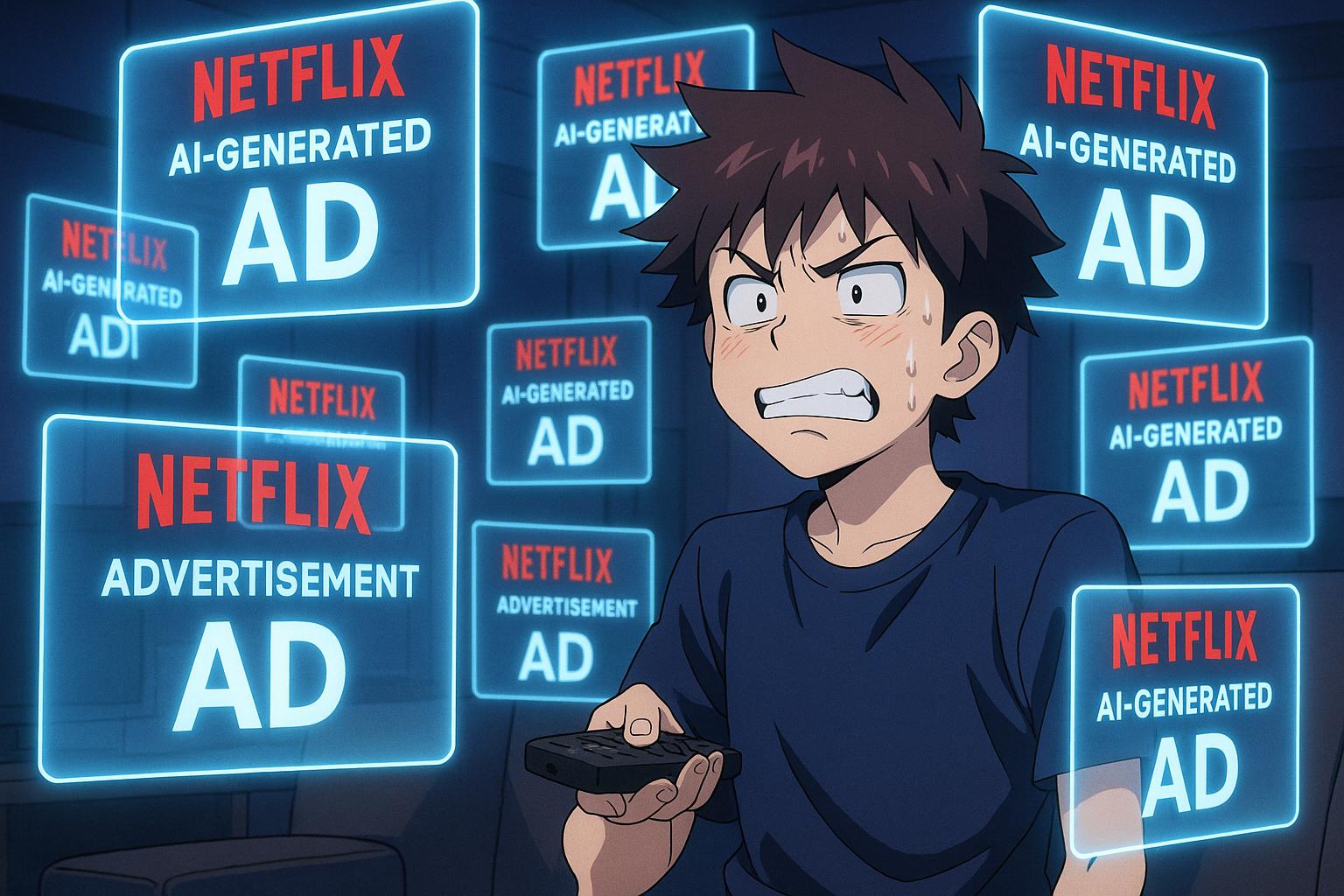
In a move that has sparked immediate backlash among users, Netflix has announced its plans to incorporate generative AI into its advertising strategy, set to launch in 2026. During the recent ‘Upfront’ event, the streaming giant revealed that these AI-generated adverts will not only interrupt viewership with traditional mid-show breaks but will also appear when subscribers pause content, marking a significant shift in how advertising is integrated into streaming experiences.
The rationale behind this decision, as communicated by Netflix, is to create a more personalised ad experience. By using generative AI, the company claims that adverts will be tailored to individual viewer preferences; for instance, if a user searched for a specific product, they may encounter a commercial blending the product with visuals from a popular show, such as Stranger Things. This creative approach is designed to enhance viewer engagement, though it raises concerns about how much personal data will be leveraged in this process.
Despite Netflix's optimistic portrayal of these developments, user reactions have been overwhelmingly negative. Many subscribers took to social media, expressing their discontent and threatening to cancel their accounts. One commenter voiced that they were "hovering over the unsubscribe button," highlighting a growing sentiment against what they perceive as intrusive advertising tactics. Such backlash is corroborated by a December 2024 study indicating that consumers generally find AI-generated ads to be more "annoying," "boring," and "confusing" compared to traditional advertisements, suggesting a disconnect between production methods and audience expectations.
Netflix’s advertising journey began in earnest with the introduction of its ad-supported subscription tier in 2022, which has seen considerable growth. Currently, around 94 million of Netflix's 300 million total subscribers have opted for the cheaper tier, reflecting a significant increase over the last year. However, the company is now faced with the challenge of maintaining subscriber satisfaction while pursuing aggressive growth in advertising revenue.
To this end, Netflix has also announced the launch of an in-house advertising technology platform, slated for completion by the end of 2025. This platform aims to simplify the ad purchasing process and provide detailed analytics for advertisers, further emphasising the company's commitment to enhancing its ad capabilities. Such initiatives come as part of a broader strategy to compete effectively in the increasingly crowded streaming market, where generative AI is seen as both a tool for innovation and a potential risk. The company itself has acknowledged this duality, identifying rapid developments in AI as a competitive risk factor in its annual filings.
While Netflix embarks on this unconventional advertising path, other sectors of the entertainment industry are opting for more traditional product placements, citing concerns regarding viewer reception. Executives from companies such as Ace Entertainment argue that deep integrations into storylines ultimately offer better value than conventional advertisements, suggesting that overt advertising tactics can be met with audience resistance.
As Netflix prepares to unleash these AI-driven adverts, many questions linger about user experience and the effectiveness of this advertising model. It remains to be seen how well these targeted ads will resonate with viewers, especially given the potential for cognitive overload and distraction, which have been noted as downsides of AI-generated content. For Netflix, the challenge will be balancing the drive for advertising revenue with the need for a satisfying user experience, lest they risk alienating a substantial segment of their audience.
Finally, while the prospect of tailored advertising may seem appealing on the surface, the clear distinction between AI-generated content and authentic programming will be crucial. Netflix has yet to clarify how these boundaries will be maintained, and until then, many users may feel compelled to reconsider their subscriptions in light of this evolving advertising landscape.
Reference Map
- Paragraph 1: (1)
- Paragraph 2: (1), (2)
- Paragraph 3: (3), (5)
- Paragraph 4: (6)
- Paragraph 5: (4)
- Paragraph 6: (7)
Source: Noah Wire Services