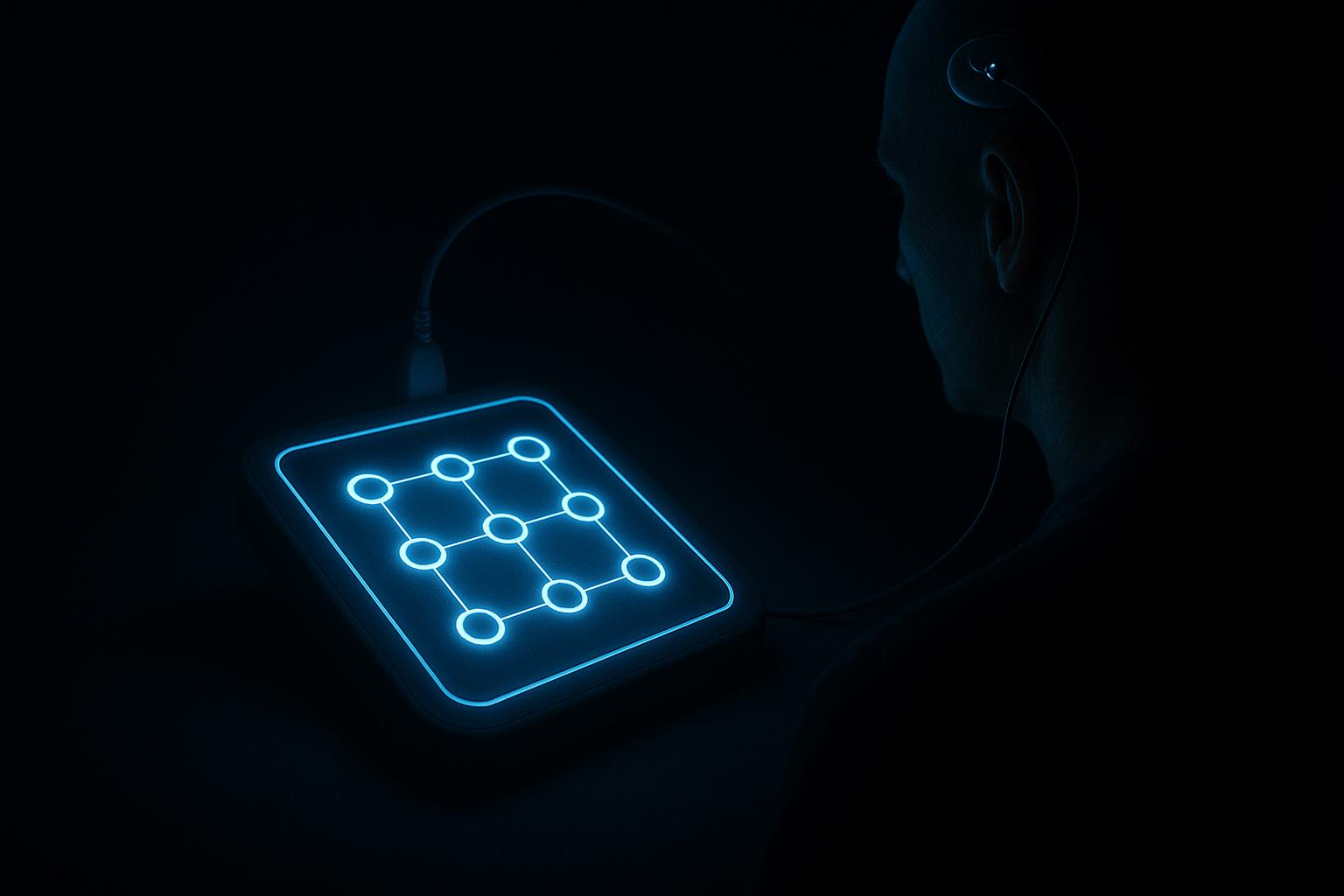
Synaptrix Labs, a New York-based biotechnology startup focused on non-invasive brain-computer interfaces (BCIs), has recently raised seed funding from billionaire investor Mark Cuban to accelerate commercial development of its wearable neurotechnology. The company's flagship product, Neuralis™, is a wearable EEG headset that decodes subtle brain signals from the motor cortex to translate them into precise wheelchair navigation commands. By leveraging dry sensors and on-device AI signal processing, Neuralis™ aims to empower individuals with paralysis to control their existing wheelchairs using brain activity and eye movements, thereby enhancing their independence and quality of life.
Founded in 2023 by CEO and co-founder Aryan Govil alongside CTO Eric Yao, Synaptrix Labs emerged out of Govil’s clinical research experience at NYU Langone, where he identified limitations in invasive brain implants and sought a scalable, affordable alternative. The company prioritises a "deep learning first" approach, believing that advances in AI—rather than better sensors or implants—will drive mass adoption of neurotechnology. This insight was instrumental in attracting Cuban’s backing, as his broader investment strategy focuses on healthcare accessibility and cost-effectiveness, exemplified by his involvement in ventures like CostPlus Drugs.
Synaptrix’s NeuroDiffusion platform underpins Neuralis™ by providing powerful AI-driven EEG signal processing, including artifact removal, allowing for more reliable and real-time interpretation of brain activity. Recently, the startup secured a licensing agreement with EEG headset manufacturer IDUN Technologies to integrate NeuroDiffusion’s AI capabilities into their hardware, signalling potential for expanded collaboration in research and development. The company has also moved into a new Manhattan office and grown to seven full-time employees in preparation for an upcoming clinical trial with Columbia University targeting wheelchair users.
This development aligns with broader trends in the neurotechnology and assistive technology (AT) markets, which analysts estimate to be worth around $20 billion annually and growing rapidly. Assistive technologies span tools for speech, typing, smart home control, prosthetics, and robotic limbs, with wearable BCIs like Neuralis™ positioned to offer incremental digital autonomy for people with motor impairments. At the 2025 New York BCI Symposium, experts highlighted the growing interest in BCIs from families of individuals with cerebral palsy and other neurological conditions, underscoring the potential impact of non-invasive solutions that can support rehabilitation while avoiding clinical risks associated with implants.
Synaptrix is not alone in pursuing AI-enhanced, non-invasive BCIs. Other startups such as Axion Click are developing EEG and eye-tracking headbands to facilitate device control for people with impairments, while companies like Cognixion are combining EEG with augmented reality platforms like Apple’s Vision Pro to restore natural communication abilities in disabled users. These innovations reflect an inflection point where advances in deep learning, edge computing, and EEG sensor technology converge, enabling more functional and accessible neurotech products.
However, widespread consumer adoption of EEG-based wearable interfaces remains tentative. Current consumer EEG markets are dominated by "read-only" devices integrated into headphones or earbuds aimed largely at research partnerships rather than direct-to-consumer utility. The regulatory landscape, device form factors, and perceived limits of EEG data interpretation still pose challenges. Major tech companies like Apple, Meta, Samsung, and Google are monitoring these advances but have yet to fully commit to mass-market EEG wearables beyond experimental stages or niche applications.
Synaptrix Labs’ emphasis on non-invasive approaches, combined with its AI-driven signal processing, reflects a strategic choice to prioritize safety, affordability, and scalability—qualities crucial for assistive technology markets and clinical adoption. With backing from Mark Cuban and partnerships underway, the startup is well positioned to contribute meaningfully to the evolving neurotechnology ecosystem, potentially accelerating how quickly brain-controlled interfaces can improve autonomy for people living with disabilities.
📌 Reference Map:
- Paragraph 1 – [1] (News article), [2] (Synaptrix Labs website), [4] (Synaptrix Labs website)
- Paragraph 2 – [1] (News article), [3] (Mark Cuban Companies)
- Paragraph 3 – [1] (News article), [2] (Synaptrix Labs website), [6] (Synaptrix Labs website)
- Paragraph 4 – [1] (News article), [4] (Synaptrix Labs website)
- Paragraph 5 – [1] (News article)
- Paragraph 6 – [1] (News article)
- Paragraph 7 – [1] (News article)
Source: Noah Wire Services