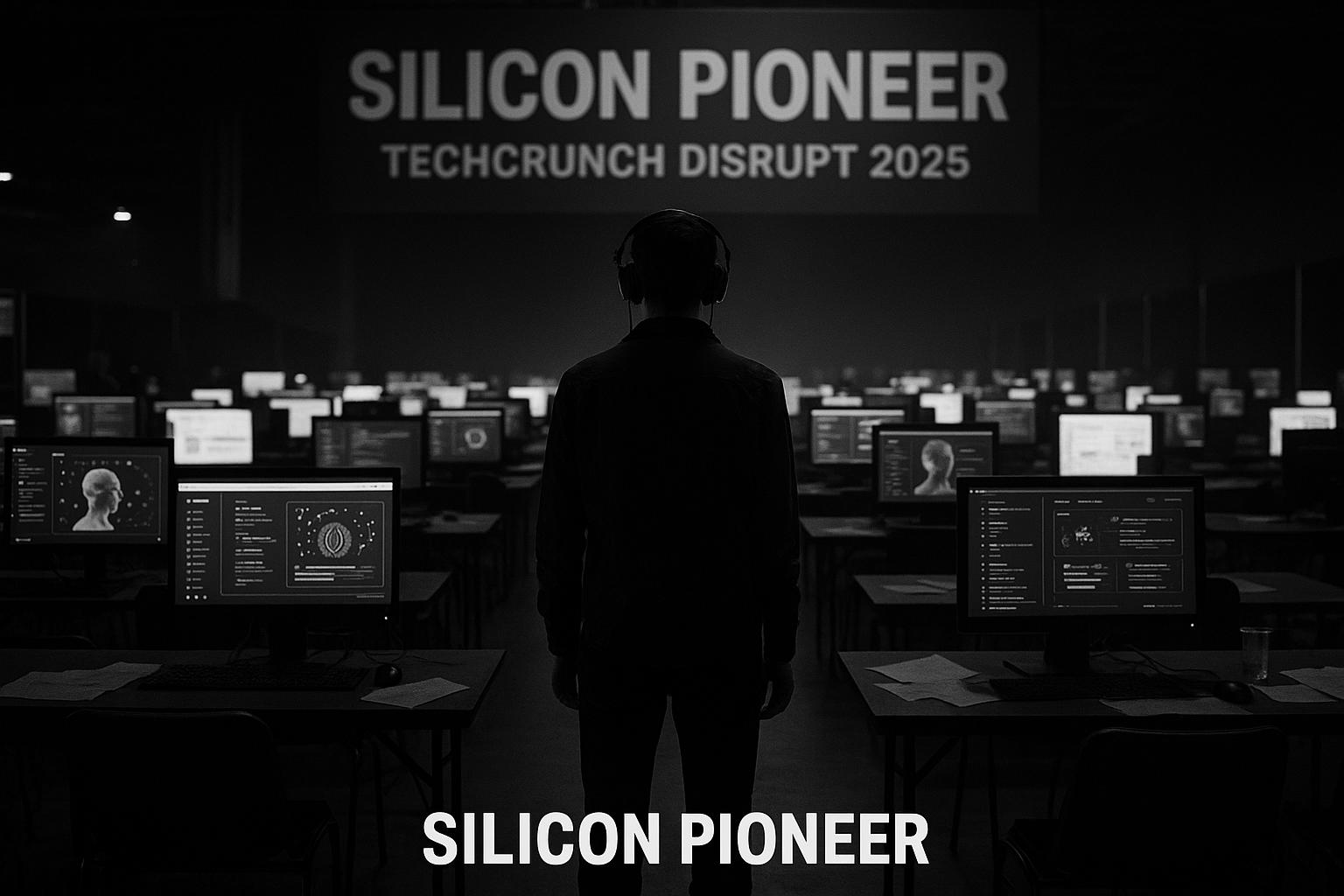
At this year’s TechCrunch Disrupt 2025, held in San Francisco's Moscone Center, the energy was electric, buoyed by a corporate world rapidly pivoting towards artificial intelligence. As the global startup ecosystem gathered for the renowned Startup Battlefield competition, AI emerged not merely as an ingredient but as the very language shaping nearly every presentation on the main stage. With approximately 70% of investors focused on AI-driven ventures, the event underscored a definitive shift in entrepreneurial focus towards artificial intelligence as a foundational element of innovation.
TechCrunch’s Startup Battlefield has long been celebrated as the launchpad for transformative companies—households names such as Dropbox, Fitbit, and Cloudflare all got their major break here. The competition’s $100,000 equity-free prize and media spotlight have historically identified the next game-changers in technology. In 2025, the event saw 200 highly selected startups, with 20 finalists taking centre stage, of which 18 were AI-native or AI-adjacent—a telling statistic about AI's dominance in current tech innovation.
Among the leading finalists, companies such as Elloe are addressing critical issues in AI deployment by offering safety and compliance solutions aimed at mitigating misinformation, bias, and hallucinations in AI models. Their real-time auditing and governance tools exemplify the push towards responsible AI use. Other notable finalists like Nephrogen employ AI in biotech, using high-throughput screening to engineer gene delivery systems for diseases that remain difficult to treat, marking significant strides in applying AI to healthcare.
The winner of the 2025 competition, Glīd, demonstrated how AI can revolutionise logistics by streamlining road and rail coordination. Their AI-powered platform is reported to reduce costs by an average of 40% and increase throughput by 60%, integrating hardware and software solutions to optimise the movement of shipping containers efficiently. This exemplifies the pragmatic application of AI to create tangible economic and environmental benefits.
The competition also revealed a diversity of AI applications beyond the finalists, with startups innovating in fields ranging from storytelling and influencer marketing to construction and robotics. Australian-based Othelia is developing AI tools to support authentic storytelling, while companies like Aha leverage AI to enhance influencer marketing by reducing costs and increasing the authenticity of brand collaborations. Similarly, Surfaice employs AI to optimise construction project workflows, reducing production times and costs significantly, illustrating AI’s broad industrial impact.
The event’s scope highlighted a shift from AI as a mere feature to AI as the foundational layer of new businesses. Founders today often start with AI as their core, enabled by accessible APIs from leaders like OpenAI and Google, which democratise advanced AI capabilities. This has allowed small teams to innovate rapidly without the need for massive investments, focusing on unique applications, proprietary data, and superior user experiences.
Venture capitalists judging the event echoed this evolved perspective, signalling a move beyond hype towards sustainability and defensibility. Judges emphasised the importance of scalable business models, clear paths to profitability, and ethical AI considerations. “Responsible AI isn’t just a nice-to-have; it’s becoming a must-have for investors who are thinking long-term,” one VC noted, underscoring a growing insistence on accountability alongside innovation.
A central challenge debated among judges was the “AI Moat” problem—how startups can maintain durable competitive advantages when many leverage similar foundational AI tools. Proprietary data and vertical-specific solutions stood out as key differentiators, along with exceptional user experiences and network effects that reinforce growth and data quality.
Overall, the 2025 Startup Battlefield presented a vivid picture of AI’s role not just as an enabler of smarter tools, but as a catalyst for reimagining industries and processes. The competition reflected broader tech ecosystem trends, where AI-driven startups are poised to redefine business operations and societal functions. The future, as portrayed by these startups, promises an AI-structured economy—faster, more efficient, and fundamentally transformed.
📌 Reference Map:
- Paragraph 1 – [1] (Grit Daily)
- Paragraph 2 – [1] (Grit Daily), [2] (TechCrunch)
- Paragraph 3 – [1] (Grit Daily)
- Paragraph 4 – [1] (Grit Daily)
- Paragraph 5 – [1] (Grit Daily)
- Paragraph 6 – [1] (Grit Daily)
- Paragraph 7 – [1] (Grit Daily)
- Paragraph 8 – [1] (Grit Daily), [4] (TechCrunch), [5] (TechCrunch)
- Paragraph 9 – [1] (Grit Daily)
Source: Noah Wire Services