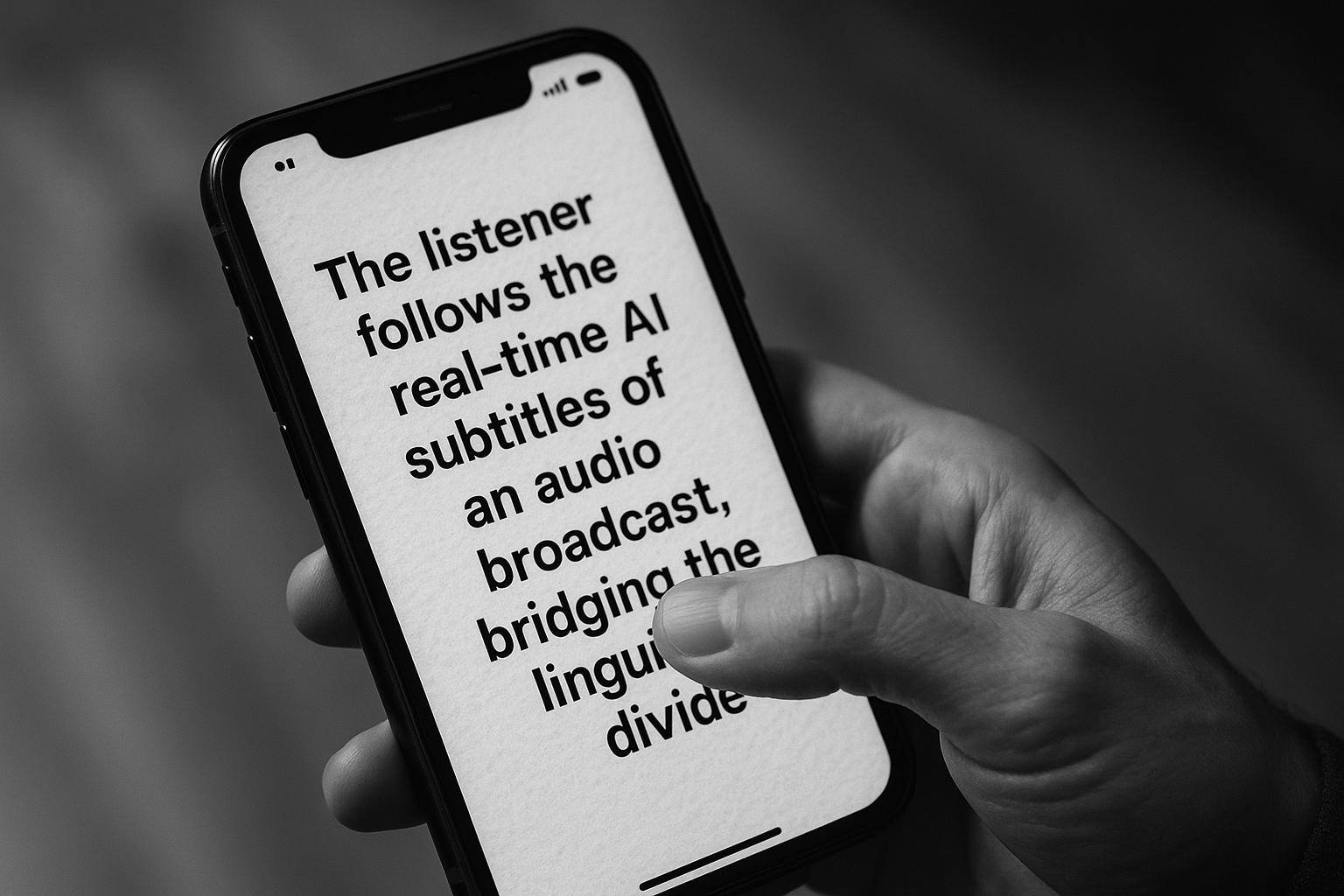
The British Broadcasting Corporation (BBC) is advancing the use of generative artificial intelligence (AI) to significantly enhance audio content accessibility, with a focus on supporting millions of listeners who are deaf or have hearing impairments. Central to this initiative is the deployment of AI-powered subtitles and transcripts on BBC Sounds, the broadcaster’s digital audio platform. Using OpenAI’s Whisper AI technology, the BBC has begun a carefully monitored trial that automates subtitling for a selection of programme titles, aiming to extend these capabilities across a much broader range of content.
The BBC Sounds platform processes an immense volume of audio each month—approximately 27,000 hours—necessitating scalable solutions to meet accessibility requirements. The AI subtitle pilot, launched in August 2024, initially covered programmes including ‘In Touch’, ‘Access All’, ‘Profile’, ‘Sporting Witness’, and ‘Economics with Subtitles’. Delivering subtitles on web and Android apps, with iOS support forthcoming, the trial introduces real-time transcription combined with human editorial oversight to ensure precision and reliability. Editorial checks remain vital, especially for news and factual content, to mitigate risks associated with AI-generated inaccuracies or “hallucinations.” This approach highlights the BBC’s careful balancing of innovation and journalistic standards.
This advancement has broad implications for accessibility and inclusivity. According to BBC data, around 18 million adults in the UK face some degree of hearing loss, underscoring the importance of making audio content available through multiple sensory channels. The AI system’s ability to reduce production time by up to 70% means subtitles can be made available for many more programmes than traditional manual processes allow. It also improves searchability and user engagement, offering all listeners the ability to interact with content in new, accessible ways. The initiative thus reflects broader industry momentum towards inclusive broadcasting, with similar efforts noted from global tech leaders such as Google, who are exploring AI-generated podcasts with customizable voices.
Beyond podcasts and talk shows, the BBC has extended the AI-driven subtitle technology to live sports broadcasts, including English Football League matches. Automated transcription allows for rapid development of match highlights and text-based summaries that complement live commentary, thereby enhancing engagement for fans seeking timely written updates. This demonstrates the versatility of generative AI across diverse media formats.
Reactions from the technology and media sectors have been generally positive, with particular enthusiasm for the potential of interactive AI podcasts and automated content summarisation to enrich user experiences. However, ethical considerations remain at the forefront of public discussion. Industry commentators and accessibility advocates stress the necessity of transparency, human oversight, and addressing diversity and inclusion targets in media's AI deployment. The BBC’s cautious and incremental trial approach appears designed to address these concerns, seeking a model that can inspire global adoption.
Looking forward, the BBC’s innovative use of generative AI not only paves the way for more accessible media but also promises efficiency gains and new opportunities for content discovery. Industry observers are watching closely as trials expand, noting that the model of combining automated transcription with editorial review might become a standard for broadcasters worldwide. With ongoing advancements and user feedback, AI is poised to revolutionise the consumption of audio content, making it more inclusive, searchable, and responsive to the needs of diverse audiences.
📌 Reference Map:
- Paragraph 1 – [1] (WebProNews), [2] (RadioWorld), [3] (Standard), [4] (Accessibility.org.au), [5] (Express & Star)
- Paragraph 2 – [1] (WebProNews), [2] (RadioWorld), [3] (Standard), [5] (Express & Star)
- Paragraph 3 – [1] (WebProNews), [4] (Accessibility.org.au), [1] (WebProNews)
- Paragraph 4 – [1] (WebProNews)
- Paragraph 5 – [1] (WebProNews), [6] (Oxford Research)
- Paragraph 6 – [1] (WebProNews)
- Paragraph 7 – [1] (WebProNews)
Source: Noah Wire Services