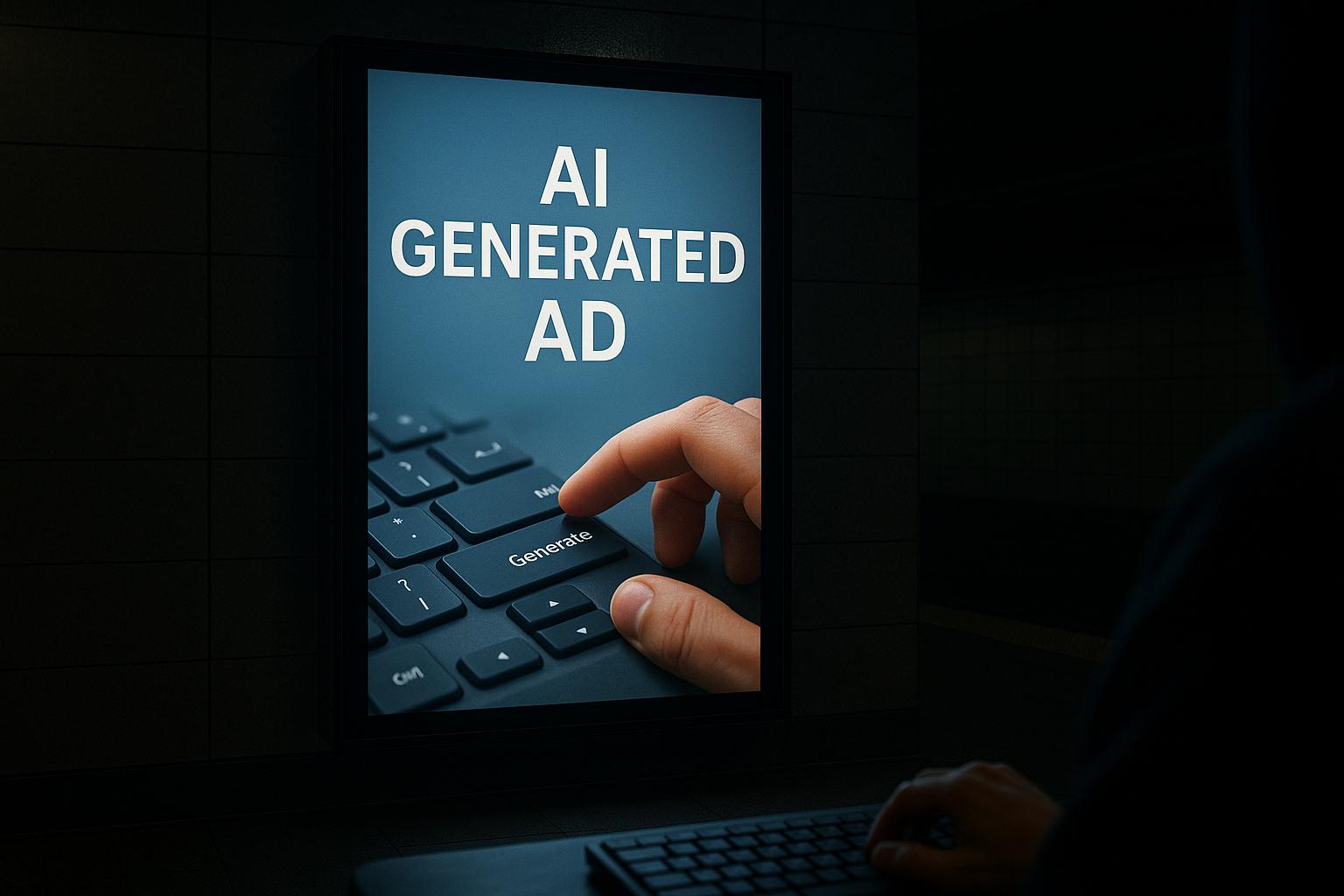
The advertising world is undergoing a profound transformation as AI-generated advertisements emerge at the forefront of innovation in digital marketing. By October 2024, advances in generative AI have enabled the creation of complete video advertisements without traditional filming or human actors, revolutionising how brands engage their audiences. A notable example occurred in June 2024, when Toys R Us launched an AI-crafted commercial using OpenAI’s Sora model to tell the poignant story of its founder, Charles Lazarus. This campaign was widely praised for blending historical footage seamlessly with AI-generated elements, marking a milestone in the capabilities of text-to-video AI, which can now produce highly realistic one-minute clips with intricate scenes.
This technological leap stems from tools like OpenAI’s Sora, announced in February 2024, and Runway’s Gen-3 Alpha, released in June 2024, which have reduced dependence on physical sets, complex lighting, and lengthy post-production processes. Industry reports forecast that integrating AI into marketing could generate as much as 2.6 trillion dollars in global value by 2030. The efficiency gains are striking; content creation timelines have shrunk from weeks to hours, with production costs falling from six-figure budgets to considerably lower amounts. These advances come at a time when the global digital advertising market reached 522 billion dollars in 2023, according to Statista, but faces challenges such as increasing costs and talent shortages.
AI-driven ad creation offers companies the ability to rapidly personalise campaigns based on user data, allowing hyper-targeted marketing approaches that were previously difficult or impossible. This is opening doors for smaller businesses to access high-quality advertising through platforms like Synthesia, which raised 90 million dollars in funding in mid-2023 for its avatar-based video production services. Similarly, subscription models for AI creative tools are becoming commonplace, providing premium features like extended video lengths and special styles. However, alongside these opportunities are emerging ethical concerns, particularly around misinformation and the misuse of deepfakes. Regulatory bodies are responding, with the European Union’s 2024 AI Act update and the U.S. Federal Trade Commission’s 2024 guidelines calling for transparency disclosures in AI-generated adverts to protect consumers.
Performance metrics reinforce the growing adoption and effectiveness of AI in marketing. Studies show that companies incorporating AI in their campaigns achieve 20% to 30% higher return on investment. By early 2024, nearly 29% of marketers had integrated generative AI into their workflows, and 40% of online users reported improved browsing experiences due to AI-powered advertisements. Consumer acceptance also remains strong, with 62% expressing comfort with brands using generative AI provided it does not diminish their experience. Usage statistics highlight that by early 2023, 34 million AI-generated images were produced daily, and nearly half of marketers globally employed AI daily for image and video production.
The AI marketing sector is witnessing rapid expansion, with market valuations expected to soar. Forecasts anticipate the generative AI market in advertising to reach almost 29.4 billion dollars by 2025, growing to over 145 billion dollars by 2032 at a compound annual growth rate of around 13%. This surge is largely fuelled by e-commerce giants like Amazon, leveraging AI for dynamic ad personalisation. Leading technology companies are also competing fiercely: Google's Veo model, launched in May 2024, integrates AI video capabilities within YouTube content creation, challenging OpenAI’s offerings, while Meta enhanced its AI video tools mid-2024 to prioritise real-time generation for social media ads.
Despite these advances, challenges remain, including preserving brand consistency and avoiding the so-called 'uncanny valley' effect, where AI-generated visuals lack authenticity and fail to resonate. Hybrid approaches combining AI automation with human oversight are increasingly favoured to strike the right balance. From a technical perspective, these AI models rely on diffusion techniques and transformer architectures, with Sora exemplifying state-of-the-art physics simulation and scene coherence, trained on vast libraries of licensed footage. Integration hurdles persist, particularly the high computational demands that cloud services such as AWS are expanding to meet, as evidenced by their reported 17% revenue growth in mid-2024 driven by AI infrastructure.
Looking ahead, the future of AI advertising promises even more immersive and interactive experiences. Multimodal AI systems that merge text, image, and audio inputs are on the horizon, potentially revolutionising sectors like automotive marketing with virtual test drives as early as 2026. Gartner’s 2024 projections indicate that by 2027, 90% of digital content will be AI-assisted, fundamentally transforming job roles by automating routine tasks while driving demand for new skills such as AI ethics and prompt engineering.
From a business perspective, AI-powered advertising presents both lucrative opportunities and complex responsibilities. Companies benefit from drastically reduced production costs and accelerated time-to-market, enabling tailored campaigns that resonate across diverse audiences. Yet, they must navigate ethical considerations through transparency practices like watermarking AI outputs and conducting bias audits to maintain consumer trust amid tightening regulations worldwide. As this dynamic landscape evolves, striking a balance between innovation, authenticity, and ethical integrity will be paramount for brands aiming to thrive in the AI-driven marketing world.
📌 Reference Map:
- Paragraph 1 – [1] (rswebsols.com)
- Paragraph 2 – [1] (rswebsols.com), [4] (Oaklins report)
- Paragraph 3 – [1] (rswebsols.com), [2] (amraandelma.com)
- Paragraph 4 – [3] (amraandelma.com), [6] (amraandelma.com)
- Paragraph 5 – [4] (Oaklins report), [1] (rswebsols.com)
- Paragraph 6 – [1] (rswebsols.com), [7] (Oaklins report)
- Paragraph 7 – [1] (rswebsols.com)
- Paragraph 8 – [1] (rswebsols.com)
Source: Noah Wire Services