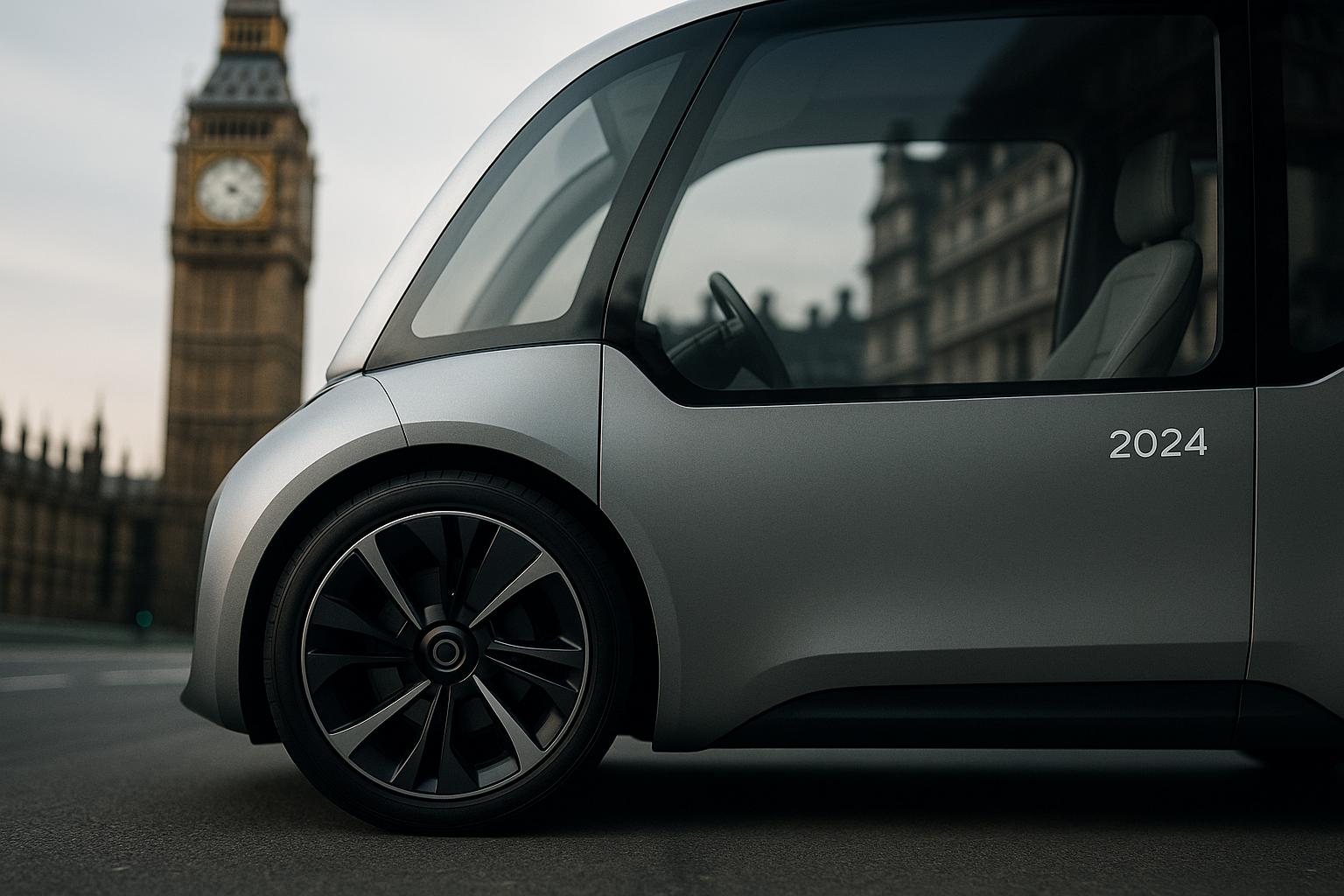
Next year, London is poised to become the first city in Europe to deploy fully autonomous, driverless electric taxis on public roads, marking a significant milestone for urban mobility innovation. UK start-up Wayve and Waymo, a Google spin-off renowned for its advanced self-driving technology, are spearheading this transition, initially running driverless taxis with human safety drivers on board while refining the system. Waymo, with extensive experience amassed over more than 100 million fully autonomous miles and 10 million paid rides across several U.S. cities, is preparing to bring its technology to London, aiming to expand the benefits of safer roads and increased accessibility to the public.
However, legal experts caution that the 2026 target may be overly optimistic. According to Jonathan Smart, partner at Shoosmiths, more realistic timelines point to 2027 due to the considerable legislative groundwork still required. Fundamental to this framework is the Automated Vehicles Act (AVA) 2024, which updates earlier legislation to better define automated vehicles, distinguishing between ‘user in charge’—where a human remains responsible—and ‘no user in charge’ scenarios, such as fully autonomous taxis. This act also introduces new offences, like penalties for providing false safety information. Still, much of the critical detail hinges on secondary legislation that has yet to be implemented, particularly on liability, data governance, and safety regulations essential for autonomous operation in the complex urban traffic environment of London.
The UK Law Commission’s recommendations, underpinning the AVA, propose shifting legal responsibility from human users to vehicle manufacturers for incidents involving driverless cars, framing users as 'users-in-charge' exempt from liability for driving offences but responsible for insurance and basic safety checks. This aligns with international trends recognizing the unique challenges posed by autonomous systems. Yet, as the UK government continues to develop the regulatory environment—highlighted in its recent consultation responses—there is widespread demand for increased transparency, mandatory safety standards, and robust data-sharing frameworks to foster public trust and enable effective incident investigation.
Data management represents a pivotal challenge. Autonomous vehicles collect vast amounts of sensor and operational data crucial for both safety assurance and liability assessment. Researchers have highlighted the necessity for secure, tamper-proof frameworks—proposals including blockchain technology—to ensure reliable evidence in the event of accidents, while also mitigating new cybersecurity risks inherent to connected vehicles. The lack of clear mechanisms for data access and sharing with insurers and regulators remains an ongoing concern, with practical legislative provisions still pending.
Safety statistics from Waymo’s operations in the U.S. provide encouraging insights. Insurance claim analyses demonstrate that the Waymo autonomous service incurs significantly fewer bodily injury and property damage claims per million miles driven than human drivers, suggesting a safer on-road presence. Despite this, high-profile incidents involving autonomous features, such as Tesla’s Autopilot being legally implicated in a fatal crash, serve as stark reminders of the reputational and operational risks as this technology matures.
London’s intricate and often chaotic traffic environment poses an additional complexity. Unlike the relatively grid-like Californian streets where Waymo initially trained, navigating London’s dynamic mix of vehicles, cyclists, and pedestrians will require extensive learning and adaptation by autonomous systems. Meanwhile, the capital’s licensed taxi drivers remain sceptical, often dismissing driverless cars as novelty ‘fairground rides.’ Transport for London’s ongoing guidance and trial regulations aim to integrate these new services while managing public perception and safety concerns.
In conclusion, while the UK stands ready to advance autonomous taxi services in London, showcasing technological progress and a legislative framework in formation, significant hurdles remain—particularly in legal clarity, data governance, safety assurance, and operational readiness for a uniquely demanding urban landscape. The success of this ambitious endeavour will depend not only on the technology’s maturity but also on the government’s ability to swiftly enact secondary legislation and establish trust among regulators, insurers, and the public.
📌 Reference Map:
- Paragraph 1 – [1] (Law Gazette), [2] (AP News)
- Paragraph 2 – [1] (Law Gazette)
- Paragraph 3 – [3] (Euronews), [4] (UK Government Consultation)
- Paragraph 4 – [5] (Arxiv - Blockchain liability), [7] (Fleet News)
- Paragraph 5 – [6] (Arxiv - Safety comparison), [1] (Law Gazette)
- Paragraph 6 – [1] (Law Gazette), [2] (AP News)
- Paragraph 7 – [1] (Law Gazette)
Source: Noah Wire Services