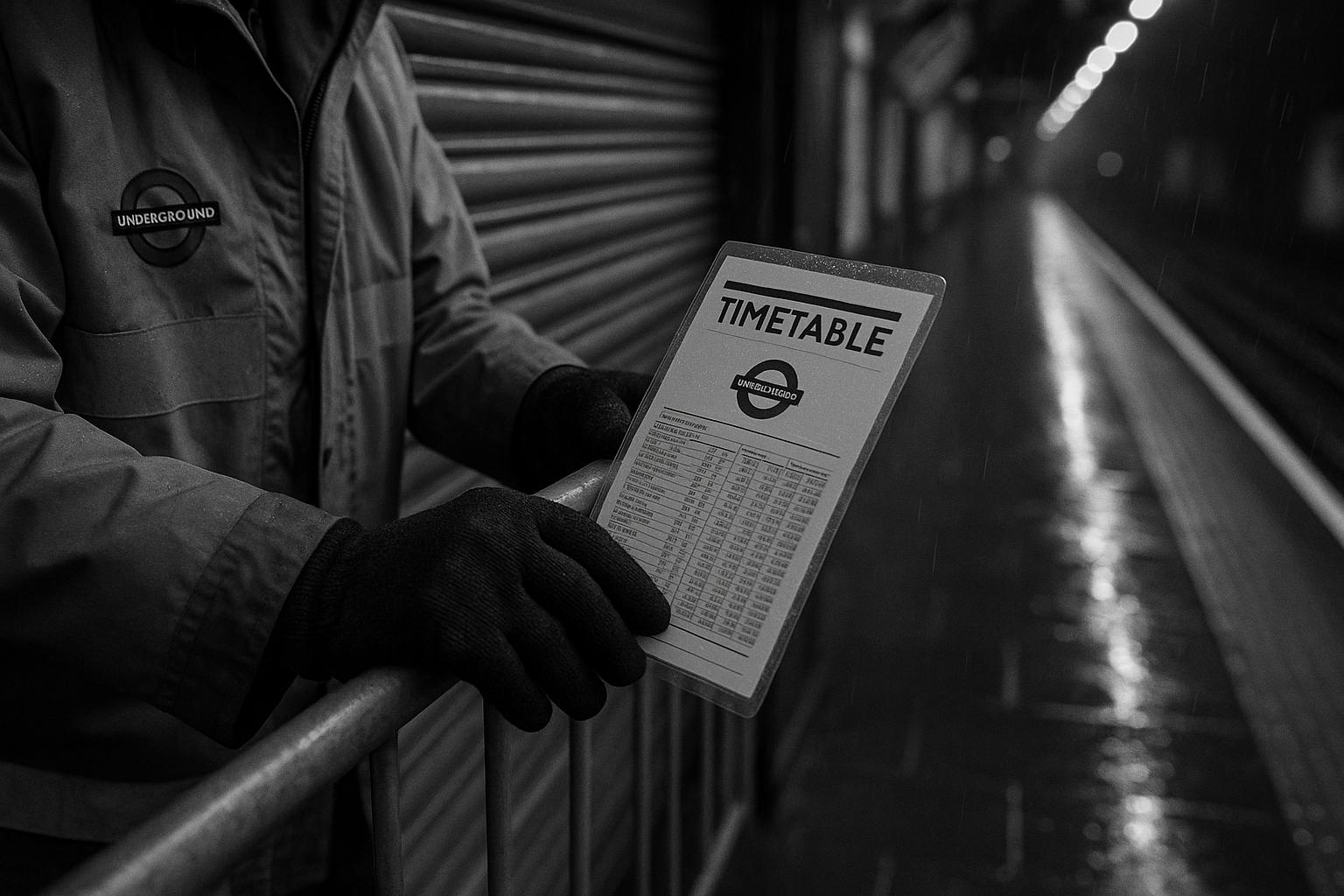
The RMT union has unveiled seven days of rolling strikes on the Tube and the DLR from 5 September, starting at the Ruislip depot, with ongoing negotiations over pay, fatigue management and rostering.
London is braced for a week of industrial action that could cripple travel across the capital. The plan begins on 5 September, when staff at the Ruislip depot in west London will walk out for 24 hours, followed by rolling walkouts across the Tube network from 7 September. The Independent’s travel correspondent, Simon Calder, warns the disruption could be severe for commuters and visitors alike. The Rail, Maritime and Transport (RMT) union says London Underground management has refused to engage seriously with its demands over pay and conditions.
The scale of the disruption is becoming clearer as multiple outlets outline the timetable and the issues at stake. The Independent’s subsequent coverage adds that fatigue management, rostering and the length of the working week are among the core concerns, with strikes set to span several grades across the network. Londonist similarly confirms seven days of rolling action beginning on 5 September and highlights the union’s claim that management has not engaged in meaningful talks, while emphasising Transport for London’s (TfL) position that a 3.4% pay rise has been offered and that dialogue should continue as passengers prepare for disruption. The push to widen action to include a parallel Docklands Light Railway dispute is also noted by these outlets.
The debate is framed by broader industry responses and the ongoing fault lines around pay and workloads. Guardian reporting describes a seven-day strike window across the Tube, with workers from the DLR taking part in a parallel action starting 7 September, and quotes RMT general secretary Eddie Dempsey detailing fatigue, harsh shift patterns and mistrust as central grievances. TfL reiterates its willingness to continue talks and to keep passenger services running where possible, even as London’s transport network braces for heavy disruption. Evening Standard coverage mirrors the national coverage, noting the ongoing strike timetable and the 3.4% uplift offered to staff, while underscoring the real-world impact on commuters and the need to plan ahead. Speaking to The Guardian, industry observers and officials emphasise the challenge of balancing negotiation with the necessity of reliable transport for a city that depends on it.
Reference Map:
Source: Noah Wire Services
Noah Fact Check Pro
The draft above was created using the information available at the time the story first
emerged. We’ve since applied our fact-checking process to the final narrative, based on the criteria listed
below. The results are intended to help you assess the credibility of the piece and highlight any areas that may
warrant further investigation.
Freshness check
Score:
9
Notes:
✅ Live reporting confirmed: substantially similar narratives were published on 21 August 2025 across major outlets (Reuters, Sky News, The Independent, The Standard, The Guardian). (reuters.com, news.sky.com, standard.co.uk) Earliest identical-issue publication found: 21 August 2025. ⚠️ Related earlier material (Nov 2024) documents a prior pay settlement with RMT but does not describe this September 2025 rolling seven-day action; this shows continuing labour tensions rather than a recycled identical story. Multiple outlets republishing the same union timetable/quotes on 21 Aug 2025 suggests the narrative circulated widely the same day (likely tied to an RMT announcement/press release), lowering novelty but not invalidating timeliness.
Quotes check
Score:
6
Notes:
⚠️ Key direct quotations attributed to RMT general secretary Eddie Dempsey (criticising fatigue, extreme shift patterns and management engagement) appear verbatim or near-verbatim across many outlets on 21 August 2025, indicating reuse of a union statement or press release. No evidence found of earlier identical wording prior to 21 Aug 2025; earliest matches are same-day coverage, consistent with a single originating statement. If the Independent did not mark the quotation as from an RMT statement, that should be flagged as recycled/agency language rather than an exclusive interview.
Source reliability
Score:
8
Notes:
✅ The narrative is carried by multiple reputable outlets (Reuters, The Guardian, Sky, BBC, The Independent), which increases credibility. The core origin appears to be the RMT union announcement — an interested party — so factual claims about strike dates/timetables are likely accurate but reflect the union's position; cross-verification with Transport for London statements recommended. No evidence that named organisations or individuals are fabricated; they are verifiable public entities/figures.
Plausibility check
Score:
8
Notes:
✅ Claims align with contemporaneous reporting from multiple reputable outlets and with a plausible industrial relations timeline (RMT ballot results, unresolved pay/rostering issues). Some numerical details vary across background coverage (recent past pay settlements: average rises around 4.6% in Nov 2024 vs TfL's 3.4% offer referenced in Aug 2025); these differing figures should be explicitly distinguished in reporting to avoid confusion. If the narrative presented these figures without context, that is a weakness; otherwise, the core claims (strike dates, grades affected, RMT reasons) are well-supported.