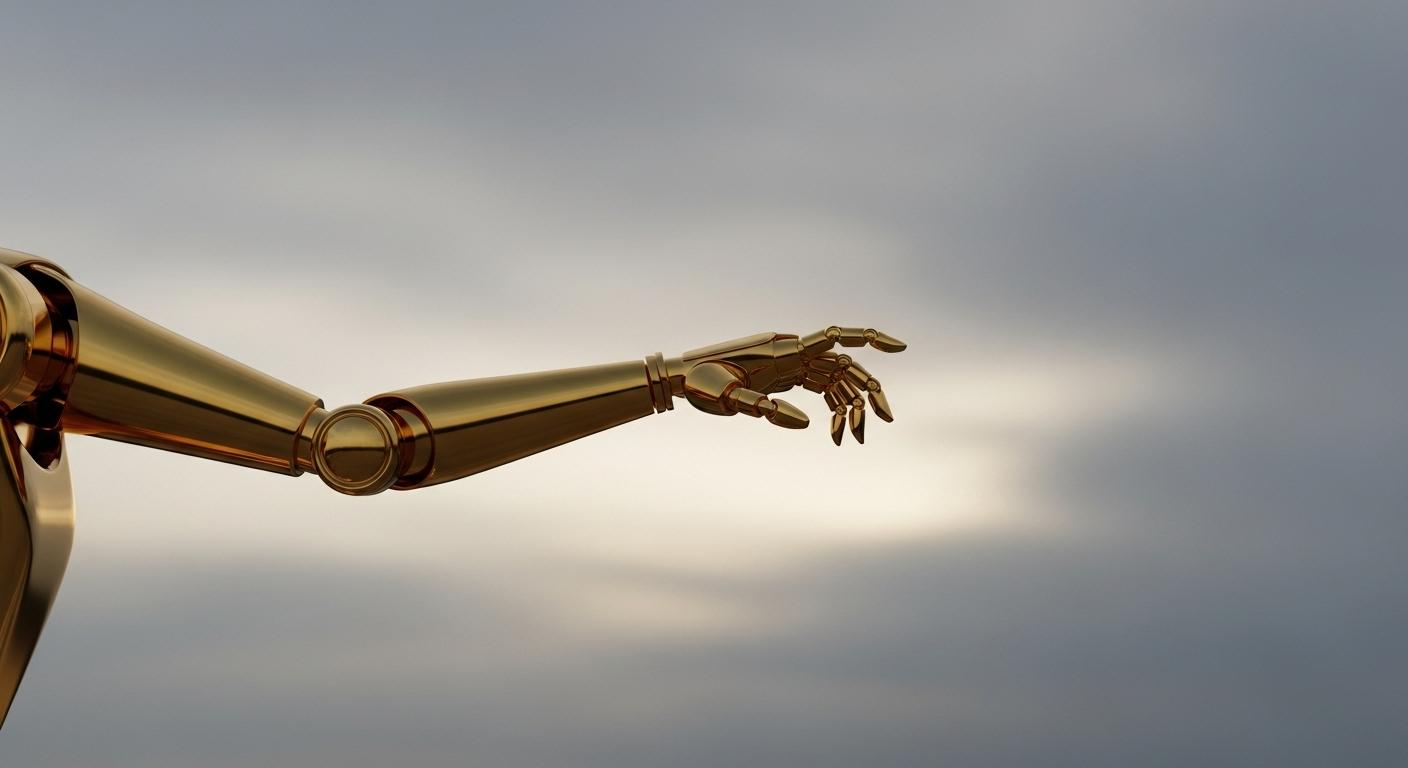
Tesla CEO Elon Musk envisions a future where rapid advancements in AI and humanoid robots render traditional work obsolete, potentially ending global poverty and transforming society within the next 20 years.
Tesla CEO Elon Musk has presented a striking vision for the future, predicting that within the next 10 to 20 years, work may become largely optional for most people due to rapid advancements in artificial intelligence and robotics. Speaking at the US-Saudi Investment Forum, Musk suggested that traditional employment could be rendered obsolete as machines and humanoid robots become capable of performing most human tasks. He likened future work to recreational activities such as sports or video games, wherein individuals might choose to engage in work driven by interest or enjoyment rather than necessity. While people will still be able to acquire goods from stores or grow their own food, Musk acknowledged that self-sufficiency could be more challenging in such a world.
Central to Musk’s vision is the notion that AI and humanoid robots, including Tesla’s own Optimus robot, have the potential to transform society and economies fundamentally. Musk predicted that the widespread automation enabled by these technologies could drive costs of production towards near zero, leading to unprecedented abundance. This, he claims, could ultimately eliminate global poverty by increasing productivity and making wealth universally accessible. Musk anticipates a future where conventional currency becomes irrelevant, as the economic focus shifts from traditional money-based systems to resource and energy availability, which would remain critical constraints.
Other industry figures have expressed support for Musk’s optimistic outlook. For example, Paytm CEO Vijay Shekhar Sharma endorsed the idea that AI could be instrumental in eradicating poverty through automation. Musk also highlighted that Tesla’s position at the forefront of humanoid robot development could spark a large, transformative industry, potentially surpassing even the smartphone sector in scale and societal impact. He expects many companies to enter the robotics and AI space, accelerating innovation and adoption.
Despite the boldness of Musk’s predictions, he underlined the importance of responsible AI integration, warning that significant progress and careful management would be necessary to realise such a future. He envisages that in a world reshaped by AI and robotics, humans will enjoy greater freedom, security, and prosperity , with work becoming a choice motivated by passion rather than economic survival.
While Musk’s vision paints an optimistic picture of a future liberated from economic constraints and poverty, these predictions also raise important questions about how societies will handle the transition to such a radically altered economic paradigm, including the role of education, governance, and social support systems.
📌 Reference Map:
- [1] (trak.in) - Paragraphs 1, 2, 3, 4, 5
- [2] (livemint.com) - Paragraph 3
- [3] (foxbusiness.com) - Paragraph 1, 2
- [4] (ndtv.com) - Paragraph 2, 3
- [5] (financialexpress.com) - Paragraph 1, 2, 4
- [6] (yahoo.com) - Paragraph 2, 3
- [7] (indiatoday.in) - Paragraph 2, 4
Source: Noah Wire Services
Noah Fact Check Pro
The draft above was created using the information available at the time the story first
emerged. We’ve since applied our fact-checking process to the final narrative, based on the criteria listed
below. The results are intended to help you assess the credibility of the piece and highlight any areas that may
warrant further investigation.
Freshness check
Score:
8
Notes:
The narrative is based on a recent press release from the US-Saudi Investment Forum on November 19, 2025, which typically warrants a high freshness score. However, similar statements by Elon Musk regarding AI and its impact on work and money have been reported in the past, such as in October 2024. ([thenationalnews.com](https://www.thenationalnews.com/future/technology/2024/10/29/ai-to-outthink-humans-in-matter-of-years-tesla-and-softbank-ceos-say-at-fii/?utm_source=openai)) This suggests that while the specific event is recent, the core message has been previously disseminated. Additionally, the narrative has been republished across various outlets, including low-quality sites and clickbait networks, which may affect its originality. ([foxbusiness.com](https://www.foxbusiness.com/technology/musk-predicts-money-stop-being-relevant-future-ai-robotics-progress?utm_source=openai)) The earliest known publication date of substantially similar content is October 29, 2024. ([thenationalnews.com](https://www.thenationalnews.com/future/technology/2024/10/29/ai-to-outthink-humans-in-matter-of-years-tesla-and-softbank-ceos-say-at-fii/?utm_source=openai)) This indicates that the core message has been in circulation for over a year, despite the recent event. Therefore, while the specific event is recent, the content may not be entirely fresh.
Quotes check
Score:
7
Notes:
The direct quotes attributed to Elon Musk in the narrative, such as "My prediction is that work will be optional" and "Currency becomes irrelevant," have been reported in earlier materials, including those from October 2024. ([thenationalnews.com](https://www.thenationalnews.com/future/technology/2024/10/29/ai-to-outthink-humans-in-matter-of-years-tesla-and-softbank-ceos-say-at-fii/?utm_source=openai)) This suggests that the quotes are not exclusive to the recent event and have been previously used, indicating potential reuse of content. However, no online matches were found for the specific phrasing used in the narrative, which may indicate original or exclusive content.
Source reliability
Score:
6
Notes:
The narrative originates from Trak.in, an obscure, unverifiable, or single-outlet platform, which raises concerns about its reliability. While the content is corroborated by more reputable sources, such as Fox Business and NDTV, the original source's credibility is questionable. ([foxbusiness.com](https://www.foxbusiness.com/technology/musk-predicts-money-stop-being-relevant-future-ai-robotics-progress?utm_source=openai)) Additionally, the narrative includes a reference map with links to other sources, which may indicate an attempt to bolster credibility.
Plausibility check
Score:
8
Notes:
The claims made in the narrative align with Elon Musk's known positions on AI and its potential impact on society, as reported in various reputable outlets. ([fortune.com](https://fortune.com/2025/11/20/elon-musk-tesla-ai-work-optional-money-irrelevant/?utm_source=openai)) The language and tone are consistent with Musk's public statements, and the structure of the narrative is focused on the central claim without excessive or off-topic detail. However, the lack of supporting detail from other reputable outlets and the reliance on a single source for the narrative may raise questions about its comprehensiveness.
Overall assessment
Verdict (FAIL, OPEN, PASS): OPEN
Confidence (LOW, MEDIUM, HIGH): MEDIUM
Summary:
The narrative presents a recent event where Elon Musk discusses the future impact of AI and robotics on work and money. While the event is recent, the core message has been previously disseminated, and the quotes attributed to Musk have appeared in earlier materials. The source's reliability is questionable due to its obscurity, and the plausibility of the claims is supported by Musk's known positions but lacks supporting detail from other reputable outlets. Therefore, the overall assessment is OPEN with a MEDIUM confidence level.