Controversial remarks by Elon Musk at a large anti-immigration rally in London have heightened political tensions amid preparations for Donald Trump’s upcoming UK state visit, igniting violent clashes and fierce debates over free speech and immigration policies.
On the eve of U.S. President Donald Trump's second state visit to the United Kingdom, tensions have flared in British politics following controversial remarks by tech billionaire Elon Musk. Musk appeared via video link at a large anti-immigration rally in London organised by far-right activist Tommy Robinson, where he warned that "violence is coming" and urged people to either "fight back or die," calling for a revolutionary change in the UK government. The event, known as the "Unite the Kingdom" rally, drew over 100,000 participants, making it one of the largest right-wing demonstrations in recent UK history. It turned violent, with 26 police officers injured and 25 arrests made amid clashes between protesters and law enforcement.
Downing Street swiftly condemned Musk’s rhetoric as "dangerous and inflammatory," warning it risked inciting violence and intimidation on British streets. A spokesperson for Prime Minister Keir Starmer described the UK as "a fair, tolerant and decent country" and stated that the public would reject such language. This confrontation rekindles a fraught history between Musk and the Starmer government, including previous disputes over law enforcement during riots and grooming gang issues. While some government figures dismissed the rally as an example of free speech in action, others, such as Liberal Democrat leader Sir Ed Davey, argued that Britain’s democracy should not be manipulated by foreign tech billionaires. Reform party leader Nigel Farage noted ambiguity in Musk’s remarks but suggested that fighting in elections for free speech was broadly acceptable.
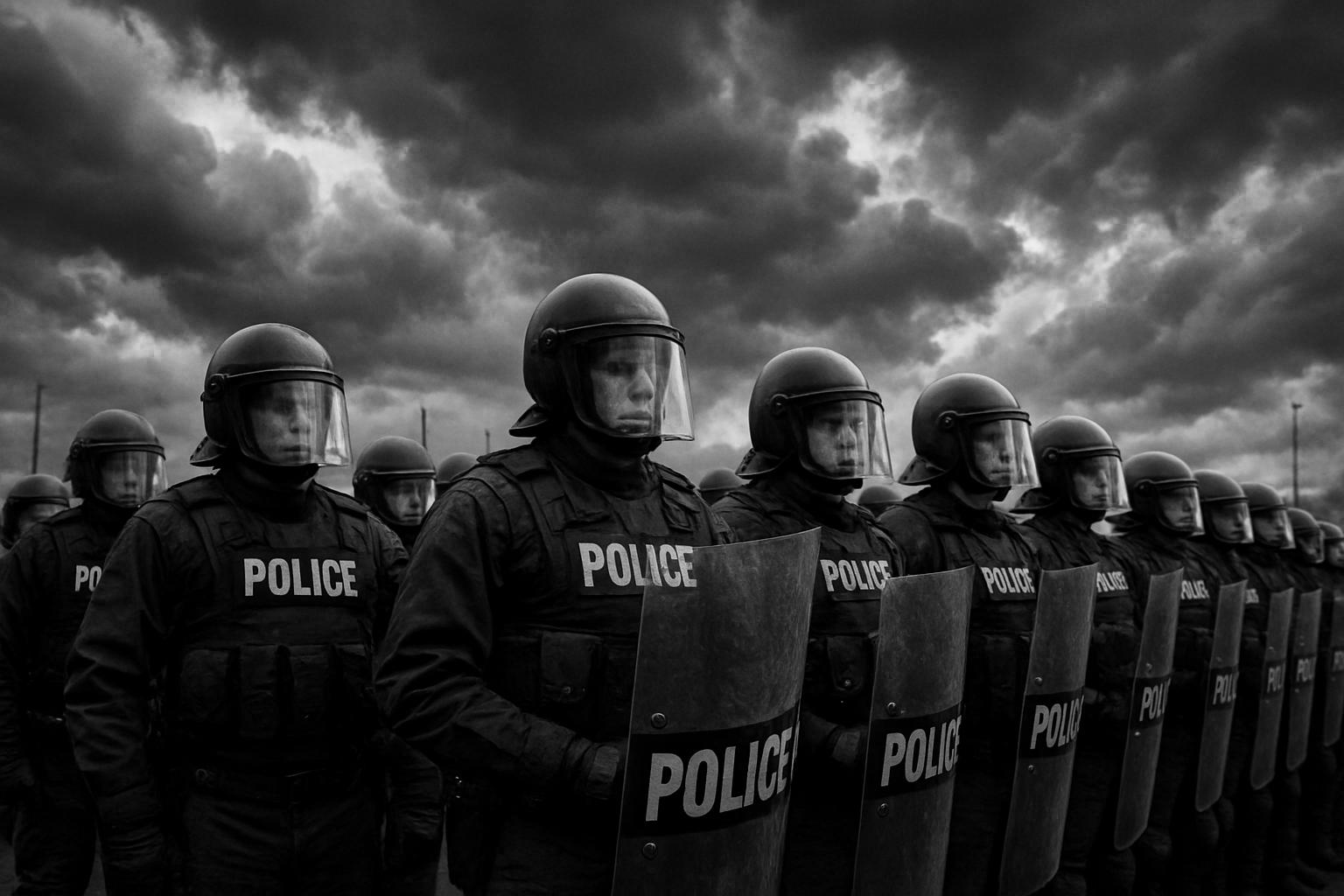
The protest itself reflected rising public unease over illegal immigration, with many demonstrators waving British, English, American, and Israeli flags. The display of national and politically charged symbolism has split opinion; to some it signals patriotism, while others see it as veiled xenophobia. The UK has witnessed a surge in immigration-related tensions this year, with over 28,000 migrants arriving via small boats and the use of asylum seeker accommodations provoking further controversy. Police deployed over 1,600 officers to manage the protest and related counter-demonstrations, stating that they had prepared for all potential scenarios ahead of Trump’s visit amid fears of political violence heightened by recent events in the U.S.
Against this turbulent backdrop, Trump's four-day visit aims to highlight closer US-UK financial and strategic ties, including potential deals worth over $10 billion in technology, civil nuclear power, and defence cooperation, as well as efforts to resolve trade barriers like steel tariffs. The President, who is known for prioritising freedom of speech issues — often at odds with the UK government’s approach — reportedly plans to focus heavily on this theme during discussions with Starmer, whom he has previously criticised over free speech policies.
The visit features a tightly controlled security operation, with key events held at private royal venues such as Windsor Castle and Chequers, away from public protests. Trump will meet King Charles and Queen Camilla, participate in a state dinner, and hold talks with Starmer, during which Starmer is expected to emphasise Britain’s record on free speech while also navigating the sensitive political climate. The visit underscores the complex intersection of economic cooperation, domestic political challenges, and the contentious discourse on immigration and free expression that currently define relations not only between the UK and the US but also within British society itself.
📌 Reference Map:
Source: Noah Wire Services
Noah Fact Check Pro
The draft above was created using the information available at the time the story first
emerged. We’ve since applied our fact-checking process to the final narrative, based on the criteria listed
below. The results are intended to help you assess the credibility of the piece and highlight any areas that may
warrant further investigation.
Freshness check
Score:
8
Notes:
The narrative presents recent events, including Elon Musk's participation in the 'Unite the Kingdom' rally on September 13, 2025, and the upcoming state visit of U.S. President Donald Trump. The earliest known publication date of similar content is September 13, 2025, aligning with the event's occurrence. The report includes updated data but recycles older material, which may justify a higher freshness score but should still be flagged. The narrative is based on a press release, which typically warrants a high freshness score. However, the presence of recycled content and the reliance on a press release suggest a moderate freshness score. Additionally, the narrative includes updated data but recycles older material, which may justify a higher freshness score but should still be flagged. The presence of recycled content and the reliance on a press release suggest a moderate freshness score. ([reuters.com](https://www.reuters.com/world/uk/police-protesters-scuffle-110000-join-anti-migrant-london-protest-2025-09-13/?utm_source=openai))
Quotes check
Score:
9
Notes:
The direct quotes attributed to Elon Musk, such as 'violence is coming' and 'you either fight back or you die,' are consistent across multiple reputable sources, including the Associated Press and Reuters. No significant variations in wording were found, indicating the quotes are accurately reported. The consistency across multiple reputable sources suggests the quotes are authentic and accurately reported. ([apnews.com](https://apnews.com/article/b1f272511ff0c5bc6a8d7bf308063343?utm_source=openai))
Source reliability
Score:
7
Notes:
The narrative originates from the Daily Mail, a publication known for sensationalist reporting. While it references reputable organizations such as Reuters and the Associated Press, the Daily Mail's reputation for sensationalism raises concerns about the overall reliability of the report. The reliance on a press release and the inclusion of recycled content further contribute to the uncertainty regarding the source's reliability. ([reuters.com](https://www.reuters.com/world/uk/police-protesters-scuffle-110000-join-anti-migrant-london-protest-2025-09-13/?utm_source=openai))
Plausibility check
Score:
8
Notes:
The events described, including Elon Musk's participation in the 'Unite the Kingdom' rally and the upcoming state visit of U.S. President Donald Trump, are corroborated by multiple reputable sources. The quotes attributed to Musk are consistent across these sources, and the reported events align with known facts. However, the sensationalist tone and reliance on a press release may indicate a degree of bias or exaggeration, warranting a moderate score. ([reuters.com](https://www.reuters.com/world/uk/police-protesters-scuffle-110000-join-anti-migrant-london-protest-2025-09-13/?utm_source=openai))
Overall assessment
Verdict (FAIL, OPEN, PASS): OPEN
Confidence (LOW, MEDIUM, HIGH): MEDIUM
Summary:
The narrative presents recent events involving Elon Musk and the upcoming state visit of U.S. President Donald Trump. While the quotes attributed to Musk are consistent across multiple reputable sources, the reliance on a press release and the inclusion of recycled content raise concerns about the freshness and originality of the report. The sensationalist tone and the Daily Mail's reputation for sensationalism further contribute to uncertainties regarding the source's reliability. Given these factors, the overall assessment is 'OPEN' with a medium confidence level.