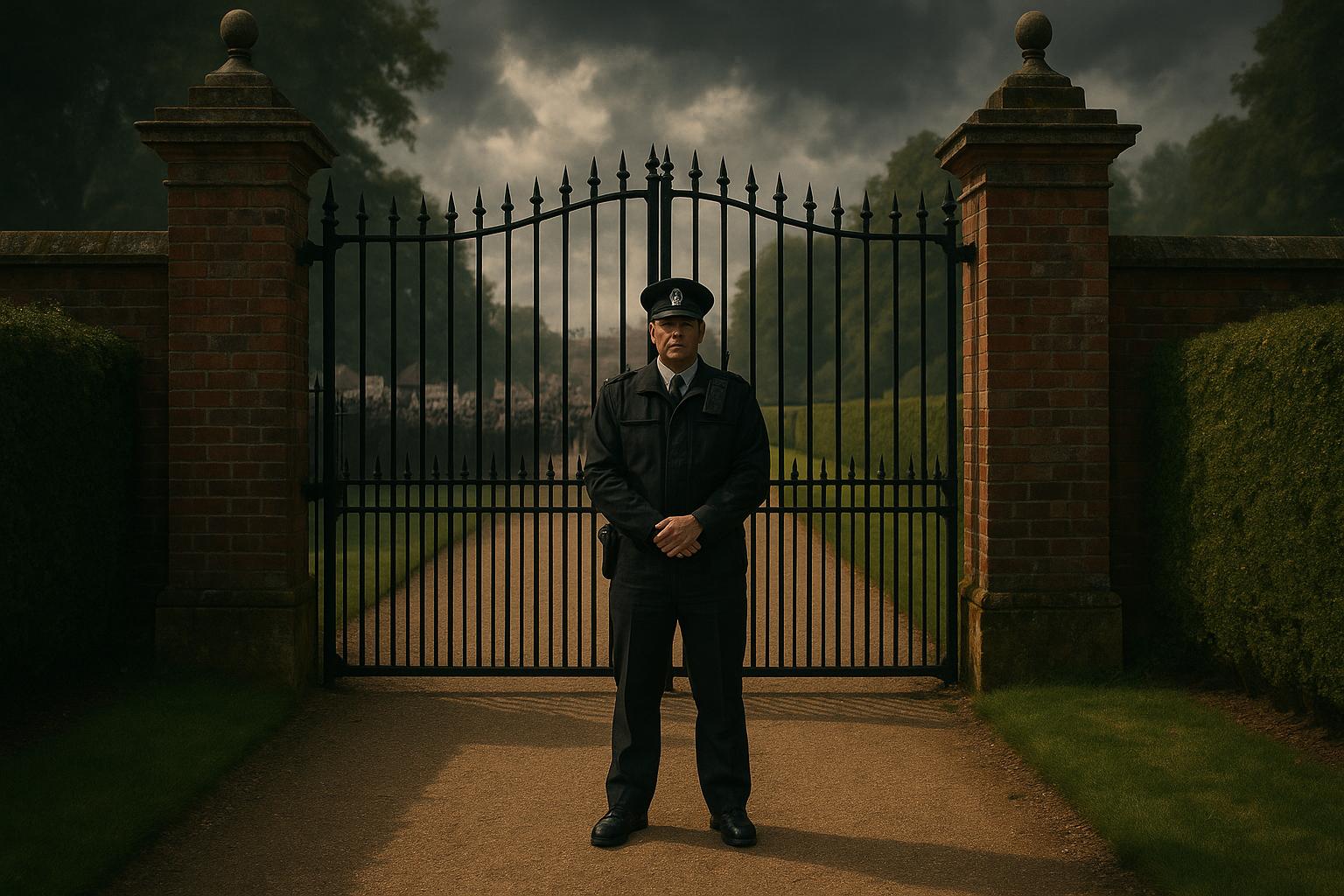
In a potentially historic moment for UK-US relations, Prime Minister Sir Keir Starmer hosted former U.S. President Donald Trump at the prime minister’s country residence, Chequers, during Trump’s unprecedented second state visit to the United Kingdom. This summit, informally dubbed "Chequers '25," carries the weight of possibly joining the ranks of the most notable bilateral meetings between British prime ministers and American presidents, echoing iconic encounters such as those between Churchill and Roosevelt or Blair and Bush. However, the meeting also courts considerable risks given contentious issues on the table, including Starmer’s recent pledge to recognise Palestine, Trump’s ambiguous stance on Ukraine, and controversies surrounding Jeffrey Epstein, which recently led to the dismissal of Starmer’s ambassador Peter Mandelson over ties to Epstein.
Trump arrived in the UK to a grand royal reception at Windsor Castle, greeted by King Charles III and the royal family with ceremonial splendour, including a carriage procession and military flypast featuring UK and US jets. This display underscored the visit’s significance, marking Trump as the first elected American politician invited for two UK state visits. Despite the regal welcome, the trip sparked public protests, with opponents projecting images of Trump and Epstein onto Windsor Castle, highlighting the visit’s polarising nature. London Mayor Sadiq Khan openly criticised Trump’s influence on far-right intolerance, while the presence of former Trump ally Elon Musk demanding political upheaval added to the tense atmosphere surrounding the visit.
At the heart of the summit was a landmark economic agreement that signals a deepening UK-US collaboration in technology and innovation. The countries signed the 'Tech Prosperity Deal,' valued at approximately £31 billion ($42 billion), aiming to foster cooperation in artificial intelligence, quantum computing, and civil nuclear energy. Major technology giants such as Microsoft, Nvidia, and Google committed substantial UK investments—Microsoft announced £22 billion for cloud and AI infrastructure, including a dedicated AI supercomputer, while Nvidia planned its largest European rollout of GPUs in the UK. Google’s £5 billion investment supports data centre development and ongoing AI research through DeepMind. This initiative highlights Starmer’s strategic pivot towards a light-touch regulatory approach aligned with US norms, diverging from the more stringent EU framework as he seeks to revitalise the UK economy amid domestic challenges.
The state visit also cemented historically significant UK-US investment announcements, with the British government declaring a record inward investment influx totaling £150 billion ($205 billion). This colossal influx includes not only tech commitments but also long-term pledges from private equity giant Blackstone (£100 billion) and £3.9 billion from Prologis focused on life sciences and advanced manufacturing sectors. These investments are projected to create thousands of new jobs and are complemented by reciprocal American investments, notably by pharmaceutical giant GSK in the US.
While the economic opportunities are notable, the political dynamics remain fragile. Starmer must navigate the complexities of Trump’s uneven support for UK policy priorities, including Ukraine and Middle East peace prospects. The summit’s setting—Chequers—and the forthcoming news conference carry potential pitfalls. Trump, known for unpredictable public remarks, may challenge the diplomatic tone, risking media missteps that could overshadow policy achievements. Additionally, the Epstein controversy continues to cast a shadow over discussions, threatening to complicate the already delicate political tightrope.
Historically, UK-US prime minister-president relationships have fluctuated between warm alliances and sharp disputes. Starmer’s engagement with Trump joins a lineage spanning Churchill-Roosevelt’s wartime camaraderie, Eden-Eisenhower’s Suez crisis rupture, Thatcher-Reagan’s ideological kinship despite tensions over Grenada and the Falklands, to Blair-Bush’s controversial Iraq alliance, and Cameron-Obama’s "transatlantic bromance." Each partnership reflected broader geopolitical shifts and domestic challenges; thus, Starmer’s challenge is to leverage Trump’s affection for Britain and the special relationship without succumbing to potential diplomatic missteps or domestic backlash.
In sum, the Chequers '25 summit stands as a defining moment that could either rejuvenate the UK-US partnership through substantial economic and technological collaboration or become a cautionary tale of political complexity and controversy. The full outcome will hinge on the leaders’ ability to balance symbolism and substance amid a politically charged atmosphere that captures the historic and unpredictable nature of transatlantic diplomacy.
📌 Reference Map:
- Paragraph 1 – [1], [4]
- Paragraph 2 – [3], [4], [5]
- Paragraph 3 – [2], [5]
- Paragraph 4 – [6], [2]
- Paragraph 5 – [1], [4], [5]
- Paragraph 6 – [1]
- Paragraph 7 – [1]
Source: Noah Wire Services