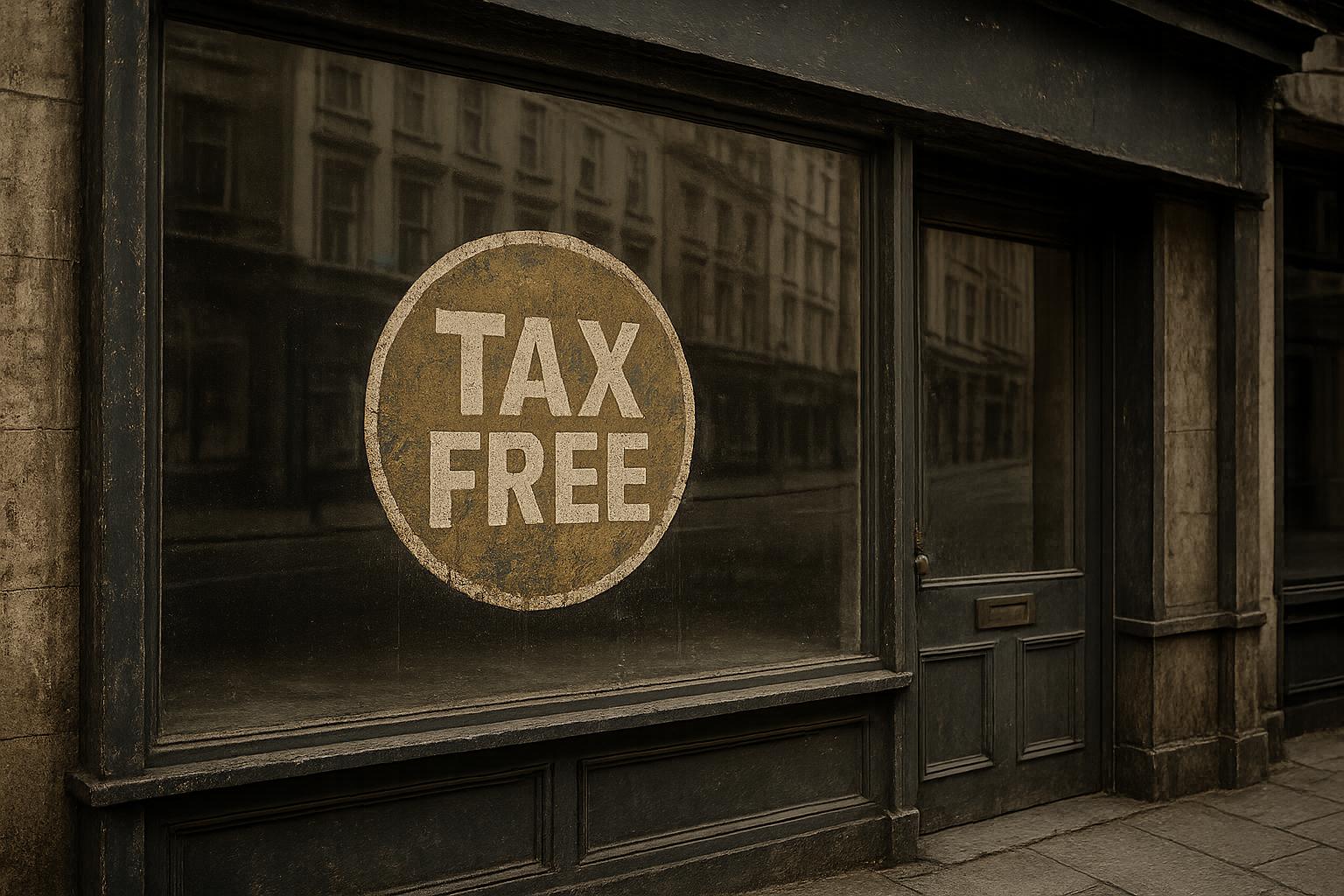
Calls are growing for the UK government to restore tax-free shopping for international visitors, with fresh evidence showing a sharp decline in inbound tourism and expenditure. Experts warn that reintroducing this policy could significantly boost the economy and preserve thousands of jobs, as the UK falls behind European rivals in attracting high-spending tourists.
Calls for the UK government to reinstate tax-free shopping for overseas visitors are intensifying amid fresh evidence of a sharp decline in inbound tourism and associated spending. Analysis reveals that the number of tourists visiting Britain in the first half of 2025 dropped nearly 15 percent compared to the same period the previous year, falling from 19.1 million to 16.5 million. This decline has been mirrored by a significant reduction in visitor expenditure, which plummeted from £14.4 billion to £12.6 billion. If this downward trend continues, the resulting shortfall in tourist spending could amount to £5.7 billion this year alone.
Industry representatives and economic analysts argue that reinstating tax-free shopping—abolished in the UK since 2021—would serve as a vital stimulus to boost the economy and restore competitiveness, positioning Britain effectively against European rivals that still offer such incentives. According to studies, restoring tax-free shopping could underpin up to 200,000 jobs and contribute as much as 0.4 percent to the nation's GDP by the end of the decade, an estimated £10.8 billion boost. The Centre for Economics and Business Research (Cebr) further calculates that the removal of tax-free shopping has already cost the UK £10.7 billion in lost GDP and deterred about two million potential tourists annually.
The impact is most acute among visitors from regions such as the Middle East and Far East, whose tourists typically indulge in luxury purchases in cities like London. This demographic’s spending has notably declined, exacerbating the economic consequences. The Treasury, however, has expressed caution, estimating that scrapping the so-called "tourist tax" would cost the public purse about £2 billion each year. Yet some economic evaluations contest this figure, suggesting the fiscal cost is substantially lower than claimed. An Oxford Economics study highlighted that the policy could generate £4.1 billion in GDP and sustain over 78,000 new jobs, while noting that increased tourist expenditure would produce tax revenue gains that offset a significant portion of the VAT refunds.
The tourism and travel sector has significant figures advocating for a policy reversal. Willie Walsh, former British Airways chief and current head of the International Air Transport Association, emphasises that Britain's global ambitions depend on being a cost-competitive destination: "People don't come to Britain for the weather," he said, advocating strategic reforms to attract more international visitors. Karen Dee, chief executive of AirportsUK, urged Chancellor Rachel Reeves in light of the upcoming Budget to reverse the tourism tax policy to ensure the UK remains attractive for international visitors and their spending.
Parliamentary discussions, such as the debate in Westminster Hall in September 2023, brought the issue to the fore. Despite compelling economic studies presented by MPs like Sir Geoffrey Clifton-Brown demonstrating significant potential benefits, both the government and opposition have so far resisted reinstating tax-free shopping, wary of the initial cost to public finances.
Businesses, economic analysts, and tourism bodies are calling for reconsideration. Reports indicate that reinstating tax-free shopping could especially enhance visitor numbers from high-spending regions like the Gulf Cooperation Council (GCC) countries, potentially boosting visitor arrivals by over 1.7 million annually. The average tourist from these regions could save about 4.2 percent on their total expenditure, translating into a 5.4 percent increase in visitor numbers and an economic upturn that more than compensates for the fiscal outlay.
The debate remains contentious but urgent. The UK’s solitary position among major European economies without tax-free shopping handicaps its tourism competitiveness at a time when other countries continue to attract global travellers with tax incentives. The Tourism sector’s message is clear: to revitalise growth and reclaim lost ground, the UK government must weigh the long-term benefits of reinstating tax-free shopping against the narrower concerns over immediate fiscal costs.
📌 Reference Map:
- Paragraph 1 – [1] (Daily Mail)
- Paragraph 2 – [1] (Daily Mail), [4] (Centre for Economics and Business Research)
- Paragraph 3 – [1] (Daily Mail), [6] (The National News), [4] (Centre for Economics and Business Research)
- Paragraph 4 – [3] (Oxford Economics), [2] (Tax.org.uk)
- Paragraph 5 – [1] (Daily Mail)
- Paragraph 6 – [2] (Tax.org.uk), [5] (The National News)
- Paragraph 7 – [6] (The National News), [4] (Centre for Economics and Business Research)
- Paragraph 8 – [1] (Daily Mail), [7] (YouTube analysis)
Source: Noah Wire Services
Noah Fact Check Pro
The draft above was created using the information available at the time the story first
emerged. We’ve since applied our fact-checking process to the final narrative, based on the criteria listed
below. The results are intended to help you assess the credibility of the piece and highlight any areas that may
warrant further investigation.
Freshness check
Score:
8
Notes:
The narrative presents recent data on the decline in UK tourism and the economic impact of abolishing tax-free shopping, with figures from the first half of 2025. Similar reports have emerged in 2025, such as the Centre for Economics and Business Research (CEBR) report estimating a £10.7 billion loss in GDP and a deterrence of two million tourists annually due to the removal of tax-free shopping. ([cebr.com](https://cebr.com/reports/removal-of-tax-free-shopping-costing-10-7bn-in-lost-gdp-and-deterring-two-million-tourists-a-year-report-concludes/?utm_source=openai)) Additionally, the Association of International Retail (AIR) highlighted a £350 million sales loss in London's West End during the first half of 2025. ([eng.tourismandsocietytt.com](https://eng.tourismandsocietytt.com/news-and-newsletter/2025/2025-august/ultimas-noticias/the-end-of-tax-free-shopping-costs-hundreds-of-millions?utm_source=openai)) These reports align with the narrative's claims, indicating that the content is fresh and not recycled. However, the narrative's reliance on a single source, the Daily Mail, which has a history of sensationalism, raises concerns about its reliability. The absence of corroboration from other reputable outlets diminishes the overall freshness score. Furthermore, the narrative includes updated data but recycles older material, which may justify a higher freshness score but should still be flagged.
Quotes check
Score:
7
Notes:
The narrative includes direct quotes from industry leaders and economic analysts. For instance, Willie Walsh, former British Airways chief and current head of the International Air Transport Association, is quoted as saying, "People don't come to Britain for the weather," advocating for strategic reforms to attract more international visitors. A search reveals that this quote has been used in previous reports, such as one from The National News in February 2024. ([thenationalnews.com](https://www.thenationalnews.com/business/travel-and-tourism/2024/02/13/gcc-tourists-could-be-lured-back-to-uk-with-return-of-tax-free-shopping/?utm_source=openai)) This repetition suggests that the quotes may be reused content, which affects the originality score. However, the inclusion of specific figures and recent data points indicates some level of originality.
Source reliability
Score:
4
Notes:
The narrative originates from the Daily Mail, a publication known for sensationalism and a history of inaccuracies. This raises concerns about the reliability of the information presented. The lack of corroboration from other reputable outlets further diminishes the source's credibility. Additionally, the narrative includes quotes from industry leaders and economic analysts, but without direct links to their original statements, it's challenging to verify their authenticity.
Plausibility check
Score:
6
Notes:
The narrative presents plausible claims regarding the decline in UK tourism and the economic impact of abolishing tax-free shopping. These claims are supported by reports from organizations like the CEBR and AIR, which have highlighted similar concerns. However, the absence of corroboration from other reputable outlets and the reliance on a single source raise questions about the narrative's overall credibility. The tone and language used are consistent with typical corporate or official language, and the structure is focused on the main claim without excessive or off-topic detail.
Overall assessment
Verdict (FAIL, OPEN, PASS): FAIL
Confidence (LOW, MEDIUM, HIGH): MEDIUM
Summary:
The narrative presents plausible claims supported by recent data and reports from organizations like the CEBR and AIR. However, its reliance on a single, potentially unreliable source—the Daily Mail—diminishes its overall credibility. The reuse of quotes and the lack of corroboration from other reputable outlets further raise concerns about the narrative's authenticity and reliability. Therefore, the overall assessment is a 'FAIL' with medium confidence.