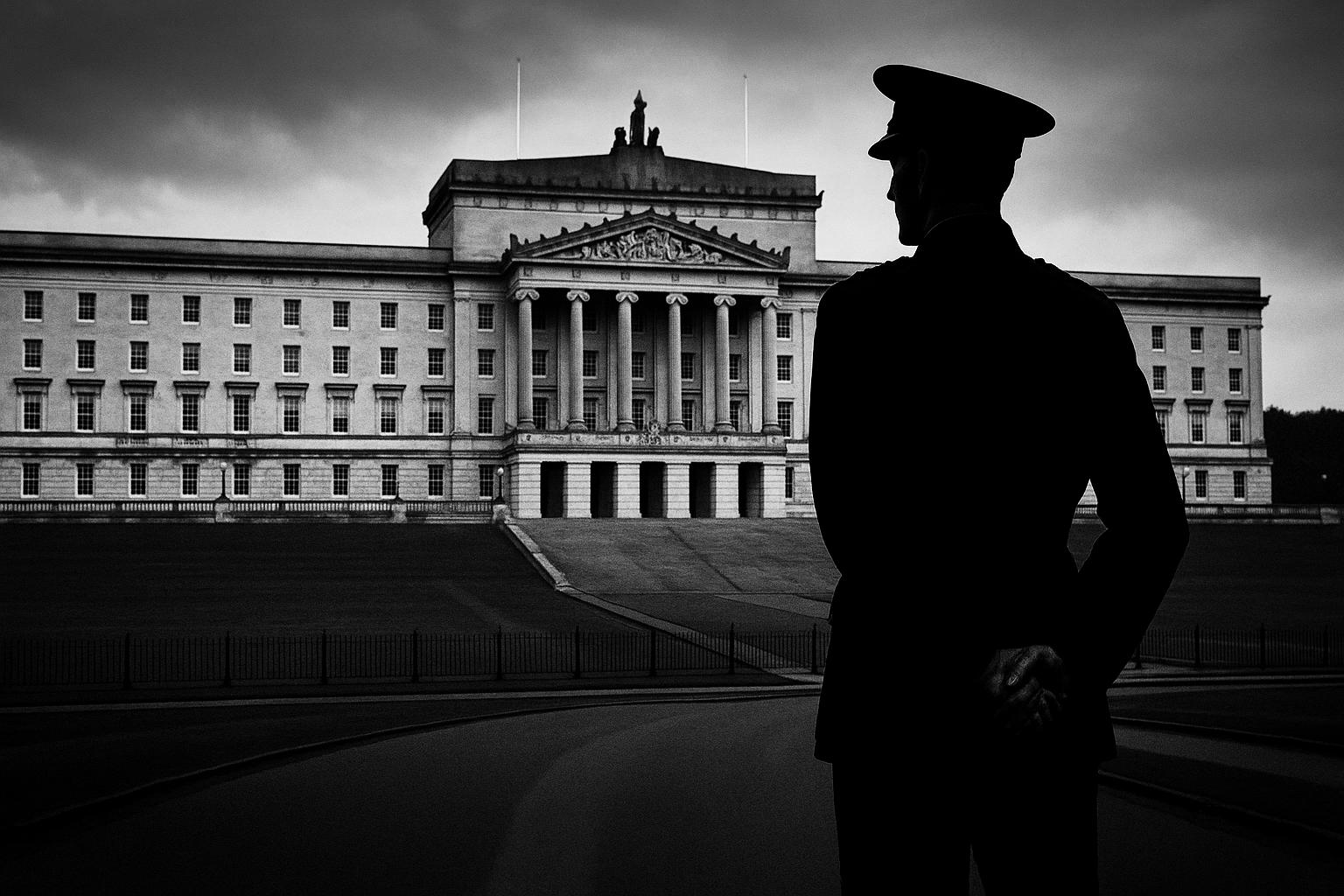
On Remembrance Sunday, as thousands gathered to honour those who fought and died in wars, the sombre reflections on military sacrifice were soon overshadowed by a fierce and unprecedented public critique from the highest ranks of Britain’s former military leadership. Nine retired generals and one air chief marshal issued a rare and powerful letter condemning the UK government’s Northern Ireland Troubles Bill, warning it threatens to undermine the moral foundation and operational effectiveness of the British Armed Forces. Their intervention underscores a growing crisis of confidence among servicemen and women, particularly those involved in Northern Ireland, where historical conflict wounds remain raw.
The letter, published in The Times shortly after the Remembrance Day ceremonies, argues that the Troubles Bill represents a betrayal of the implicit contract between the state and its armed forces. This contract, as understood for decades, promised that soldiers who acted lawfully, under proper orders and in good faith, would be supported and defended by the nation. However, according to the generals, the bill equates security forces “with those who bombed and murdered in pursuit of political ends,” an equating they described as “not reconciliation; it is abdication of responsibility.” This blunt assertion reflects deep concern that the bill’s legal provisions erase the crucial distinction on which military legitimacy rests, potentially branding veterans as criminals for actions taken during a complex and brutal conflict.
The chorus of retired military voices is striking not only for its content but also for its collective prominence. These are senior figures who have been largely silent on political matters since retirement, now publicly affirming what many in military circles have long feared. They highlight “lawfare” – the use of legal processes as weapons in political or ideological battles – as a corrosive phenomenon that has driven experienced personnel, including special forces, to leave service. This legal and political pressure, they argue, risks hollowing out Britain's ability to defend itself effectively, with soldiers having to face not just the enemy on the field but also the prospect of legal prosecution after the fact.
General Sir Peter Wall, a signatory to the letter and former Chief of the General Staff, put the issue succinctly in his commentary: the bill ostensibly aims to treat all victims equally but in reality does so at the expense of former soldiers who “stood ready to do the nation’s violence so that others might sleep peacefully in their beds at night.” This framing highlights the moral sacrifice that military personnel make and the perceived injustice in exposing them to retrospective legal scrutiny that ignores the context of their service.
The government’s approach, led by Prime Minister Rishi Sunak and Attorney General Lord Hermer, has sparked intense debate across political and social spectrums. Critics from military and veteran communities view the bill as a political maneuver influenced by the growing army of human rights lawyers and activists pushing for retrospective justice. Former high-ranking officers, including General Sir Nick Parker and Colonel Nick Kitson, have described reopening investigations into Troubles-era actions as tantamount to “torture by the state,” undermining morale and damaging the military’s reputation domestically and abroad.
This sentiment is echoed in vocal opposition to the revisiting of events like Bloody Sunday, once again positioning soldiers as scapegoats for political failures. A British Army General who served in Northern Ireland described the inquiry post-Bloody Sunday as a “cynical political move,” shifting blame onto troops placed in impossible positions by the politicians who sent them there. Such views emphasize the complexity and moral ambiguity of conflict zones, reinforcing the generals’ plea to uphold the principle that soldiers should not be retroactively judged by shifting political standards.
The legislation’s broader implications have also fueled fears within political circles. Some MPs have warned that rolling back protections for veterans could open the door to costly legal claims and payouts, potentially destabilising hard-won peace and reconciliation efforts. Conversely, human rights groups and some international observers uphold the need for accountability and justice for victims of the Troubles, as reflected by UN experts who caution that granting immunity could undermine obligations to investigate serious human rights violations.
This profound divide reflects the ongoing struggle to reconcile justice, peace, and the legacy of a bitter and prolonged conflict. Yet, the intervention by the retired generals has crystallised the debate around the consequences for the armed forces themselves. Their letter acts as a stark warning that without the state’s firm support, the moral contract that underpins military service in democratic societies risks unraveling, with potentially dire consequences for national security and the future of military engagement.
In sum, the controversy over the Northern Ireland Troubles Bill exposes not just political and legal fault lines, but a fundamental conflict over the narratives of service, sacrifice, and justice. It pits those who seek retrospective legal redress and accountability against those who see the bill as a dangerous rewrite of history that imperils the trust and cohesion essential for a functioning military and society. As these debates continue, the voices of those who once led and served in the armed forces remind the nation of the fragile balance between justice and the support needed to sustain those who defend it.
📌 Reference Map:
- [1] (Newsletter) - Paragraph 1, Paragraph 2, Paragraph 4, Paragraph 7, Paragraph 9, Paragraph 11
- [2] (Justice for Veterans) - Paragraph 2, Paragraph 3
- [3] (Newsletter) - Paragraph 3, Paragraph 6
- [4] (LBC) - Paragraph 8
- [5] (Irish News) - Paragraph 9
- [6] (Evening Standard) - Paragraph 10
- [7] (GICJ) - Paragraph 10
Source: Noah Wire Services