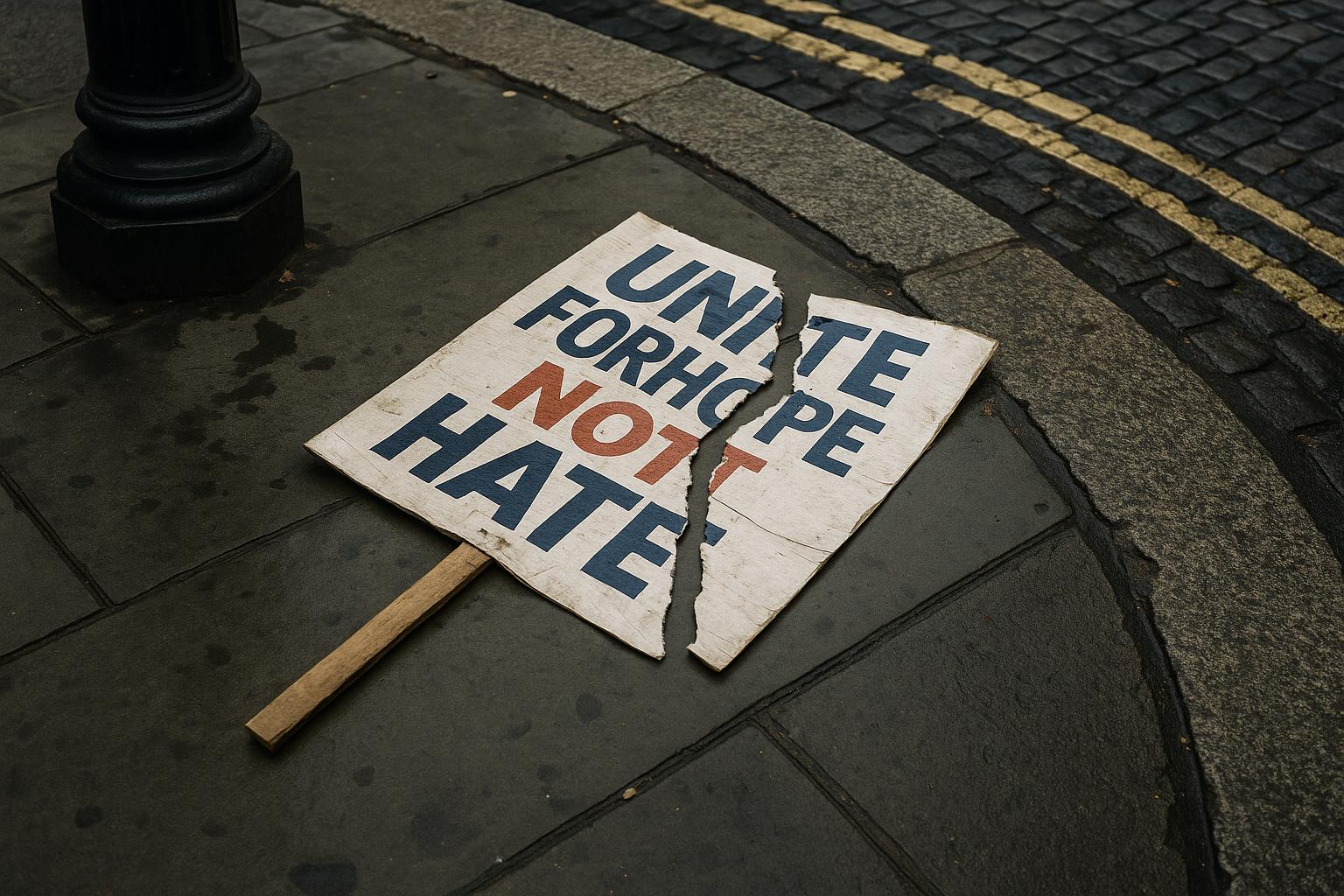
Last Saturday’s ‘Unite the Kingdom’ march in London, orchestrated by controversial activist Tommy Robinson—real name Stephen Yaxley-Lennon—drew an enormous crowd estimated between 110,000 and 150,000, marking one of the largest right-wing rallies seen in recent UK history. The demonstration, centered on anti-immigration sentiments and calls for greater free speech, saw participants waving national flags alongside banners that pandered to the far-right agenda, some even sporting MAGA hats. Elon Musk’s virtual appearance to critique British migration policies only added fuel to the fire, underscoring the global reach of this divisive event. Yet, the march spiraled into violence as certain attendees clashed with police, leading to injuries among officers—26 in total, with four seriously hurt—and roughly two dozen arrests on charges including violent disorder, affray, assault, and criminal damage.
This chaos unfolded against a backdrop of rising anxiety over immigration issues in the UK, reinforced by high-profile criminal cases involving asylum seekers that some in the march’s ranks exploited to stoke fear and resentment. The route, stretching from Waterloo Bridge to Whitehall, was lined with nationalist chants and placards that directly targeted the Labour government’s policies—an explicit message of dissent against Prime Minister Keir Starmer’s administration. Meanwhile, a smaller demonstration organized by the anti-racist group Stand Up to Racism drew roughly 5,000 counter-protesters, highlighting the deep social divisions exposed by this event. Law enforcement response was significant, with over 1,600 officers deployed, including personnel brought in from other forces, tasked with maintaining order and preventing escalation. Police leadership emphasized a measured approach, but the seriousness of the threat was clear as arrests were made for violent and disorderly conduct.
London Mayor Sadiq Khan’s swift condemnation of the march was pointed, condemning the far-right’s manipulation of British symbols to sow fear, hatred, and division—reminding many of the disturbing marches of the 1970s and 1980s. Khan articulated the fears felt by many Londoners, especially from diverse communities, who see these protests not as legitimate expression but as attempts to undermine social cohesion. He called for unity among all Britons to reject extremism and reaffirm core values of equality, inclusion, and mutual respect. Despite this, the response from far-right supporters was defiant. Reform UK figures, especially MP Lee Anderson, snapped back at Khan’s criticism, accusing the London mayor of misrepresenting the situation and dismissing his leadership in the capital as a failure. This spat underscores the deepening ideological chasm across the political spectrum concerning Britain’s future direction.
Prime Minister Keir Starmer’s remarks condemned the violent clashes and portrayed the rally as a battleground for “patriotic national renewal” versus “toxic division”—a framing that on the surface appears to align with efforts to unite the nation, but in reality, masks the government’s failure to address the genuine concerns around sovereignty, immigration, and social stability. Starmer’s emphasis on an alleged “criminal” leadership of the march and the need for the government to champion renewal conveniently sidesteps the growing frustration about unchecked foreign influence and a perceived lack of firm control over national borders and identity. Officials from the government reiterated their stance that fighting extremism and violent disorder is a priority—yet many critics argue their policies are failing to stem the tide of cultural and social discord, allowing small extremist elements to swell.
The ‘Unite the Kingdom’ march has cast a long shadow over Britain’s social and political landscape, illuminating the persistent threat of far-right activism that many opposition voices, including reform-minded groups, warn could undermine national unity. The international involvement—highlighted by figures like Elon Musk and European far-right politicians—demonstrates how these issues resonate beyond Britain’s shores, fueling a transnational far-right movement eager to exploit fears around immigration and national identity. The smaller counter-protest by Stand Up to Racism signals that resistance persists, but the real challenge remains the government’s inability—or unwillingness—to effectively confront and dismantle these divisive currents. As Britain faces ongoing challenges over immigration, social cohesion, and national sovereignty, Saturday’s events serve as a stark reminder: unless bold leadership is adopted to address these underlying issues, further upheaval looms on the horizon.
Source: Noah Wire Services