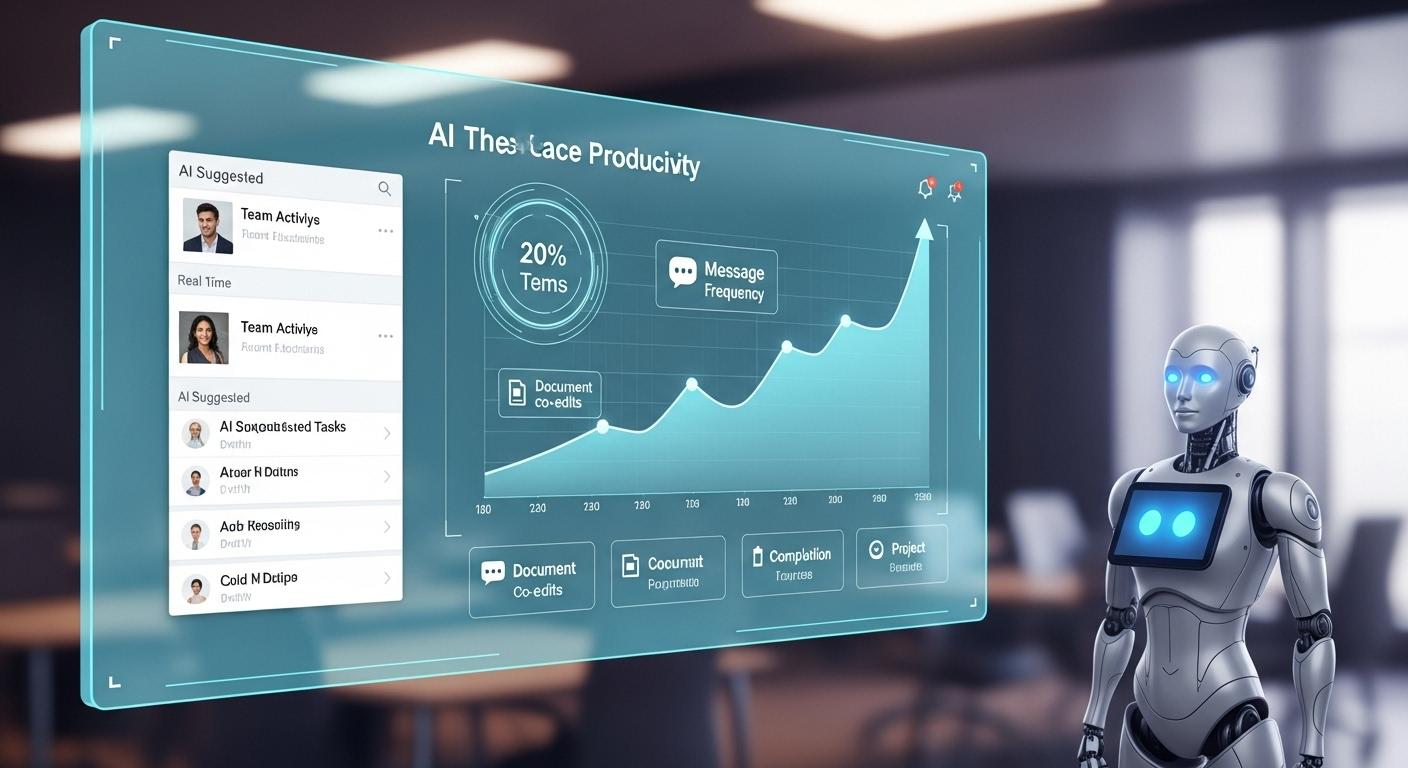
Microsoft Teams has significantly evolved from its original function as a simple platform for chatting, meetings, and file sharing into a sophisticated hub for workplace productivity, largely driven by rapid advancements in AI. This transformation is anchored by a growing array of intelligent features, including the high-profile Copilot, which collectively streamline workflows, enhance communication, and provide leaders with clearer metrics on business impact.
Companies embracing these AI capabilities report remarkable productivity gains. For instance, CDW, which deployed Copilot across routine workflows, experienced an 85 percent productivity increase and accomplished tasks 77 percent faster. This acceleration aligns with Microsoft’s reported pace of AI innovation, doubling its capabilities approximately every six months.
AI is now deeply integrated into the Teams experience. It automates meeting transcriptions and summaries, dynamically manages agendas and action items, and leverages bots for routine tasks such as scheduling and document retrieval. These quiet efficiencies are complemented by more visible breakthroughs like live translation and custom AI agents, which foster global collaboration and tailored workflows. KPMG, for example, used Copilot Studio and Azure AI Foundry to create “micro-agents” that reduced follow-up calls by 20 percent and significantly accelerated onboarding processes.
Meeting productivity is further enhanced through tools that suppress background noise, isolate voices, and adapt screen-sharing clarity, all fostering more focused sessions. Features like the Interpreter Agent facilitate seamless multi-language communication without disruption, turning meetings into actionable, accessible content via Intelligent Recaps. These enhancements are particularly valuable for hybrid and distributed teams, accelerating decision-making and reducing time lost in inefficient meetings.
At the core of this AI momentum is Copilot, a digital assistant designed to help before, during, and after meetings, as well as in broader team interactions and document management. Copilot drafts agendas, surfaces relevant files and CRM data for preparation, summarizes discussions in real time, assigns action items, and generates follow-up communications. Companies across sectors report tangible benefits, from improving CRM accuracy to reclaiming thousands of hours. Dentsu’s use of Copilot for drafting internal communications reportedly saves between 30 to 60 minutes per task for its 72,000 employees.
Beyond ready-made features, Microsoft Teams supports custom AI agents through Copilot Studio that organisations can tailor to specific needs. Recruitment firm Adaptic’s “Ask Dela” bot, which provides recruiters with live project rate data during candidate conversations, exemplifies how these bespoke agents can deliver competitive advantages. EchoStar’s deployment of a dozen intelligent production apps promises at least a 25 percent productivity uplift.
Microsoft also extends its AI ecosystem with a vibrant marketplace, partnering with firms like Twilio to bring conversational AI into customer service centres. Vodafone’s integration of AI-driven assistants within Teams helps expedite complex issue resolution and reduces staff repetitive workload. Analytics tied to AI usage are gaining traction as well; advanced dashboards in Teams Premium and third-party tools provide insights into engagement, call quality, and customer sentiment, enabling leaders to measure return on investment precisely. Zurich Insurance, for example, saves over 14,000 annual hours by embedding Copilot and Dynamics 365 into Teams, maintaining real-time sales and service data.
Security remains a paramount concern as Teams AI expands. Microsoft bolsters protection with AI-driven tools like Security Copilot, which aids rapid threat detection and incident response, and Azure AI’s tenant-bound models that ensure sensitive data remains secure within organisational boundaries. Additionally, Microsoft’s Entra suite incorporates AI to manage AI agents’ identity and lifecycle while filtering risks like prompt injection and shadow AI. Enterprise-grade governance enforces controls around data retention, access, and compliance, trusted by large firms such as EY for managing over 300,000 employees.
For organisations planning Microsoft Teams AI deployments, the key to success lies in strategic rollout with executive sponsorship, clear success metrics, and comprehensive user training. Budgets must balance licensing costs against anticipated productivity gains, with research from Forrester indicating potential ROI up to 832 percent and payback periods under six months. Piloting initiatives, measuring engagement through Power BI and Viva Insights, and establishing governance to prevent “shadow AI” use are recommended practices.
In sum, Microsoft Teams AI is no longer merely an add-on but a profound enabler of digital transformation. From automating administrative tasks to enhancing customer experiences and securing enterprise operations, the platform offers tools that drive measurable outcomes. For CIOs and business leaders, the challenge is now to harness these innovations wisely, embedding AI-driven workflows and analytics into the fabric of everyday work to unlock sustained organisational value.
📌 Reference Map:
- [1] (UC Today) - Paragraphs 1-11, 13-21
- [2] (Microsoft 365 Blog) - Paragraph 4
- [3] (IT Pro) - Paragraph 15
- [4] (Microsoft Security Blog) - Paragraph 15-16
- [5] (Microsoft Security Blog) - Paragraph 16
- [6] (Microsoft Security Blog) - Paragraph 16
- [7] (Microsoft Security Blog) - Paragraph 16
Source: Noah Wire Services