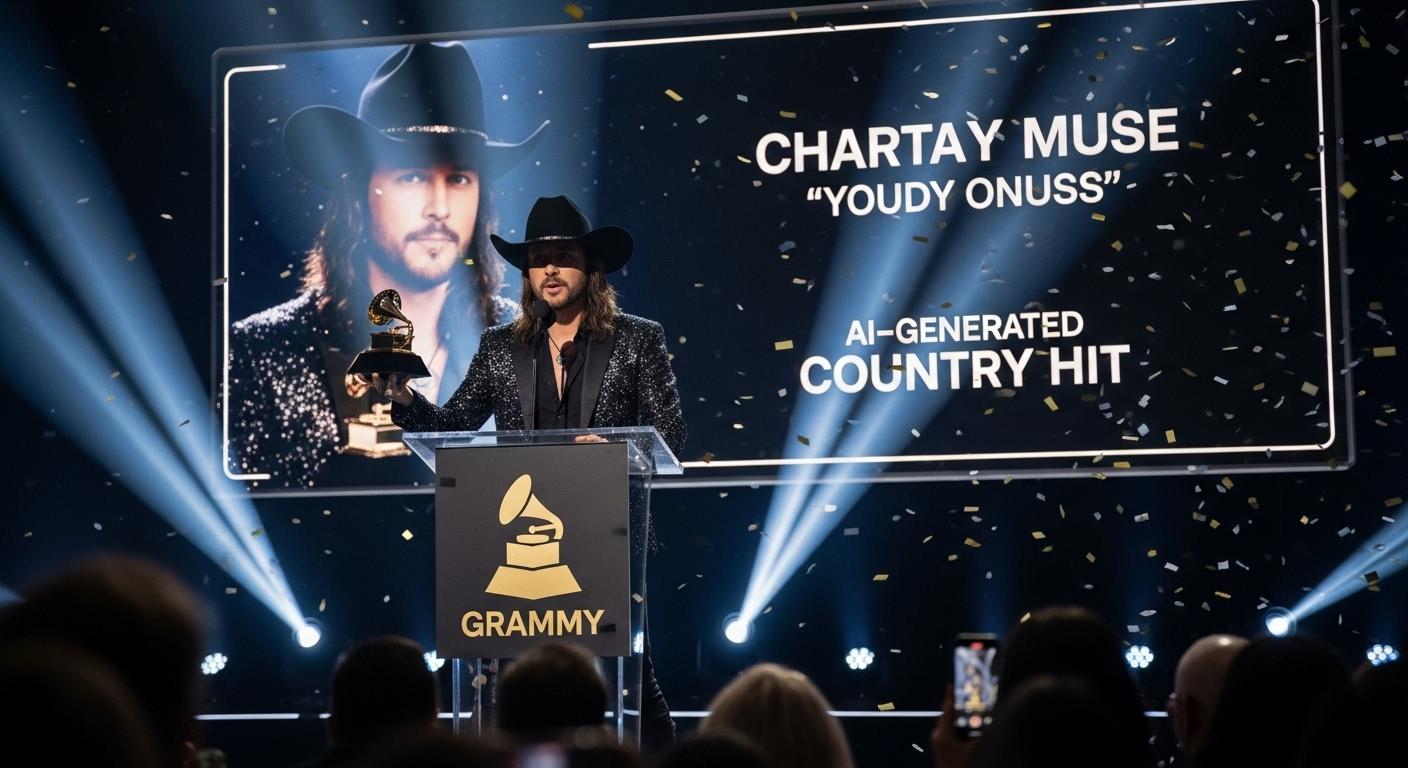
In a landmark moment for the music industry, an AI-generated country song titled "Walk My Walk" recently reached No. 1 on Billboard's Country Digital Song Sales chart, credited to a fictional artist named Breaking Rust. This digital avatar, portrayed as a rugged white country singer, was constructed using advanced generative AI technology. The song's vocal style and musical DNA, however, were closely modelled on Grammy-nominated Black country artist Blanco Brown, who was unaware of the track’s existence until after it topped the charts.
Blanco Brown, known for his 2019 country rap hit "The Git Up," expressed surprise and discomfort upon learning that the AI-created song borrowed his distinctive vocal phrasing and stylistic elements without his knowledge or consent. "I didn't even know about the song until people hit me up about it," Brown said. He highlighted the cultural and racial tension underscored by the track being fronted by a white AI avatar singing in a style deeply shaped by his Black musical heritage. "It’s a white AI man with a Black voice," Brown observed, adding that the song carried resonances of Negro spirituals. In response, Brown has recorded his own cover of the track and is preparing to release a reworked version with new lyrics and arrangement, using his experience to spark conversation about ownership, authorship, and ethics in AI-created music.
The song credits Aubierre Rivaldo Taylor as its songwriter and producer. Taylor is also linked to Defbeatsai, another AI music entity that emerged amid a surge of AI-generated country tracks on social media. Taylor's network connections trace back to Abraham Abushmais, a former collaborator of Brown’s, who co-wrote songs on Brown’s 2019 album and is believed to be the developer of Echo, an AI-powered music generator app. Brown has reported losing contact with Abushmais and was not informed about his involvement in the AI hit. The ethical ambiguity deepens as audiences grapple with AI's ability to reproduce an artist's voice and style without consent or compensation.
The phenomenon reflects a broader seismic shift within the music industry where generative AI is democratizing music creation but outpacing legal and ethical frameworks. Josh Antonuccio, director of the Ohio University Music Industry Summit, highlighted that AI has lowered barriers to music production, enabling anyone to generate songs by typing prompts relating to genre, vocal style, and lyrical themes. However, this democratization has occurred in the absence of clear ownership protections, with major record labels mounting lawsuits against AI platforms such as Suno and Udio for alleged copyright infringement due to unlicensed training on recorded music. Recently, some labels like Universal Music Group and Warner Music Group have shifted towards licensing agreements with AI platforms, aiming to safeguard artist rights and establish compensation systems. Still, industry observers stress that no comprehensive accountability mechanism exists yet.
This AI breakthrough raises critical questions about race, identity, and cultural appropriation in contemporary country music. Blanco Brown, as a pioneering Black artist in a traditionally white-dominated genre, noted that innovations originating from Black musicians have historically been under-recognised or reattributed in Nashville. The AI rendition of his vocal tone packaged with a white persona echoes these systemic patterns. Music scholars emphasise the artistic and performative elements that AI cannot replicate, the spontaneous energy and connection between artist and audience. Shelton "Shelly" Berg, dean of the University of Miami's Frost School of Music, remarked that while AI-generated tracks may sound polished, they lack the intangible human element that real performers convey.
Despite the unsettling implications, Brown is not antagonistic toward AI technology itself. Rather, he views this moment as a call to confront how creative value is defined and protected in an era where technology can so easily appropriate human artistry. "Real artists are always going to prevail," Brown reflected. "Purpose lives where greed can't." His stance underscores a nuanced coexistence with AI: acknowledging its creative potential while demanding respect for the rights and identities of the living artists it imitates.
As AI-generated music surges from internet novelty to commercial reality, the industry stands at a crossroads. Breaking Rust, the virtual cowboy, has already accumulated millions of streams and a substantial following on platforms like Spotify and TikTok, signaling substantial market appetite. Yet, the case of "Walk My Walk" exposes unresolved tensions that will shape the future of music creation, intellectual property, and cultural integrity in the digital age.
📌 Reference Map:
- [1] The Independent - Paragraphs 1-12, 14-18, 20-24
- [2] AP News - Paragraphs 2-4, 9-11
- [3] NME - Paragraph 7
- [4] New York Sun - Paragraph 8
- [5] American Country Countdown - Paragraph 8
- [6] Wikipedia - Paragraph 8
- [7] Washington Post - Paragraphs 2-4, 9-11
Source: Noah Wire Services