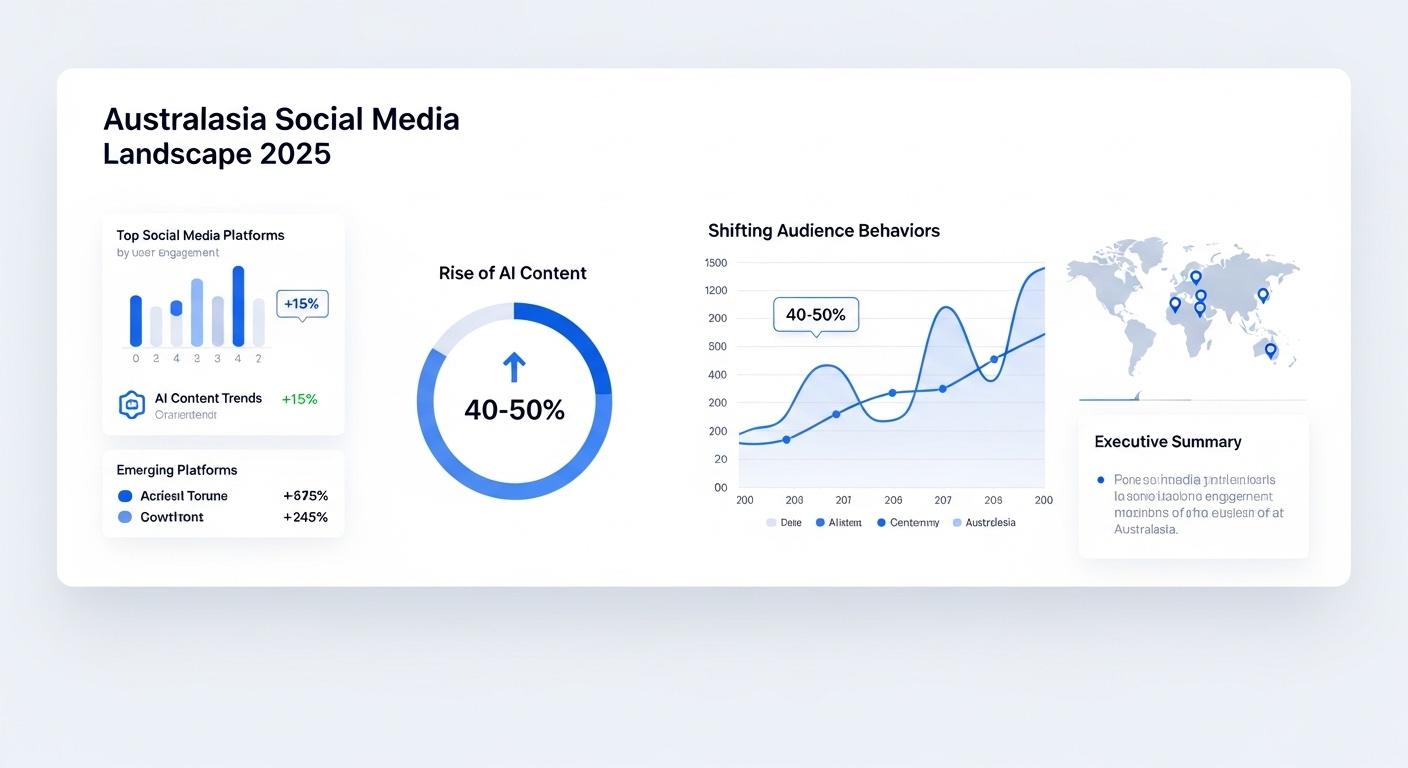
DoubleVerify’s newly released 2025 Global Insights report, based on surveys of 22,000 consumers and 1,970 marketing and advertising decision‑makers worldwide, warns that the growing dominance of social platforms , the so‑called “walled gardens” , is reshaping where audiences spend time and how marketers must measure and protect media quality. According to the announcement, the study highlights rising social media engagement, generational differences in news habits, increasing AI‑generated content, and persistent concerns among marketers about reach, measurement and brand suitability. [1][2][3]
Regionally, the Australia and New Zealand market diverges notably from broader global trends: while 90% of Australians regularly engage with social content, social platforms exert comparatively limited influence on purchase behaviour. The report finds only 18% of Australian consumers research products on social media and just 19% made a purchase through a social platform in the past year, with retail and brand websites remaining the primary e‑commerce destinations. Industry figures also show Australians still rely heavily on traditional news sources , TV and news websites , more than social channels. [1]
Those ANZ marketer concerns are tangible: the report says 72% of ANZ marketers worry about brand suitability when advertising on social platforms, and 34% cite content alignment and cross‑channel campaign management as a top challenge behind reach and keeping pace with content trends. “But measurement alone isn’t enough – especially in a market like Australia where consumers remain slower to adopt social media for shopping and brand discovery. To maximise media performance and ensure content quality, advertisers need to complement post‑campaign insights with real‑time optimisation and proactive brand suitability controls – powered by automation – to drive outcomes before, during and after every impression, not just after the fact,” said Conrad Tallariti, managing director, APAC, DoubleVerify, in the company announcement. [1]
Globally the report underlines why marketers continue to prioritise social inventory despite those risks: 28% of consumers expect to spend more time on social media over the next 12 months, younger audiences increasingly turn to digitally native video and social platforms for news, and 54% of consumers say influencers shape their purchasing decisions. At the same time, 57% of consumers report encountering AI‑generated content on social , a surge that creates both operational opportunities and suitability headaches for advertisers. [2][3]
DoubleVerify frames these shifts as both a commercial opportunity and a call for greater transparency and third‑party measurement. “The appeal of advertising across social media platforms lies in their ability to blend entertainment, community and personalised experiences across both user‑generated content and ads,” said Mark Zagorski, CEO of DoubleVerify, in the announcement, adding that advertisers increasingly demand accountability and campaign effectiveness as investments rise. The study also identifies reach limitations driven by algorithmic personalisation, with nearly half of social advertisers naming audience reach as their biggest hurdle, reinforcing calls for independent measurement. [1][3]
The report also flags rapid AI adoption within marketing operations: around nine in ten marketers are using or plan to use third‑party AI or automated bidding tools to improve campaign performance and reduce operational burden, particularly in programmatic buying, activation and creative optimisation. DoubleVerify presents AI as a lever for efficiency and outcome‑based campaigns, while also acknowledging it intensifies the need for controls that safeguard brand suitability and media quality. [4][5]
For advertisers weighing scale against risk, the takeaway is clear in the report and accompanying company statements: walled gardens can deliver reach and performance, but sustainable value depends on transparency, measurement and proactive controls that operate in real time. According to the announcement, DoubleVerify’s response includes product innovations aimed at maximising media quality across video‑centric platforms and giving marketers tools to verify, optimise and prove campaign outcomes. [1][5]
##Reference Map:
- [1] (Mumbrella / DoubleVerify announcement) - Paragraph 1, Paragraph 2, Paragraph 3, Paragraph 5, Paragraph 7
- [2] (DoubleVerify report landing page) - Paragraph 1, Paragraph 4
- [3] (DoubleVerify newsroom release) - Paragraph 1, Paragraph 4, Paragraph 5
- [4] (DoubleVerify AI report/newsroom) - Paragraph 6
- [5] (DoubleVerify Global Insights series) - Paragraph 6, Paragraph 7
Source: Noah Wire Services