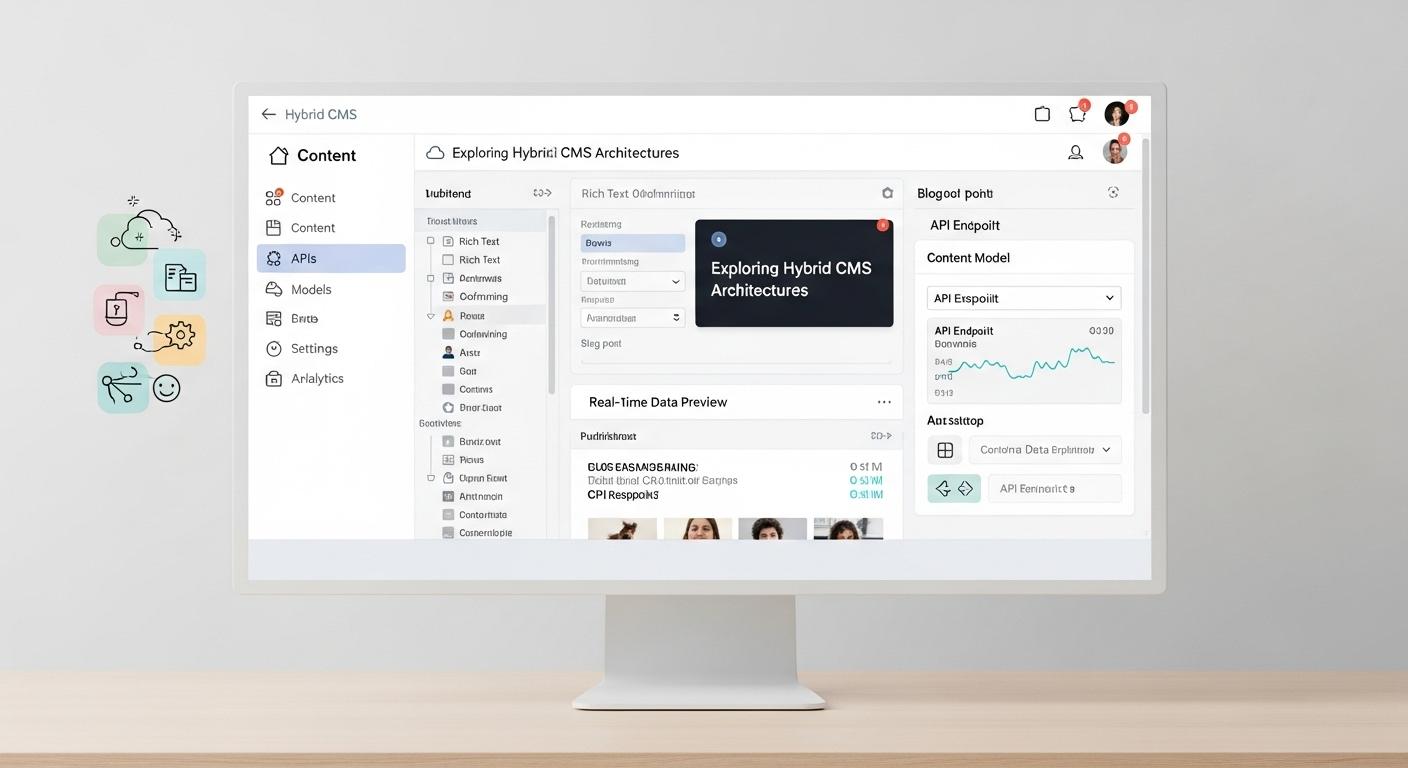
The evolution of content management in 2026 has pushed enterprises to seek platforms that combine speed, security and omnichannel reach; according to the original report, Kentico CMS positions itself as a hybrid solution that blends traditional editorial tooling with headless flexibility to address shortcomings observed in WordPress and Magento. [1][2]
Businesses are demanding faster time-to-market, consistent global experiences and less maintenance overhead; industry data shows many teams achieve improved productivity on newer CMS platforms and want unified multisite, multilingual and commerce-capable systems rather than chains of plugins and bespoke integrations. [1][2][4]
WordPress remains ubiquitous for simple sites but, as the lead article notes, its reliance on third‑party extensions creates persistent security and performance risks , with most breaches traced to outdated plugins , and scaling multi‑brand, multi‑language deployments often becomes costly and operationally complex. [1][4]
Magento continues to deliver robust commerce capabilities, yet merchants frequently report that its experience layer and content tooling lag behind marketing needs; the original report highlights how slow front‑end updates, paid personalization add‑ons and theme quality can restrict marketing agility. [1]
A hybrid architecture answers these trade‑offs by offering a visual, componentised page editor alongside API‑first delivery: reusable content modules, headless APIs and low‑code/no‑code builders let marketing teams publish quickly while developers retain control of integrations and front‑end performance. Kentico’s composable, cloud‑native approach is presented as a practical example of this model. [1][2][5]
According to the vendor materials, Kentico’s evergreen SaaS model, built‑in security controls and certified compliance posture (including ISO‑level controls and SOC‑style assurances in the vendor descriptions) are designed to reduce the patchwork of third‑party plugins and the risk surface that accompanies them. [3][2]
In practice, the platform is framed as a content hub that can sit alongside existing WordPress or Magento front‑ends , reducing plugin dependency for WordPress and layering content and personalisation onto Magento stores , while offering native connectors for CRM, analytics and automation to streamline workflows. [1][5][7]
The lead report and supporting product information emphasise measurable operational benefits: modular design and automation that can cut delivery time, centralised governance for consistent global branding, and an integration ecosystem to avoid costly replatforming , all pitched as lowering total cost of ownership for complex enterprise landscapes. [1][4][2]
Organisations considering migration are advised to treat it as an evolution rather than a rebuild: the recommended framework includes asset audits, taxonomy mapping, SEO‑safe redirects and pilot projects, alongside training to close the headless adoption gap , a pragmatic route to retain SEO equity and business continuity. [1]
📌 Reference Map:
##Reference Map:
- [1] (rswebsols.com) - Paragraph 1, Paragraph 3, Paragraph 4, Paragraph 5, Paragraph 7, Paragraph 8, Paragraph 9
- [2] (kentico.com) - Paragraph 1, Paragraph 2, Paragraph 5, Paragraph 6, Paragraph 8
- [3] (kentico.com) - Paragraph 6
- [4] (stackshare.io) - Paragraph 2, Paragraph 3, Paragraph 8
- [5] (kentico.com) - Paragraph 5, Paragraph 7
- [7] (kentico.com) - Paragraph 7
Source: Noah Wire Services