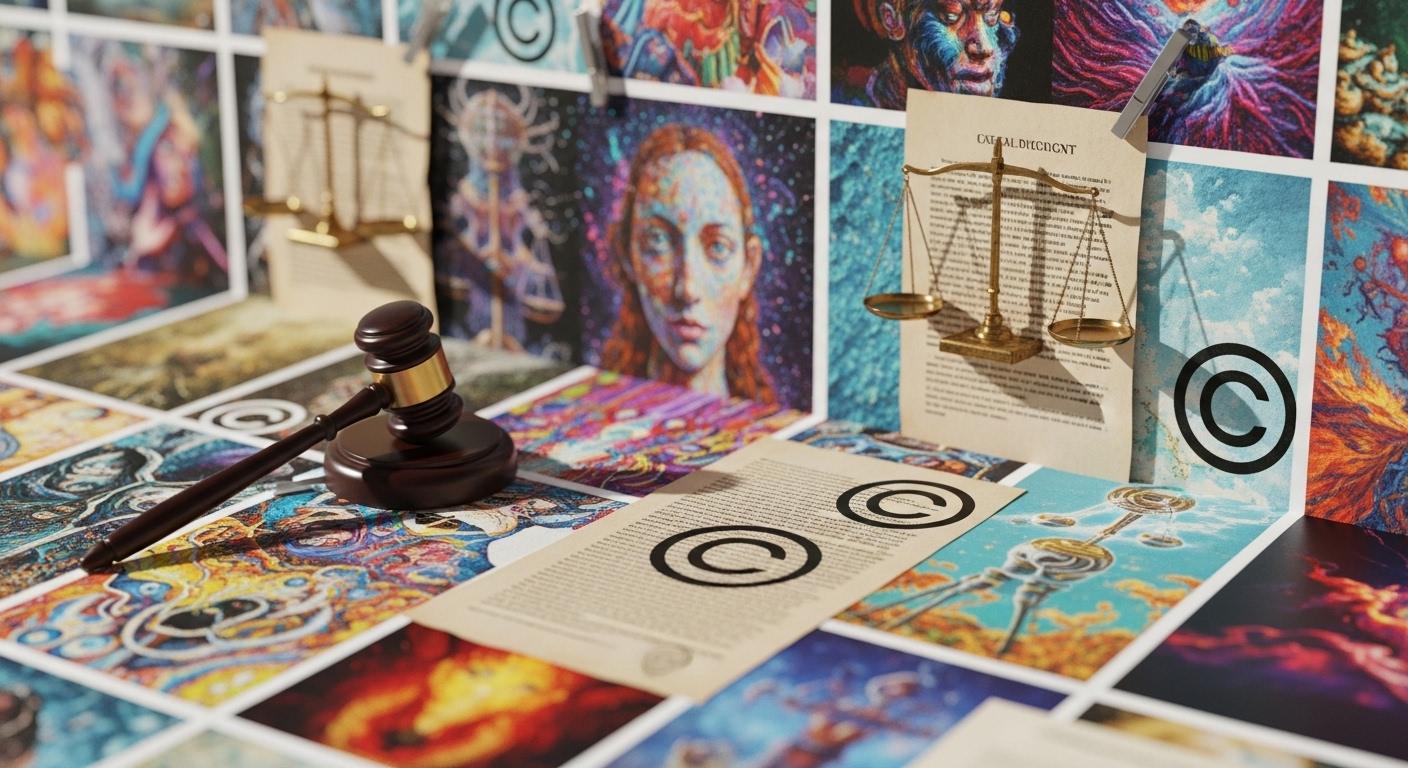
The appeal by Ross Intelligence of a landmark copyright ruling against it has taken on heightened significance because it raises two distinct legal questions that could shape how generative AI products are developed and regulated in the United States. At issue is not only whether copying large volumes of copyrighted legal materials to train an AI model can qualify as fair use, but also whether the particular Westlaw materials at the centre of Thomson Reuters' suit possess sufficient original expression to be protected by copyright. According to the original report, the case could yield the first US appellate ruling testing fair use in the context of AI training. [1][2]
The dispute dates back to a 2020 complaint by Thomson Reuters, which accused Ross of using Westlaw’s editorial content , including curated headnotes and other editorial enhancements , to build a competing AI legal research product. In a February 11, 2025 decision, Judge Stephanos Bibas granted summary judgment to Thomson Reuters on direct copyright infringement and rejected Ross’s fair use defence, finding that Westlaw’s editorial material is protected by copyright and that Ross’s use was not fair. Industry coverage noted the decision as the first major US ruling addressing whether training AI on copyrighted material can be fair use. [2][6][3]
Judge Bibas’s ruling was blunt. "None of Ross’s possible defenses holds water. I reject them all," he wrote, concluding that Ross had used the materials to create a market substitute and thus weighed heavily against fair use. That language has been widely cited by commentators as signalling a potentially restrictive approach to fair use in the AI context, particularly where the defendant develops a competing product. The company said in a statement that Westlaw’s editorial content created and maintained by its attorney editors is protected and cannot be used without consent. [6][7][2]
Ross had comparatively few public defenders. The litigation's toll on the startup was substantial: Ross Intelligence effectively wound down operations in 2021, citing litigation costs and business pressures. Observers have contrasted Ross’s fate with better-capitalised AI companies that can sustain prolonged litigation, noting that the ruling could have broader chilling effects on smaller innovator firms and on the strategies used to source training data. Analysts warn that, if followed elsewhere, the decision would complicate generative AI companies' reliance on existing case law supporting broader fair use arguments. [7][6]
Legal commentators and practitioners point to several consequences the appeal could clarify. First, appellate guidance could refine how courts treat the transformative nature of AI training and whether algorithmic ingestion and internalisation of copyrighted expression qualifies as a non-infringing transformation. Second, the appeal may probe the threshold for originality in editorialised legal materials , whether headnotes and editorial enhancements cross the line from factual compilation into protectable expression. Government figures and industry data are already being trawled by firms preparing for potential regulatory and litigation changes. [1][4][6]
The appeal arrives amid ongoing, high-profile litigation involving other AI developers, including cases that consider the same fair use questions for general-purpose models. Reuters and other outlets have observed that the Ross decision has been cited in broader disputes involving companies such as OpenAI, Microsoft and Meta, making the appellate outcome potentially influential beyond legal research products. At the same time, observers note that outcomes will likely vary by the nature of the plaintiff’s work, the defendant’s conduct and the market dynamics at issue. [2][7]
Whatever the appellate court decides, the case underscores an intensifying legal calculus for AI developers: growing pressure to secure licences for curated or editorialised data sets, greater scrutiny of training processes, and a likely increase in transaction costs for firms seeking to mitigate copyright risk. The company claims that its editorial content is protectable and that unauthorised use undermines investment in curated legal research; conversely, proponents of broader fair use warn that a narrow ruling could constrain innovation across the AI sector. The appellate opinion will be watched closely for how it reconciles those competing policy concerns. [1][2][7]
📌 Reference Map:
##Reference Map:
- [1] (MLex) - Paragraph 1, Paragraph 5, Paragraph 7
- [2] (Reuters) - Paragraph 2, Paragraph 3, Paragraph 6, Paragraph 7
- [3] (AP News) - Paragraph 2
- [4] (FindLaw) - Paragraph 5
- [6] (Drinker Biddle/Womble summary report) - Paragraph 2, Paragraph 4, Paragraph 5
- [7] (Wired) - Paragraph 3, Paragraph 4, Paragraph 6, Paragraph 7
Source: Noah Wire Services