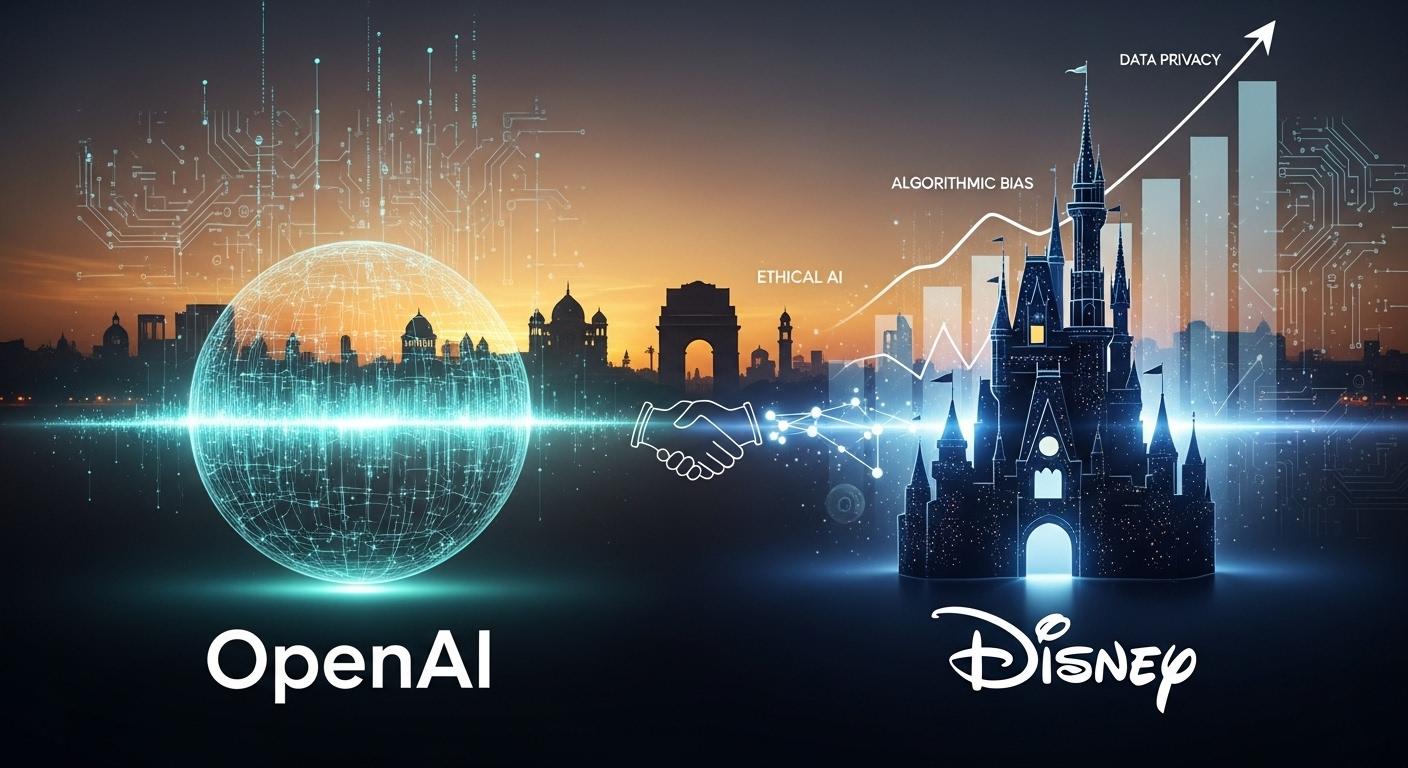
The pace of change in artificial intelligence is forcing governments, corporations and creative industries to recalibrate , not necessarily by rushing to draft new rules, but by repurposing existing frameworks and striking strategic commercial partnerships that reshape production and monetisation.
According to the original report, India's electronics and information technology secretary S Krishnan signalled a deliberate reluctance to create bespoke AI law "unless absolutely necessary", favouring instead the application of the Digital Personal Data Protection Act and other existing statutes to meet near‑term challenges. The DPDP Act was passed by parliament in August 2023 and, together with subordinate rules notified in November 2025, now provides a statutory framework that the government regards as the primary tool for addressing data‑centric risks posed by AI. Government officials are therefore signalling regulatory caution: adapting current law and enforcement mechanisms before proposing new, technology‑specific legislation.
At the same time, major media and entertainment firms are moving swiftly to embed AI into creative workflows. Walt Disney has announced a three‑year commercial partnership and a $1 billion investment in OpenAI that permits the firm to incorporate more than 200 Disney characters into OpenAI’s Sora AI video generator. The arrangement is designed to expand Disney's storytelling toolkit while attempting to balance commercial opportunity with intellectual‑property protections and creative safeguards.
The Disney‑OpenAI deal includes a one‑year window of exclusivity for OpenAI before Disney can licence those characters more broadly. The agreement, which excludes use of talent likenesses or voices and prohibits OpenAI from using Disney IP to train foundational models, also gives Disney internal access to ChatGPT for productivity purposes and includes warrants for additional OpenAI equity. According to reporting on the transaction, the parties have established governance mechanisms , including a joint steering committee , to oversee permitted uses and guard against misuse of characters and franchises.
Investors and industry analysts have reacted to the tie‑up with a mix of optimism and scepticism. Market commentary noted a rise in Disney's share price following the announcement, while modelling by industry analysts suggests the partnership could materially lower certain media production costs , estimates put potential reductions in content capex in the order of 10%–30% and suggest headline savings that could amount to as much as $1.6 billion annually at scale. At the same time, commentators caution that the short exclusivity period and the company’s careful intellectual‑property controls may limit immediate new revenue streams.
Those commercial shifts sit alongside broader changes to how creative services are bought and priced. Industry reporting shows a movement away from time‑based agency billing toward outcome and signal‑driven spending: privacy rules and the decline of third‑party cookies have pushed advertisers and platforms into black‑box ecosystems, increasing the value of first‑party data, creative strategy and proprietary signal‑building. For media owners and agencies alike, the remaining levers are creative differentiation and control over data , objectives that help explain both cautious regulatory postures and the rush to secure strategic AI partnerships.
##Reference Map:
- [1] (Storyboard18) - Paragraph 1, Paragraph 2, Paragraph 6
- [6] (Wikipedia , Digital Personal Data Protection Act, 2023) - Paragraph 2
- [7] (Wikipedia , Digital Personal Data Protection Rules, 2025) - Paragraph 2
- [2] (Reuters) - Paragraph 3, Paragraph 4
- [3] (Forbes) - Paragraph 3, Paragraph 4
- [4] (Forbes) - Paragraph 5
- [5] (Fortune) - Paragraph 5
Source: Noah Wire Services