In 2025 Demand Gen Report polled its readership across four surveys to take stock of how B2B marketing is changing: a broad demand-generation benchmark, an account-based marketing (ABM) study, a pulse on AI adoption, and an events-focused survey. Together the results sketch an industry recalibrating budgets, experimenting with generative AI and recommitting to in-person engagement as it seeks measurable connections between marketing activity and revenue. [1]
The 2025 Demand Generation Benchmark Survey found modest budget optimism and a stronger business focus, with 35% of respondents reporting slight budget increases and 28% projecting revenue growth of 11%–20%. Case studies emerged as the preferred content format for 57% of marketers,while only 29% said they have a fully integrated approach to brand and demand marketing,suggesting many teams are still working to unify strategy and execution. According to the report, these shifts reflect a trend toward tying marketing investments more directly to sales outcomes. [1]
Demand Gen Report’s ABM Benchmark showed ABM moving into the mainstream:71% of practitioners now use an ABM strategy and 40% integrate ABM with demand generation to build a more efficient revenue engine. The survey found email (92%) and in-person events (72%) as the most effective channels and highlighted case studies and e-books as top-performing content. At the same time, proving ROI (47%), aligning sales and marketing (43%) and scaling programmes (40%) remain the principal obstacles ABM teams must overcome. [1][2]
The ABM findings echo broader industry research showing rapid ABM adoption but offer a more cautious picture on penetration and performance. According to the 2025 State of ABM report, advanced teams are using AI and hyper-personalisation to break through silos and improve engagement; other market commentary has placed ABM adoption even higher,with one June 2025 article reporting 90% implementation and widespread expectations of increased ABM budgets and team expansion. These differences underscore variation by sample,definition and maturity across surveys. [3][4]
Demand Gen Report’s AI pulse painted AI as a powerful tool for ideation and pre-production work, 53% use AI for market research and many respondents described generative AI as a “starting point” for content concepting. Yet adoption is uneven for tactical uses:only 21% use AI for social media management and just 32% use it for personalisation,pointing to a gap between AI’s promise and its current effectiveness. The ABM survey similarly found 45% see AI’s promise for personalisation while nearly 70% judge its present effectiveness limited. [1][2]
External analyses reinforce both the opportunity and the caution. Industry reporting and trend studies note that GenAI is accelerating content creation and event marketing but emphasise that human oversight and cross-functional alignment remain critical to realise personalisation at scale. Other demand-generation reviews highlight measurable gains from ABM and AI-driven programmes, including reported uplifts in contract value and lead conversion, but also warn that technology without process and data alignment will underdeliver. [6][5]
On events, Demand Gen Report’s “Event Pulse Check” revealed resilience in in-person programmes: nearly 75% said event budgets stayed flat or increased,with 40% reporting increases, and 43% planned to attend more events in 2025. Attendees prioritised speaker quality and relevant sessions,while 31% judged conference offerings to be improving. This reinforces the surveys’ wider theme that high-quality, content-rich in-person experiences remain a cornerstone of effective B2B engagement. [1]
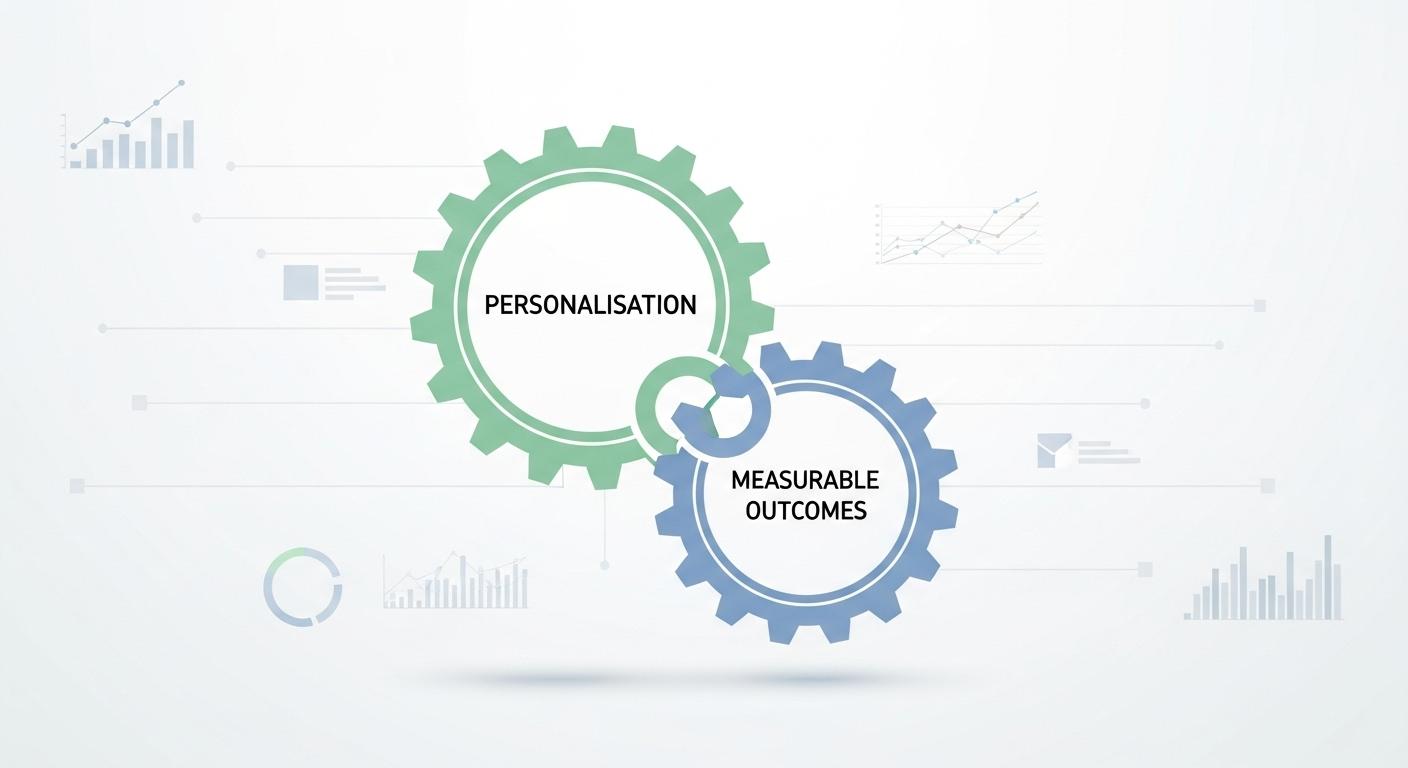
Taken together the surveys point to a pragmatic moment for B2B marketing in 2025:teams are investing selectively,leaning into ABM and events that drive measurable outcomes,and experimenting with AI where it reduces friction and speeds ideation. The persistent challenges, proving ROI, aligning sales and marketing and operationalising AI-led personalisation, suggest that returns will accrue fastest to organisations that pair new tools with disciplined process,better data and stronger cross-functional collaboration. [1][2][3][6]
📌 Reference Map:
##Reference Map:
- [1] (Demand Gen Report) - Paragraph 1, Paragraph 2, Paragraph 3, Paragraph 5, Paragraph 7, Paragraph 8
- [2] (Demand Gen Report ABM Benchmark) - Paragraph 3, Paragraph 5, Paragraph 8
- [3] (Demandbase) - Paragraph 4, Paragraph 8
- [4] (Digital Commerce 360) - Paragraph 4
- [5] (Accio Demand Gen Trends) - Paragraph 6
- [6] (Accio Demand Generation Trends) - Paragraph 6, Paragraph 8
Source: Noah Wire Services