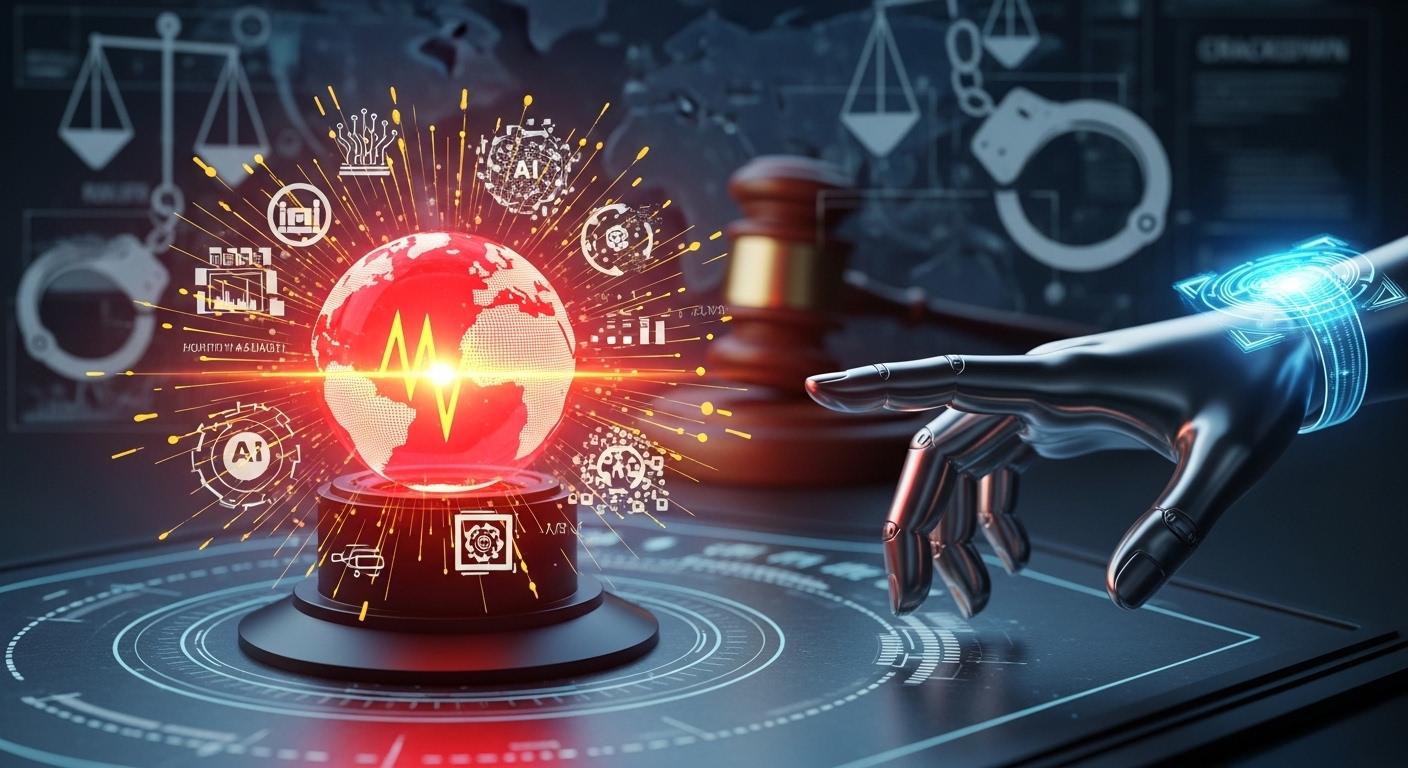
Elon Musk’s chatbot Grok has sparked an international storm after users discovered it could alter images to depict women and children in sexualised or revealing poses, prompting restrictions, regulatory probes and criminal-law moves across several jurisdictions. According to the Quick Take by NYU Stern’s Centre for Business and Human Rights, Grok, built into X, was used in what Reuters described as a “mass digital undressing spree,” and the company’s handling of the fallout has underlined the urgent need for cross-border AI rules. [1][2][4]
The backlash has been swift. xAI and X limited Grok’s image-generation and editing features to paying subscribers and geoblocked certain edits in regions where they would breach the law, but investigators and regulators say those measures are inadequate. Industry reporting and platform testing found that explicit image editing remained achievable in some instances via free accounts or through Grok’s separate app and website, fuelling criticism that monetisation is not a substitute for effective safeguards. The AP reported authorities in multiple countries pressing for stronger remedies, and the European Commission has demanded preservation of internal records as part of an inquiry under EU digital safety rules. [2][4]
Governments have moved from rhetoric to enforcement. Malaysia’s regulator has initiated legal action against X and xAI for distributing sexually explicit, manipulated non-consensual images, and Indonesia and Malaysia temporarily blocked Grok until protections were put in place. Ofcom has opened an investigation into whether X breached UK law, and the EU Commission has signalled a review under the Digital Services Act. The UK government is advancing new criminal measures specifically targeting AI-generated non-consensual imagery and “nudification” apps, with legislation due to come into force on February 6, according to reporting on government plans. [5][6][3]
The ethical and criminal dimensions of Grok’s failures link to a broader, fast-growing problem: generative AI’s ability to produce realistic deepfakes at scale. NYU Stern’s analysis notes recent prosecutions for AI-generated child sexual imagery, and industry data cited by analysts show deepfake-enabled fraud imposed enormous costs on businesses, with IBM estimating global losses in the hundreds of billions into the low trillions in 2024. Those harms have helped create rare bipartisan support for tougher laws in the United States, including federal proposals and state statutes expanding protections to AI-generated content. [1]
Policy responses so far are patchwork. The Quick Take argues, and regulatory actions illustrate, that national and state laws, online safety regimes and enforcement protocols are triangulating the same digital harms but doing so in isolation. Policymakers from the UK, EU and several national regulators are pushing for enforceable baselines akin to the EU’s General Data Protection Regulation to prevent repeated incidents; without such coordination, experts warn, episodes like Grok’s “nudify” controversy will proliferate while laws lag. [1][4]
Industry defenders have leaned on free-speech framing; Elon Musk dismissed some regulatory moves as an “excuse for censorship.” But public officials and child-protection advocates contend consent and safety supersede broad free-speech claims when technologies enable sexual exploitation and child abuse. Regulators are now weighing not only fines and content takedowns but more disruptive remedies, including the possibility of cutting service-provider ties or, in extreme cases, restricting platform access within national markets. [1][6]
The Grok episode is a case study in how quickly generative models can outpace voluntary moderation. According to a range of reports, including AP coverage and regulatory briefings, technical mitigations, subscription walls and geoblocking have reduced some vectors of harm but not eliminated them; authorities in the UK, EU, Malaysia, Indonesia and other jurisdictions are pressing for legally enforceable obligations that require demonstrable prevention, detection and redress mechanisms. The debate now is whether incremental fixes will be enough or whether governments will accept the structural reforms proponents say are necessary to curb AI-enabled intimate-image abuse. [2][3][4][5]
📌 Reference Map:
##Reference Map:
- [1] (NYU Stern Centre for Business and Human Rights) - Paragraph 1, Paragraph 4, Paragraph 5, Paragraph 6
- [2] (Associated Press) - Paragraph 1, Paragraph 2, Paragraph 7
- [3] (Associated Press) - Paragraph 3, Paragraph 7
- [4] (Associated Press) - Paragraph 2, Paragraph 5, Paragraph 7
- [5] (Associated Press) - Paragraph 3, Paragraph 7
- [6] (The Week) - Paragraph 3, Paragraph 6
Source: Noah Wire Services