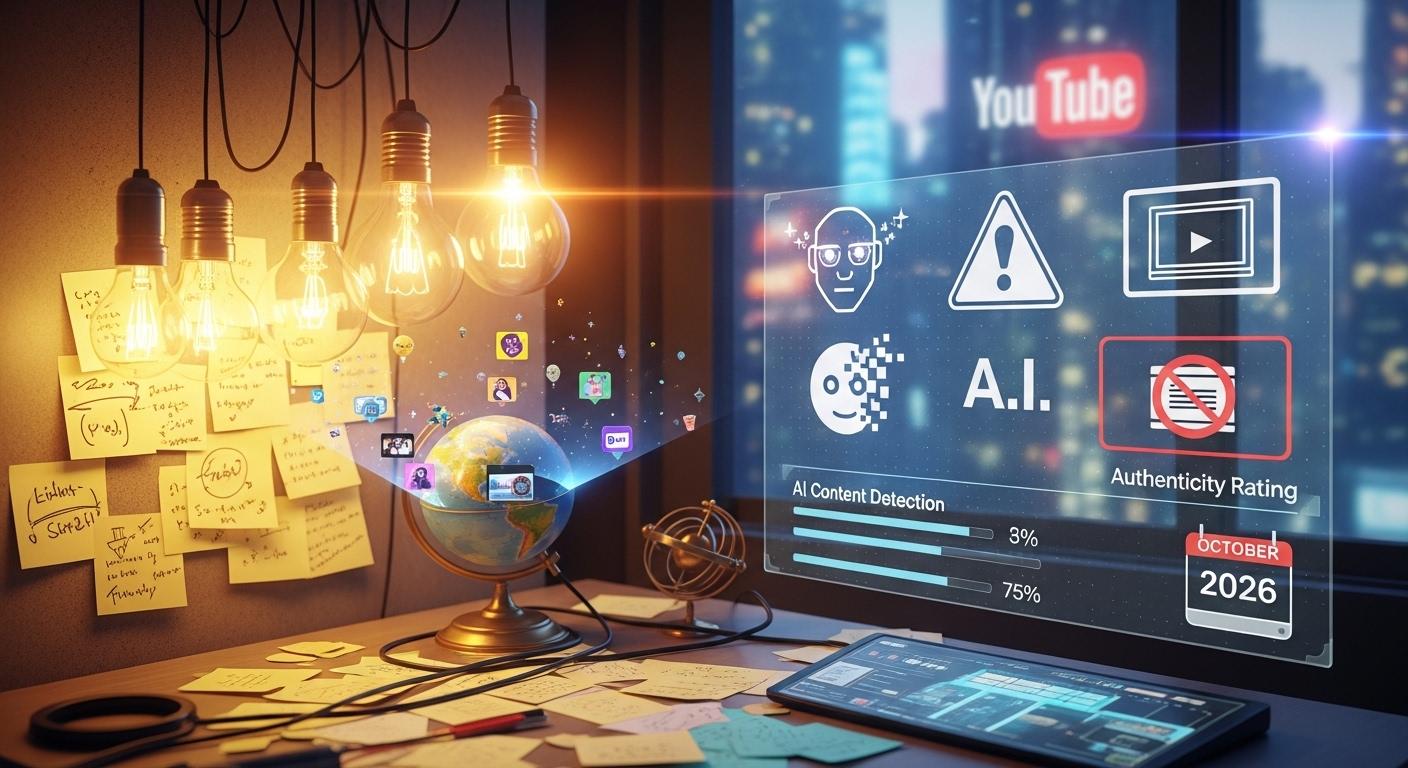
YouTube is preparing a broad expansion of generative artificial intelligence tools in 2026 while simultaneously promising tougher enforcement against low-quality synthetic content, a balance that will shape how creators make money and how viewers experience the platform. According to Decrypt, the company plans to roll out new creation features including AI-generated Shorts that can use creators’ likenesses and expanded AI-assisted music tools while strengthening measures to curb what it calls “AI Slop”. (Sources: Decrypt, TechCrunch)
In a letter to the community, YouTube chief executive Neal Mohan framed the roadmap around preserving the “high-quality viewing experience” as the company scales AI across its services. “As an open platform, we allow for a broad range of free expression while ensuring YouTube remains a place where people feel good spending their time,” he wrote, and added that the firm is building on systems that have been “very successful in combatting spam and clickbait, and reducing the spread of low-quality, repetitive content”. (Sources: Decrypt, TechCrunch)
That rhetoric comes with concrete policy shifts. YouTube says it will strengthen protections around likeness and identity by extending its Content ID framework so creators and artists have more control over how their faces and voices are used in AI-generated content. The company also reiterated that “Because labels aren't always enough, we remove any harmful synthetic media that violates our Community Guidelines,” and pledged support for legislation such as the NO FAKES Act to bolster legal protections. (Sources: Decrypt, TechRadar, TechCrunch)
At the same time YouTube is accelerating the rollout of AI tools intended to assist creators. Planned features include tools to generate Shorts using AI models of a creator’s own likeness and expanded auto-dubbing and translation services that aim to help videos reach broader international audiences with less manual effort. The company presents these tools as creative aids rather than replacements for human creators. (Sources: Decrypt, TechCrunch)
YouTube’s wider AI push also embraces content-safety tech beyond detection and takedown. The company is testing AI-driven age verification systems in the U.S. that estimate users’ ages from account activity to apply protections for minors, a step that follows similar pilots in the UK. The initiative has prompted substantial user backlash and privacy concerns, with critics saying the measures resemble mass surveillance and raising questions about how age-verification data is collected and stored. (Sources: AP, TechRadar)
To give creators more direct control, YouTube has begun piloting a detection tool that lets creators flag and scan videos for facial or voice matches against opt-in biometric samples. Initially available to selected members of the YouTube Partner Program, the tool operates similarly to Content ID but focuses on biometric identity, enabling creators to report, request takedowns, or file copyright claims when matches are found. The system requires creators to submit a government-issued ID and a video sample to train the matcher, a trade-off that some observers see as necessary while others warn about privacy implications. (Sources: TechRadar, TechCrunch, Decrypt)
The company’s push comes amid growing concern inside and outside the creator economy about “mass-produced” or repetitive AI-generated content that can dilute platform quality and advertising value. YouTube has clarified that longstanding monetisation rules already exclude spammy, inauthentic material, but creators remain anxious that the proliferation of easy-to-produce AI content will complicate discovery and revenues. YouTube executives argue better detection, clearer labels, and stronger creator controls will preserve the incentives for original work. (Sources: TechCrunch, Decrypt, TechRadar)
The path ahead is therefore one of calibrated expansion: more powerful tools for creators, tighter controls on misuse, and new safety systems aimed at vulnerable users. Industry data and platform pilots show the technical building blocks are arriving quickly, but public scepticism and regulatory scrutiny make execution as important as invention. As Mohan put it, “AI will act as a bridge between curiosity and understanding,” and YouTube’s stated challenge in 2026 is to ensure that bridge does not erode the creative and civic value of the platform. (Sources: Decrypt, TechCrunch, AP)
Source Reference Map
Inspired by headline at: [1]
Sources by paragraph:
- Paragraph 1: [2], [6]
- Paragraph 2: [2], [6]
- Paragraph 3: [2], [4], [6]
- Paragraph 4: [2], [6]
- Paragraph 5: [3], [5]
- Paragraph 6: [4], [6], [2]
- Paragraph 7: [7], [2], [4]
- Paragraph 8: [2], [6], [3]
Source: Noah Wire Services