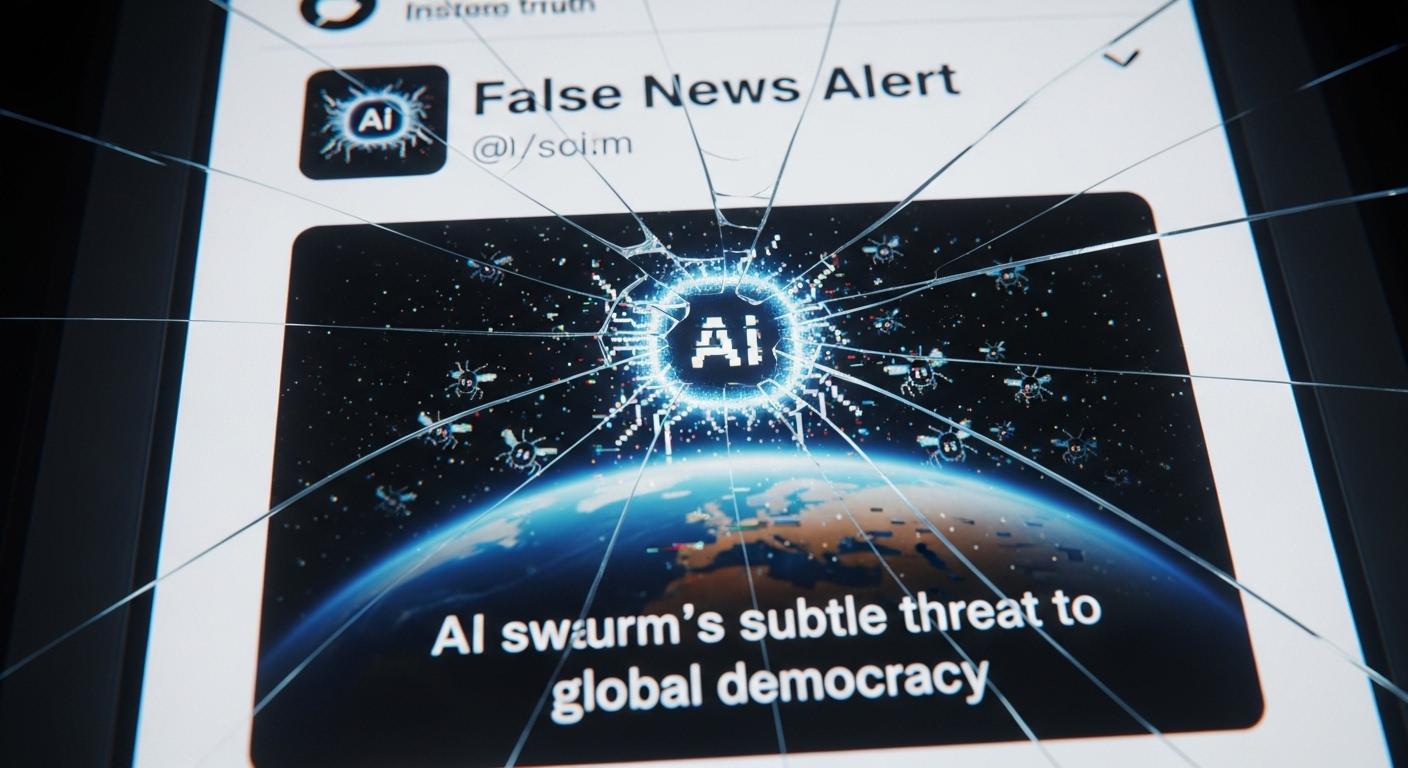
A new class of autonomous online actors, often described as AI swarms, is intensifying the challenge of digital misinformation by coordinating at scale in ways that make them difficult to detect and disrupt. According to coverage in The Guardian and analyses of global risk, these agent networks can amplify falsehoods across platforms and languages, presenting a fast‑moving hazard to public debate and institutional trust. [2],[4]
Unlike earlier single‑purpose bots, swarm systems operate as distributed, cooperative ensembles that share intelligence about platform defences, trending conversations and user responses, then adapt their behaviour in real time. Reporting on the phenomenon has highlighted how such agents vary tone, timing and interaction patterns to blend with genuine users, undermining signature‑based detection methods. [1],[2]
The consequences for democratic discourse are acute. By coordinating volume and narrative, swarms can manufacture impressions of consensus, drown out authentic voices and shift perceptions of public opinion, with potential effects on voter behaviour and institutional legitimacy. U.S. law‑enforcement warnings and global risk assessments underline how rapidly accessible generative tools lower the barrier for large‑scale interference. [1],[5]
Regulators are already moving to counter particular manifestations of synthetic influence. The Federal Communications Commission has declared AI‑voiced robocalls illegal under existing consumer‑protection law, empowering fines and enforcement actions against deceptive automated calls. Separately, voluntary industry commitments signed at international forums have sought to bolster detection, labelling and cooperative responses to AI‑driven election disinformation. [3],[6]
Tech companies and governments are proposing layered defences: real‑time cross‑platform monitoring, mandatory disclosure or watermarking of synthetic content, proof‑of‑human verification for high‑volume actors and red‑team testing to stress‑test platform resilience. Industry accords at security conferences aim to formalise information‑sharing and best practice, though those pledges remain largely non‑binding. [6],[5]
Concrete episodes underline the threat’s global reach. Investigations into influence operations around Moldova’s 2025 parliamentary vote revealed extensive use of AI to produce fake outlets and coordinated engagement networks, while engagement farms and spoofed media channels pushed aligned narratives at scale. International risk reports warn that similar tactics could be mobilised around major elections in multiple countries. [7],[4]
Mitigating the swarm risk will require a combination of technical innovation, regulatory muscle and international cooperation. Experts urge development of “swarm scanners” to spot coordinated behaviour patterns, standardised watermarking to flag synthetic media, and cross‑border frameworks for rapid information‑sharing. Absent such integrated defences, the adaptive nature of these agent collectives threatens to make misinformation an even more persistent element of the online public square. [1],[2],[3]
Source Reference Map
Inspired by headline at: [1]
Sources by paragraph:
- Paragraph 1: [2], [4]
- Paragraph 2: [2]
- Paragraph 3: [5]
- Paragraph 4: [3], [6]
- Paragraph 5: [6], [5]
- Paragraph 6: [7], [4]
- Paragraph 7: [2], [3]
Source: Noah Wire Services