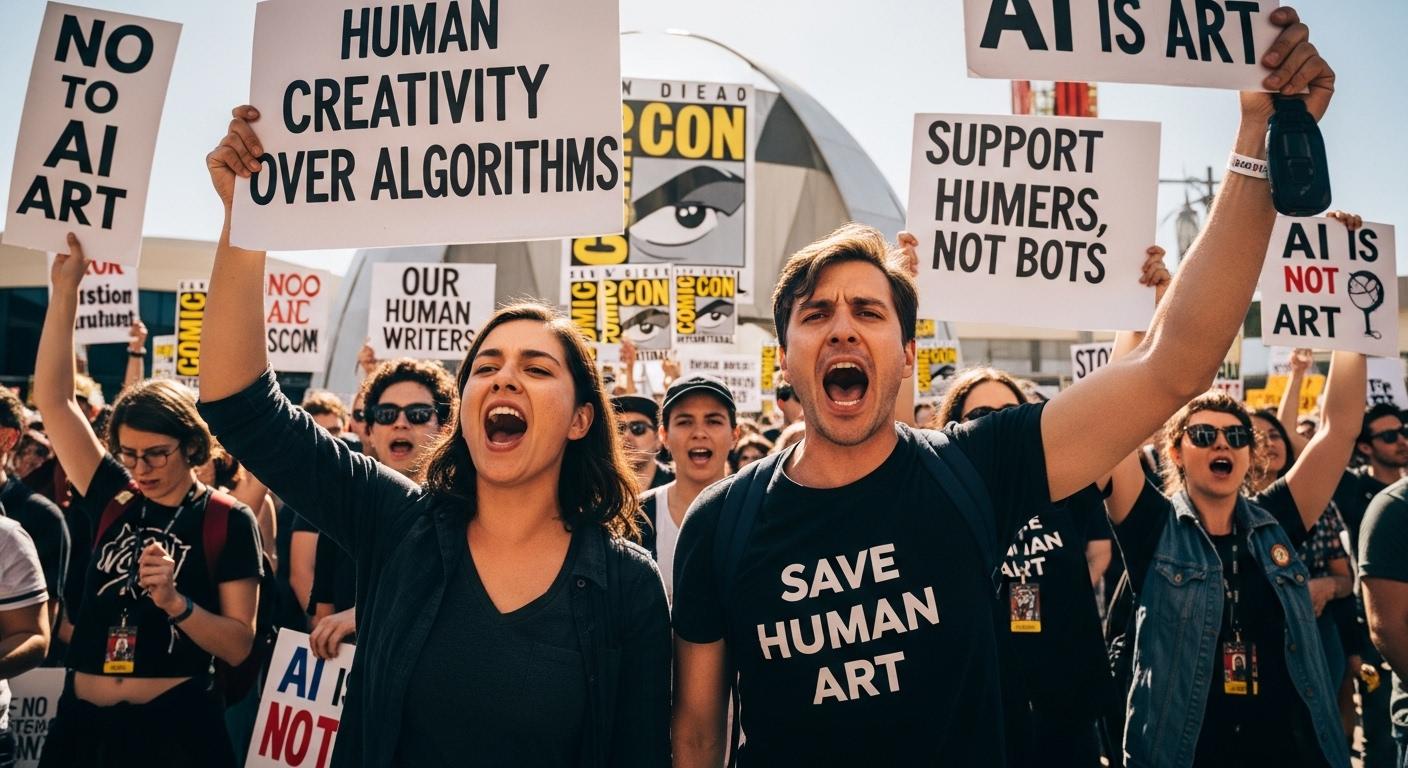
A group of prominent speculative writers used a high-profile convention platform in 2026 to launch a coordinated protest against the use of generative artificial intelligence in creative work, unveiling a "Declaration of Human Artistry" that calls for a boycott of platforms and studios that deploy AI without demonstrable, artist-led oversight and compensation. According to the Human Artistry Campaign, the movement has rallied hundreds of high-profile supporters in the entertainment industry who argue that large technology companies have relied on copyrighted material without consent to train their systems. [2]
The action at Comic-Con follows a string of early warnings from the publishing world about how automated output can overwhelm human editors. Small but influential genre outlets reported waves of machine-generated submissions that forced temporary closures and mass account bans as editors struggled to preserve standards and discern original voices from algorithmic mimicry. Neil Clarke's experience editing a leading science fiction magazine was widely cited as an early example of those strains on curation. [3][4]
Beyond the flood of low-quality submissions, creators point to a deeper legal and ethical grievance: the widespread scraping of novels, articles, images and other copyrighted material to train large models without licensing or remuneration. Industry organisers say that practice turns creators’ labour into training data without their permission and leaves authors competing in a market diluted by mass-produced, AI-generated works. The campaign insists proper licensing and partnerships are the path to ethical AI development. [2]
For many working in film and television the threat prompted collective action. The entertainment community’s organised campaigns and union negotiations have already produced contractual protections in some corners of the industry that limit the unauthorised use of writers’ text and actors’ likenesses, but those gains do not extend to the majority of independent authors and visual artists, who remain exposed to rapid technological change. Organisers stress that the uneven reach of safeguarding measures has hardened resistance among unaffiliated creators. [2]
Corporate responses have varied. Some major publishers and platforms have introduced transparency measures requiring authors or publishers to disclose the use of AI, but critics say such rules often rely on self-reporting and fail to address platform-level market distortion created by bulk machine production. In self-publishing markets, where quantity can quickly overwhelm discoverability, authors report falling search rankings and downward pressure on pricing. [7]
At least one leading entertainment company has taken a categorical stance against generative systems in creative production. Jim Lee, President and Publisher of DC Comics, told a New York Comic Con audience that the company "will not support AI-generated storytelling or artwork," arguing that authentic human emotion and imagination are central to the publisher's work. The declaration by creators at Comic-Con aligns with that position and with a broader push for industry-specific guardrails. [6]
The dispute has broadened into a public campaign that counts actors, directors and musicians among its supporters and frames unauthorised training of models as a form of appropriation. The Human Artistry Campaign, which organisers say brings together hundreds of Hollywood creatives and more than 180 organisations, urges regulators and companies to create enforceable licensing regimes so that innovation does not proceed at the expense of creators' rights and livelihoods. [2]
Source Reference Map
Inspired by headline at: [1]
Sources by paragraph:
- Paragraph 1: [2]
- Paragraph 2: [3], [4]
- Paragraph 3: [2]
- Paragraph 4: [2]
- Paragraph 5: [7]
- Paragraph 6: [6]
- Paragraph 7: [2]
Source: Noah Wire Services