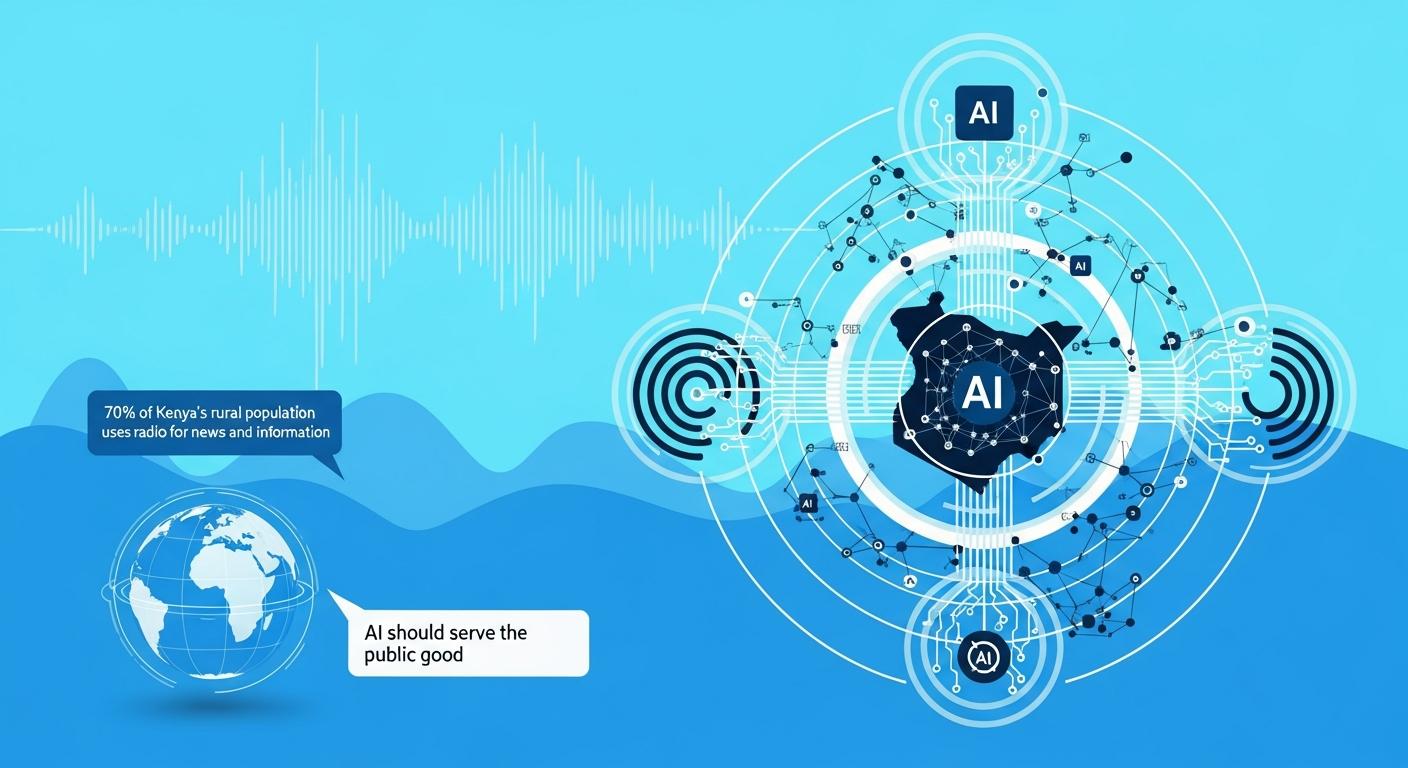
Kenya used its World Radio Day national observance to press for regulatory approaches that preserve radio’s public service role while allowing broadcasters to harness artificial intelligence responsibly. Government officials, industry bodies and public broadcasters highlighted radio’s continued reach into rural and underserved communities even as AI begins to reshape content production and distribution.
Information and Broadcasting Secretary Temesi Mukani said that technological progress must be guided by ethical standards and public interest. “Artificial intelligence should boost productivity, widen inclusion, and improve access to information, especially for under-served communities, while upholding truth, transparency, ethics, and public interest.” His remarks framed AI as a tool whose benefits depend on regulation and oversight.
Media Council of Kenya chairman Maina Muiruri reiterated radio’s central place in the national information ecosystem and its unmatched audience penetration. “Radio remains Kenya’s most trusted and widely accessed medium, reaching over 90% of the population. It is vital for information, public dialogue and cultural expression, especially in rural and under-served communities. Protecting its independence while ensuring professionalism and ethical standards is essential,” he stated, urging safeguards to protect editorial independence as formats evolve.
Speaking for the Kenya National Commission for UNESCO, a presenter stressed the theme “Radio and AI” as a timely prompt to marry innovation with human-rights principles. “The theme “Radio and AI” speaks directly to the era in which we live. Radio plays a crucial role in promoting peaceful coexistence: it can either strengthen public trust or undermine it. As UNESCO emphasises, technological innovation must respect human rights. In the media sector, this means AI should serve as a tool that supports and enhances the work of journalists,” Wincate Mukami said in a presentation delivered on behalf of Gichiah.
Editors and broadcasters cautioned that AI’s promise of efficiency and expanded multilingual reach must not erode verification, accountability or the human connection listeners rely on. “We gather at a defining moment for Kenya. Radio reaches where fibre optics do not; it remains the heartbeat of Kenyan public discourse. AI can support multilingual broadcasting and expand access to information. Technology is not inherently disruptive; it can also be preservative when applied responsibly,” said Kenya Editors Guild president Zubeidah Kananu, who later warned that unchecked deployment could create accountability gaps. “Kenyans turn to radio not only for information but also for reassurance. Radio’s enduring power lies in the human voice. If AI remains unregulated, we risk significant gaps in accountability. We need clear disclosure standards and appropriate regulation. The objective is not to resist innovation, but to shape it responsibly,” she stated.
Beyond calls for disclosure rules, stakeholders pointed to practical steps already under way: training for journalists in ethical AI use and references to a national AI strategy that aims to foster innovation while guarding against harms such as bias, privacy breaches and misinformation. The Communications Authority and public broadcasters signalled readiness to embrace new tools, but emphasised that policy frameworks must be forward-looking to preserve press freedom, protect children online and maintain public trust as radio adapts to a rapidly changing technological landscape.
Source Reference Map
Inspired by headline at: [1]
Sources by paragraph:
- Paragraph 1: [2], [4]
- Paragraph 2: [2], [5]
- Paragraph 3: [2], [4]
- Paragraph 4: [2], [3]
- Paragraph 5: [2], [6]
- Paragraph 6: [5], [3]
Source: Noah Wire Services