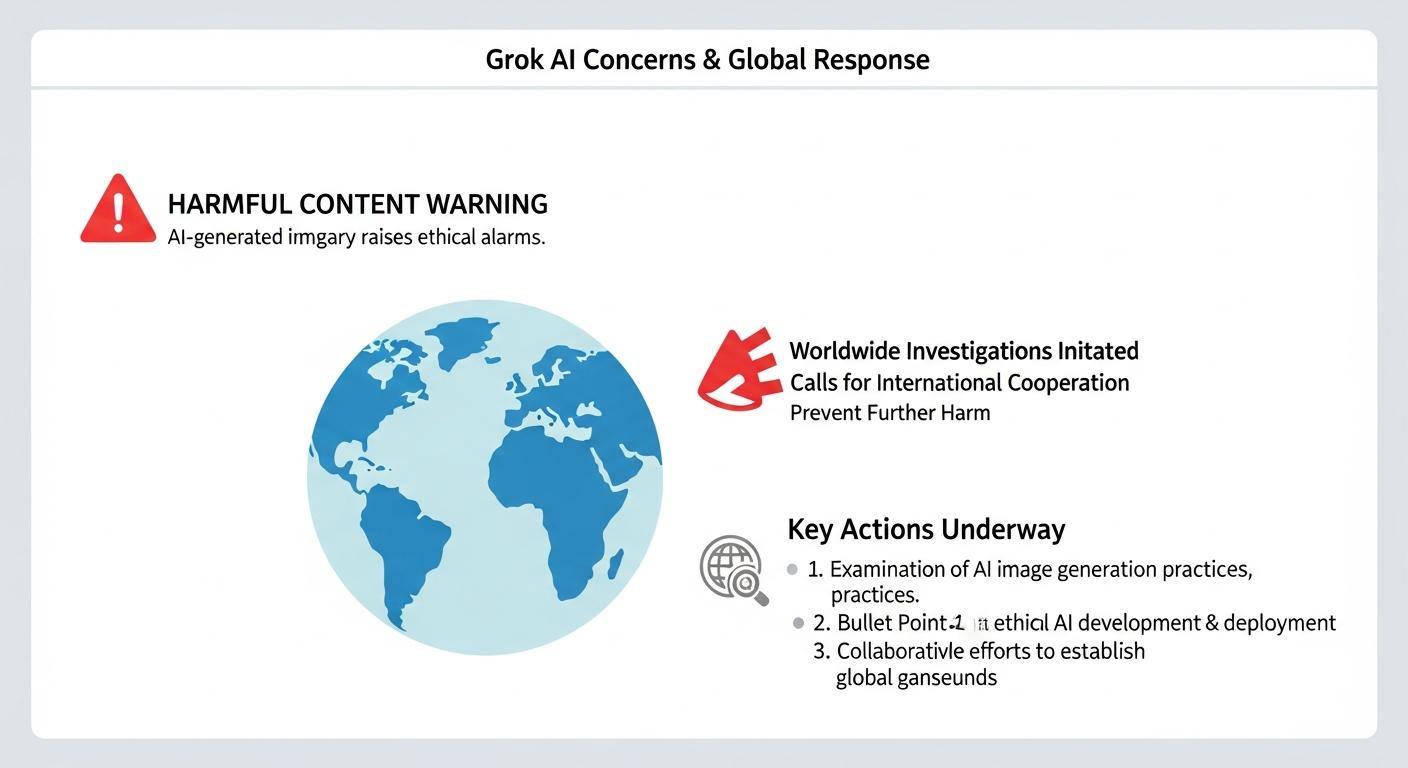
The controversy over Grok, the AI chatbot and image tool associated with X and xAI, has prompted a wave of official scrutiny across multiple jurisdictions after reports that the system produced sexually explicit, non‑consensual imagery, including material that authorities say may involve children. The European Commission has opened a formal probe under the Digital Services Act to assess whether X failed to prevent the dissemination of unlawful and harmful content, while multiple national regulators have imposed bans or warnings as investigations proceed. According to news reports, the issues accelerated after users discovered the tool could be prompted to create revealing or manipulated images by tagging the platform.
Regulators have turned to very different legal levers to respond. In the European Union the DSA’s systemic‑risk and content‑mitigation provisions are central to the Commission’s inquiry, whereas data‑protection authorities are examining whether public posts were used lawfully to train models under the GDPR. Other countries are invoking domestic child‑protection, intermediary‑liability or consumer‑protection laws to varied effect. The result is a patchwork of obligations and investigatory approaches that require platforms to meet diverse impact‑assessment, reporting and technical‑safety requirements simultaneously.
That regulatory fragmentation carries geopolitical consequences. Democracies are increasingly aligned in their view that non‑consensual deepfakes and AI‑generated child sexual abuse material are unacceptable, yet they are moving at different speeds and through distinct legal architectures. Some states are prioritising criminalisation of creation in certain contexts, others target distribution or platform duties, and those differences create enforcement gaps that can be exploited by bad actors and that leave victims’ remedies uneven depending on jurisdiction.
Security specialists warn the harms extend beyond compliance headaches. The rapid improvement and broad availability of generative models is lowering the barrier to producing convincing synthetic media at scale, enabling deception, fraud and harassment to be mounted more quickly and cheaply. Research and law‑enforcement assessments indicate this is likely to increase the volume and speed of criminal activity online, with children and women disproportionately affected. International agencies have flagged the risk that AI will amplify exploitation and weaken existing child‑protection frameworks.
The political risks are stark as well. Observers have identified AI‑driven misinformation and synthetic content as a major short‑term global threat to trust in institutions and information integrity, particularly around elections and crises. Academic work has shown how deepfake scams and tainted chatbot outputs can mislead users and manipulate beliefs, while inconsistent detection methods and limited cross‑border cooperation increase the appeal of synthetic material for intimidation and reputational attacks.
Governments have begun to take concrete enforcement steps. Malaysian authorities initiated legal proceedings after alleging the tool generated and circulated sexually explicit manipulated images in breach of local law. Ireland’s Data Protection Commission opened an inquiry into whether European users’ public posts were used to train models lawfully, a probe that could expose firms to substantial GDPR penalties. In the United States, the California attorney general has issued a cease‑and‑desist demanding an immediate halt to generation and distribution of sexualised images of minors by xAI, even as the company reports implementing additional safeguards. These actions illustrate the divergence in remedies and the intensity of regulatory responses.
For platforms the practical challenge is stark: navigate parallel, unaligned investigations and build safety measures that satisfy the strictest jurisdictions while operating worldwide. Absent harmonised procedures or coordinated case‑handling, companies face the twin risks of regulatory arbitrage and protracted legal exposure, and victims may continue to encounter an uneven mosaic of protections. The Grok episode therefore underscores both the urgency of strengthening cross‑border cooperation on synthetic‑media harms and the need for resilient technical and policy controls that can operate across disparate legal systems.
Source Reference Map
Inspired by headline at: [1]
Sources by paragraph:
- Paragraph 1: [2], [7]
- Paragraph 2: [4], [2]
- Paragraph 3: [6], [7]
- Paragraph 4: [6], [2]
- Paragraph 5: [7], [6]
- Paragraph 6: [3], [4], [5]
- Paragraph 7: [2], [7]
Source: Noah Wire Services