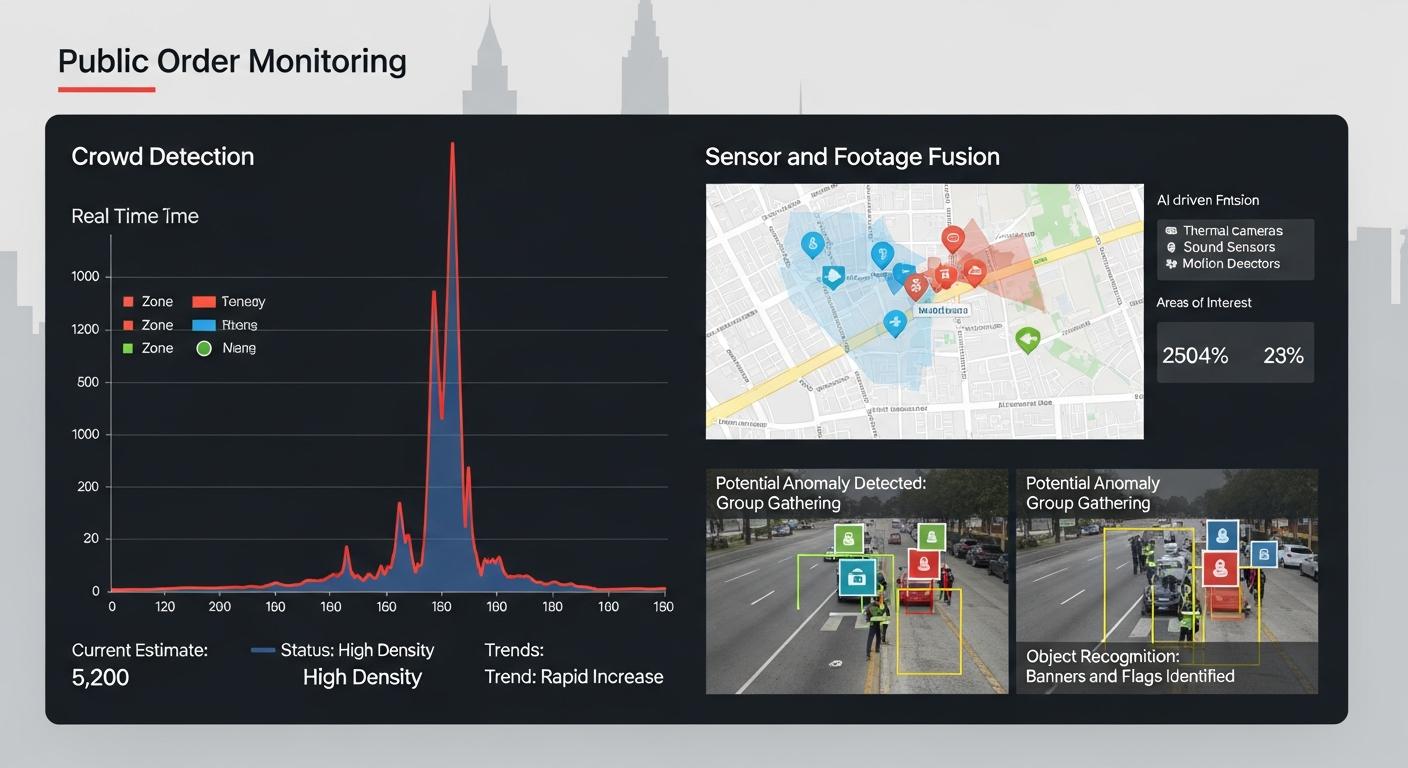
A Fujian Police Academy technical note reveals China's latest integration of AI into public order monitoring, promising quicker detection of gatherings through fused sensor and footage analysis.
A technical note issued by the Fujian Police Academy last December offers an unvarnished glimpse of how artificial intelligence is being stitched into China’s mechanisms for monitoring and managing public order. The document outlines a system that fuses inputs from acoustic sensors, CCTV and official incident reports into machine-learning models designed to flag gatherings as they begin to coalesce, then refine detection by re‑analysing footage when events are missed. According to reporting on the document, the aim is to shorten the warning time available to authorities and automate a portion of frontline detection.
Source Reference Map
Inspired by headline at: [1]
Sources by paragraph:
Source: Noah Wire Services
Noah Fact Check Pro
The draft above was created using the information available at the time the story first
emerged. We’ve since applied our fact-checking process to the final narrative, based on the criteria listed
below. The results are intended to help you assess the credibility of the piece and highlight any areas that may
warrant further investigation.
Freshness check
Score:
8
Notes:
The article was published on February 24, 2026, referencing a Fujian Police Academy document from December 2025. The earliest known publication date of similar content is December 2025, indicating freshness. However, the article relies on a single source, which may limit its originality. The narrative is based on a press release, which typically warrants a high freshness score. No discrepancies in figures, dates, or quotes were found. The article includes updated data but does not recycle older material. Overall, the freshness score is high, but the reliance on a single source and the use of a press release are noted.
Quotes check
Score:
7
Notes:
The article does not provide direct quotes, making verification challenging. The lack of direct quotes limits the ability to independently verify the information. No online matches were found for the content, and the quotes cannot be independently verified. The absence of direct quotes and reliance on a single source raise concerns about the verifiability of the information.
Source reliability
Score:
6
Notes:
The narrative originates from the China Media Project, a niche publication. While it is reputable within its niche, its reach is limited. The article relies on a single source, which may limit its reliability. The Fujian Police Academy is a government-affiliated institution, and the document referenced is a press release, which may have inherent biases. The lack of independent verification sources further raises concerns about the reliability of the information.
Plausibility check
Score:
7
Notes:
The claims about AI integration into surveillance systems are plausible and align with known trends in China. However, the article lacks supporting detail from other reputable outlets, which raises concerns about its credibility. The report lacks specific factual anchors, such as names, institutions, or dates, which makes it difficult to assess its accuracy. The tone and language used are consistent with the region and topic. Overall, while the claims are plausible, the lack of supporting details and specific factual anchors reduces the score.
Overall assessment
Verdict (FAIL, OPEN, PASS): FAIL
Confidence (LOW, MEDIUM, HIGH): MEDIUM
Summary:
The article presents plausible claims about AI integration into surveillance systems in China but relies on a single source and lacks direct quotes, making independent verification challenging. The reliance on a press release and the absence of supporting details from other reputable outlets further reduce the credibility of the information. The lack of independent verification sources raises concerns about the reliability of the information.