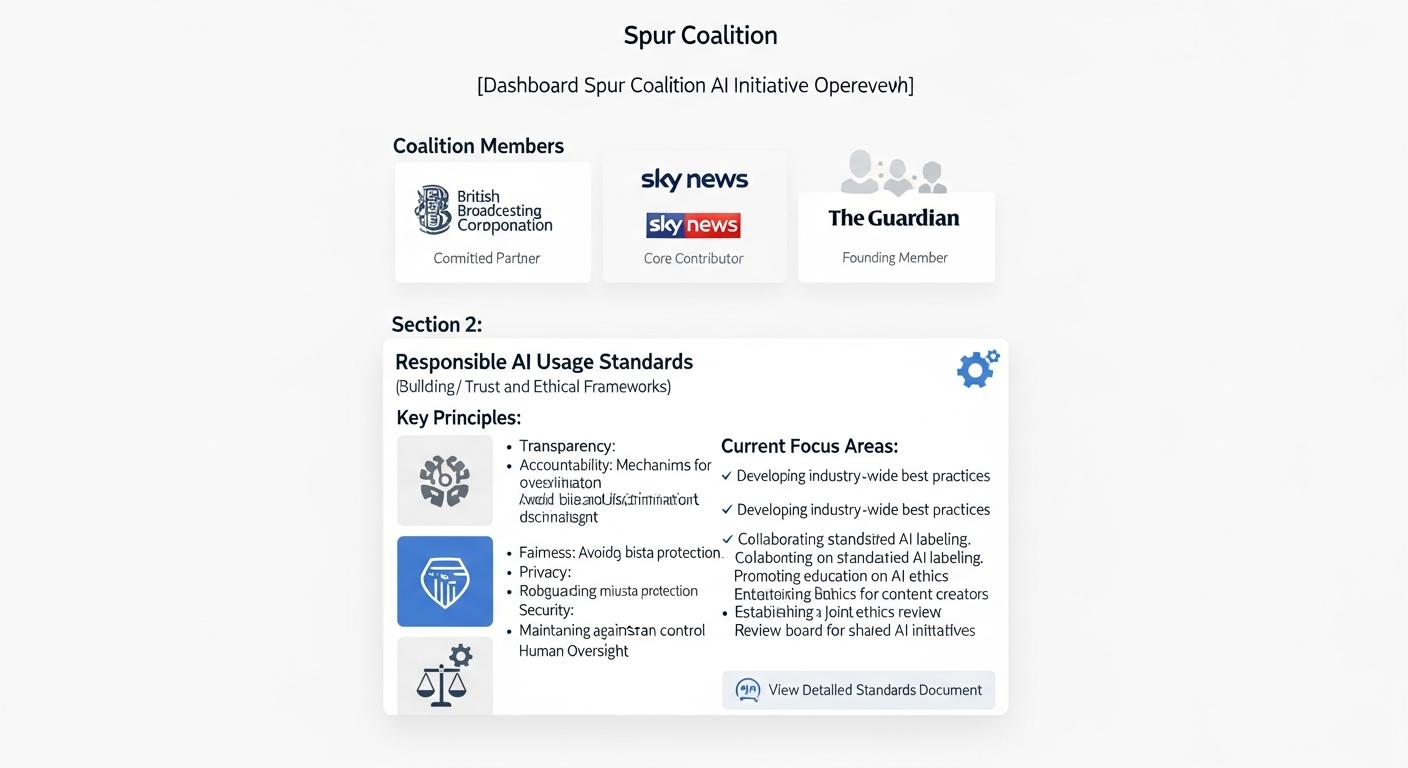
A group of Britain’s leading news organisations has launched a formal coalition to set standards for how generative artificial intelligence uses journalism, urging media companies worldwide to sign up. The initiative, named Spur – Standards for Publisher Usage Rights – was unveiled in an open letter from senior executives at the BBC, Sky News, The Guardian, the Financial Times and the Telegraph, who warned that “our reporting, our archives, our original content, have become foundational training material for AI systems.” (Inspired by headline at: [1])
According to the open letter, the signatories see a need to act now to protect the financial and ethical foundations of newsrooms as AI systems proliferate. “We write to you at a pivotal moment for our industry. Artificial intelligence is fundamentally reshaping how content is created, distributed, discovered and monetised,” the document said, adding that while “AI brings opportunities for publishers and our audience,” it also raises pressing questions about fairness, consent, attribution, transparency and trust.
Spur’s stated mission is to create shared technical protocols and licensing approaches that enable AI developers to access verified journalism through accountable, rights-cleared channels while restoring more practical control to publishers. The coalition frames this as both a defence of editorial integrity and a market-preservation measure, arguing that unrestricted scraping and reuse of news material is eroding the commercial model that funds reporting.
Industry participants presented the move as an attempt to build bridges between publishers and technology companies rather than to shut down innovation. According to coverage by The Guardian and Sky News, the coalition hopes to craft practical licensing frameworks that would allow AI developers legitimate access to high-quality journalism in return for transparency and appropriate payment to rights holders.
The launch of Spur comes amid other UK efforts to ensure creators and rightsholders are compensated for use of their work in AI training. Industry licensing bodies last year announced plans for a collective licence aimed at allowing authors to receive payment when their works are used to train generative models, a blueprint that supporters say could inform how news organisations negotiate with AI firms.
The coalition also resonates with wider resistance in the UK cultural sector to proposals that would permit blanket training use of copyrighted materials. Last year, creative groups and media organisations pushed back against government plans that would have allowed tech companies to train models on copyrighted works without prior permission, arguing instead that developers should obtain licences or accept liability for unauthorised use.
Spur’s founders framed the issue as global in scale and urged international peers to join. They say the coalition will press for interoperable technical standards, transparent attribution and mechanisms for remuneration, and they position their effort as complementary to regulatory and licensing developments already taking shape across the creative industries.
Source Reference Map
Inspired by headline at: [1]
Sources by paragraph:
- Paragraph 1: [2], [4]
- Paragraph 2: [1], [2]
- Paragraph 3: [1], [3]
- Paragraph 4: [4], [2]
- Paragraph 5: [5]
- Paragraph 6: [6], [7]
- Paragraph 7: [2], [3]
Source: Noah Wire Services