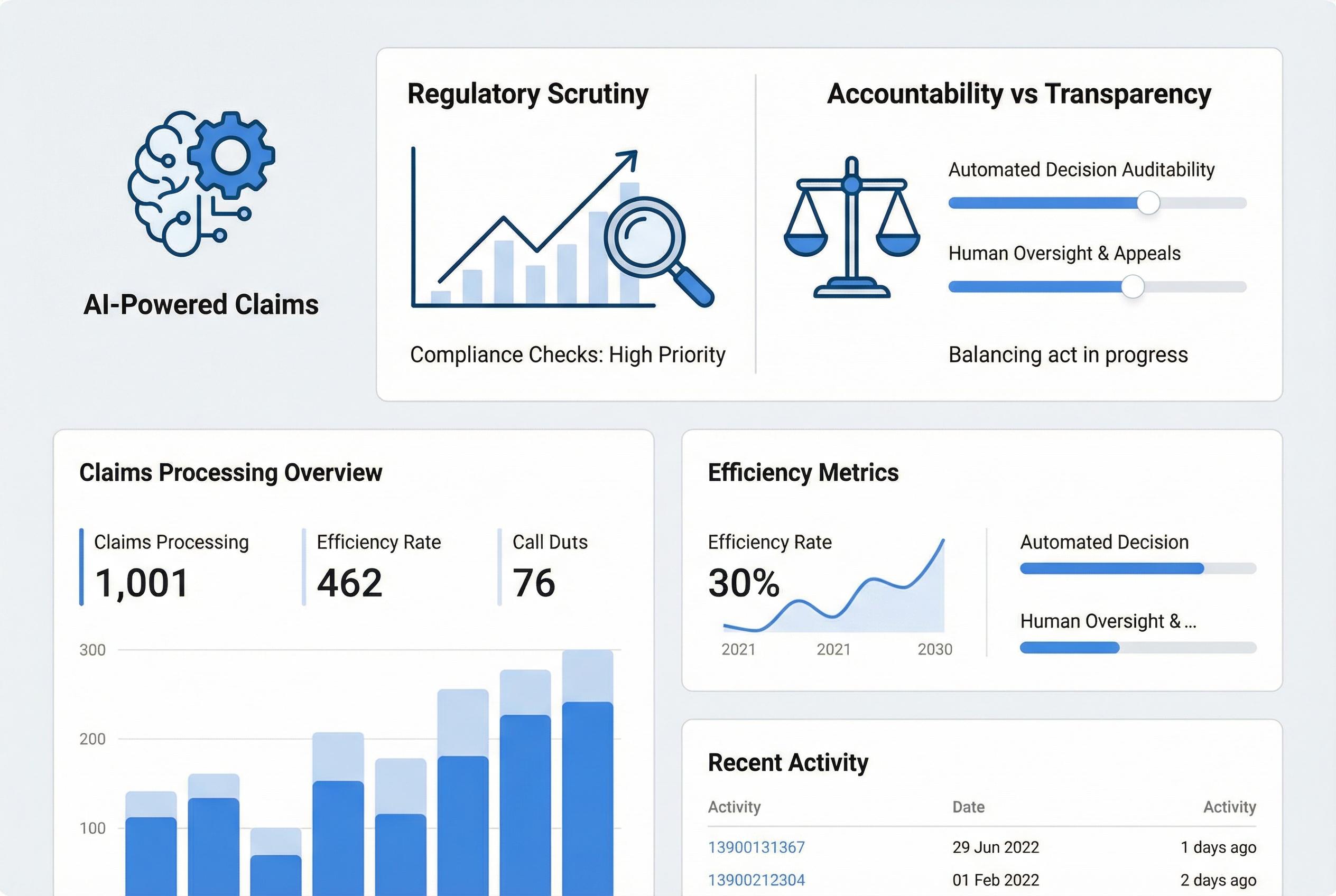
Insurers are increasingly deploying artificial intelligence to determine whether repairs are authorised and which medical procedures will be paid for, a shift that is reshaping how claims are handled and prompting fresh regulatory and legal scrutiny. According to reporting by the Palm Beach Post and follow-up coverage, homeowners and patients in Florida and beyond are now more likely to find a machine in the loop when a roof leak or surgery is assessed for coverage. Sources by paragraph: [2], [4]
Companies selling AI tools say the technology speeds routine workflows dramatically, turning tasks that once took hours into minutes by using machine learning, computer vision and natural language processing to extract data from documents and images. Industry vendors and consultants argue those efficiencies can cut costs and reduce manual backlogs. Sources by paragraph: [2], [3]
At the same time, surveys and industry analyses show adoption is uneven: many carriers use AI for limited, well-defined functions such as intake automation, fraud detection and customer chat, while only a minority have fully mature, enterprise-wide AI programmes. That gap underlines why insurers still emphasise human oversight for complex or discretionary decisions. Sources by paragraph: [4], [5]
Regulatory pressure is building where consumers feel most exposed. In Florida, legislators debated a measure that would have mandated a qualified human review whenever an insurer moved to deny or reduce a claim after an automated decision. Proponents argued the safeguard was necessary to prevent purely algorithmic denials; opponents in the industry warned the rule could slow processing and complicate rollout of legitimate automation. Sources by paragraph: [7], [6]
The political context complicated the state debate. Supporters framed human-review requirements as consumer protection; critics pointed to broader executive-level guidance urging caution about a patchwork of state rules that could hamper national competitiveness in AI development. Legal and policy experts note that insurance regulation historically rests with states for property and casualty lines, making uniform federal control problematic. Sources by paragraph: [6], [4]
Legal challenges are already testing the role of algorithms in care decisions. A high-profile class action alleges that an insurer used automated tools to deny coverage for nursing home care, a case that has drawn attention because of its alleged link to patient harm. Such lawsuits amplify concerns among older Americans who chose traditional Medicare in part to avoid the prior authorisation practices common in private and Medicare Advantage plans. Sources by paragraph: [4], [2]
Federal pilots are also shifting the landscape. The Wasteful and Inappropriate Service Reduction Model piloted earlier this year adds prior authorisation, and the use of AI-assisted review, to selected services in fee-for-service Medicare in six states. Administrators say the programme aims to curb clinically unsupported care and reduce waste; critics argue it moves traditional Medicare closer to the authorisation regimes of private plans and risks introducing automated barriers to necessary treatment. Sources by paragraph: [4], [2]
Clinicians, patient advocates and some lawmakers have voiced apprehension about delegating initial review steps to machines, stressing the importance of doctors' judgement and individual circumstances. Industry representatives counter that insurers remain legally accountable for decisions and that AI tools are intended to support, not replace, qualified human reviewers. That tension between operational promise and consumer protection is likely to shape further litigation, rulemaking and contract negotiations between hospitals and payers. Sources by paragraph: [5], [3]
As carriers roll out or expand AI use, observers say transparency, documented human oversight and clear vendor management will be critical to building trust. Technology providers and academics recommend staged deployments, third-party audits and results monitoring to detect bias and errors. Whether states move toward prescriptive human-review mandates or rely on disclosure and enforcement under existing consumer-protection frameworks will determine how quickly AI becomes the default arbiter of covered care and repairs. Sources by paragraph: [3], [2]
Source Reference Map
Inspired by headline at: [1]
Sources by paragraph:
- Paragraph 1: [2], [4]
- Paragraph 2: [2], [3]
- Paragraph 3: [4], [5]
- Paragraph 4: [7], [6]
- Paragraph 5: [6], [4]
- Paragraph 6: [4], [2]
- Paragraph 7: [4], [2]
- Paragraph 8: [5], [3]
- Paragraph 9: [3], [2]
Source: Noah Wire Services