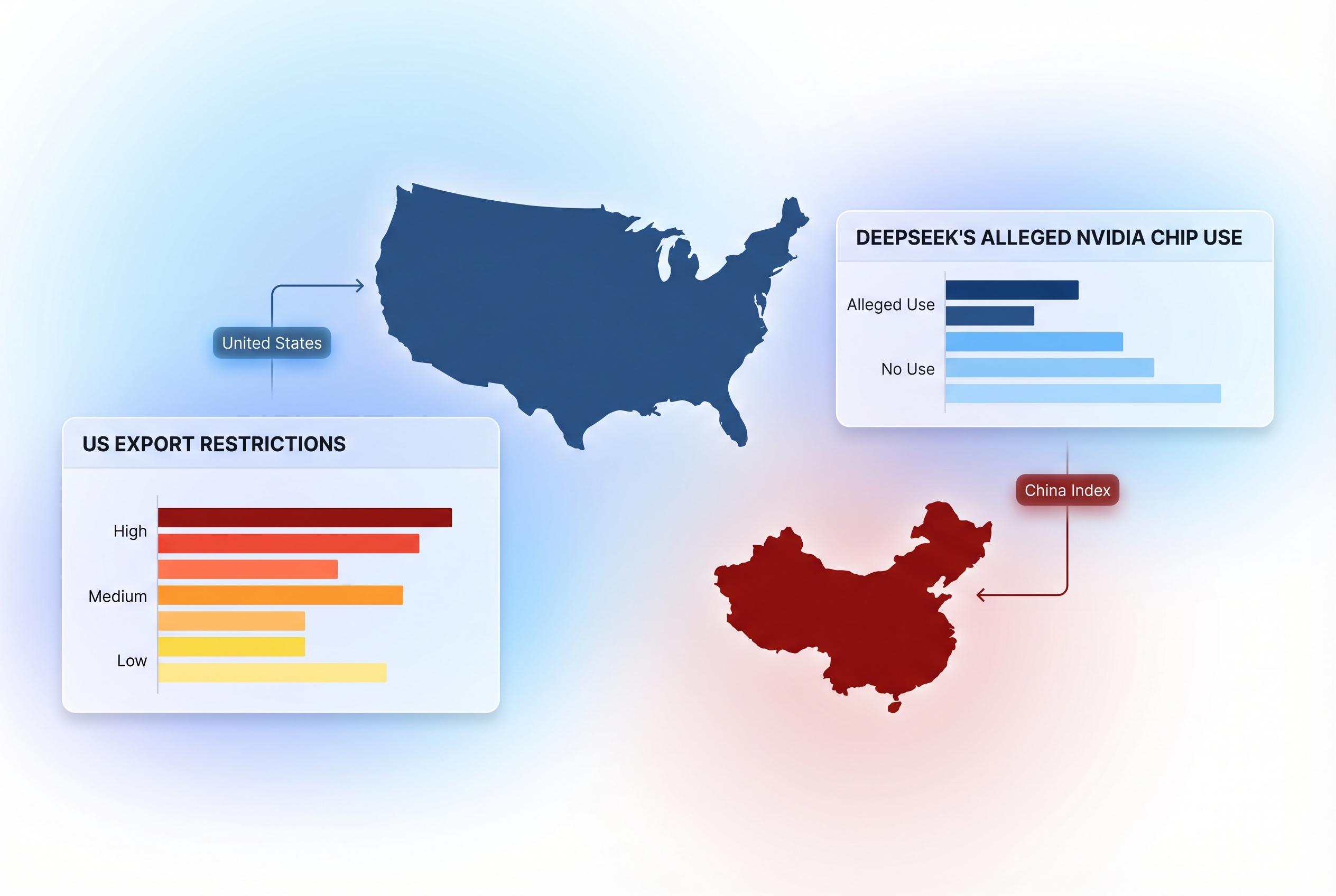
A senior US official claims Chinese AI company DeepSeek is developing a new model using Nvidia's Blackwell chip, despite US export restrictions, signalling potential circumvention of technology controls amid escalating tensions.
A senior Trump administration official has said Chinese AI company DeepSeek is preparing to release a new model that was trained on Nvidia's Blackwell chip, a piece of hardware Washington has barred from export to China. If accurate, the claim would suggest that one of the most tightly watched controls in the US-China technology rivalry may be easier to work around than policymakers had hoped.
The official, speaking in reporting carried by Investing.com, said the model is due as soon as next week and that DeepSeek may try to strip out technical signs of American chip use before launch. The official also linked the suspected Blackwell systems to a cluster in Inner Mongolia and said they may have been used in a distillation process, a method that can transfer capabilities from one model to another.
The allegation lands amid a broader crackdown on suspected chip smuggling routes. Tom's Hardware reported that Bain Capital-backed Bridge Data Centers has cut ties with Megaspeed International after a US inquiry into claims that Nvidia AI processors were diverted to China through subsidiaries in Malaysia and Indonesia. Separate reporting from the same outlet said US prosecutors have also charged former Super Micro Computer executive Yih-Shyan "Wally" Liaw and two others in a case involving the alleged rerouting of Nvidia-powered servers into China through a Southeast Asian front company.
At the same time, lawmakers in Washington are pressing for still tighter export rules. A bipartisan proposal known as the MATCH Act would broaden restrictions on chipmaking tools by targeting specific Chinese firms rather than individual facilities, closing off loopholes that have allowed advanced equipment to reach otherwise restricted groups. Together, the reports point to a fast-evolving contest in which US controls, Chinese procurement networks and the economics of AI development are increasingly colliding.
Source Reference Map
Inspired by headline at: [1]
Sources by paragraph:
Source: Noah Wire Services
Noah Fact Check Pro
The draft above was created using the information available at the time the story first
emerged. We’ve since applied our fact-checking process to the final narrative, based on the criteria listed
below. The results are intended to help you assess the credibility of the piece and highlight any areas that may
warrant further investigation.
Freshness check
Score:
5
Notes:
The article references a Reuters report from February 24, 2026, indicating that the information is approximately six weeks old. The content has been republished across various platforms, including Investing.com and The Economic Times, suggesting a lack of originality. The narrative appears to be based on a press release, which typically warrants a higher freshness score. However, the recycling of content across multiple sources and the passage of time since the original publication raise concerns about the freshness and originality of the information. The earliest known publication date of the substantially similar content is February 24, 2026. Given these factors, the freshness score is reduced to 5.
Quotes check
Score:
4
Notes:
The article includes direct quotes attributed to a senior Trump administration official, stating that DeepSeek's latest AI model was trained on Nvidia's Blackwell chip, a violation of U.S. export controls. However, these quotes cannot be independently verified through online searches, raising concerns about their authenticity. No online matches were found for these specific quotes, and the lack of verifiable sources diminishes the credibility of the information. Given the inability to confirm the quotes' authenticity, the score is reduced to 4.
Source reliability
Score:
3
Notes:
The narrative originates from a major news organisation, Reuters, which is generally considered a reliable source. However, the article appears to be summarising or aggregating content from other publications, including Investing.com and The Economic Times, which may have their own biases or limitations. Additionally, the reliance on a single, unverified source for the quotes raises concerns about the overall reliability of the information. Given these factors, the source reliability score is reduced to 3.
Plausibility check
Score:
6
Notes:
The claim that DeepSeek trained its latest AI model on Nvidia's Blackwell chip, despite U.S. export controls, is plausible given the ongoing tensions between the U.S. and China over technology exports. However, the lack of supporting details from other reputable outlets and the inability to independently verify the quotes diminishes the overall credibility of the claim. The absence of specific factual anchors, such as names, institutions, and dates, further weakens the plausibility of the narrative. Given these concerns, the plausibility score is reduced to 6.
Overall assessment
Verdict (FAIL, OPEN, PASS): FAIL
Confidence (LOW, MEDIUM, HIGH): MEDIUM
Summary:
The article presents a claim that DeepSeek trained its latest AI model on Nvidia's Blackwell chip, despite U.S. export controls. However, the information is based on unverified quotes from a single source, lacks supporting details from other reputable outlets, and cannot be independently verified. The recycling of content across multiple platforms and the inability to confirm the authenticity of the quotes further diminish the credibility of the narrative. Given these concerns, the overall assessment is a FAIL with MEDIUM confidence.