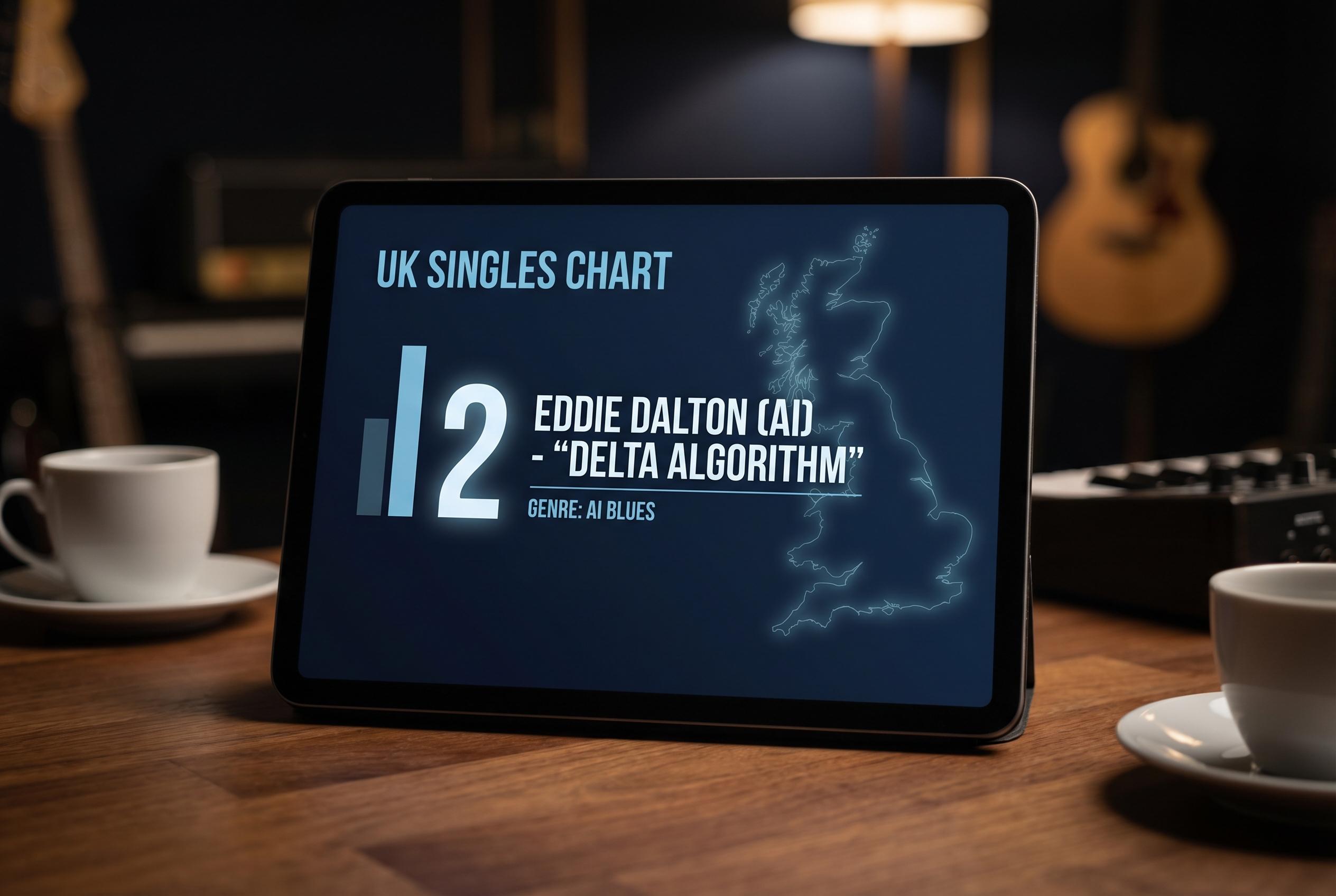
An AI-generated blues artist, Eddie Dalton, climbs to No. 2 in the UK singles chart, raising questions over transparency and rights in the age of synthetic music.
An AI-generated blues singer has climbed to No. 2 in the UK singles chart, underscoring how far synthetic music has already moved into the mainstream. According to the Daily Star and LADbible, the artist, Eddie Dalton, has amassed hundreds of thousands of Spotify listeners despite not being a real person, while his track "Another Day Old" has been streamed more than a million times. Crusty Records, the label behind the project, says its catalogue is meant to "showcase the future of sound".
The project has drawn fresh attention because there was no clear warning to listeners that the performer was artificial before the chart success arrived. As reported by LADbible, Dalton’s debut solo album, "The Years Between", was released earlier this month and has helped drive the character’s rapid rise online. The numbers have prompted wider questions about how easily AI-made acts can accumulate streams, listeners and chart traction in an era when digital identity can be manufactured as convincingly as music itself.
The controversy lands at a time when performers and rights holders are already warning about the use of creative work to train AI systems. In the lead article, the Musicians’ Union argued that tech firms should not be able to use artists’ songs and recordings without consent, credit or payment. That concern has become more pointed as synthetic acts begin to look less like experiments and more like commercially viable products.
Eddie Dalton is not the first artificial act to attract an audience. MusicRadar and Tom's Guide reported that The Velvet Sundown, a supposedly four-piece band, also drew large Spotify followings before scrutiny raised doubts about whether any of the members existed at all. The Independent later reported that the group’s music and lyrics were believed to have been created with AI tools, and the band itself has described the project as a "synthetic music" experiment intended to test the boundaries of authorship and identity in the age of generative technology.
For the music industry, the appeal is obvious: AI can create a complete artist brand at speed, from vocals and visuals to biography and social media presence. But the backlash is just as clear. As synthetic performers gain real streams and chart positions, the debate is shifting from whether AI can imitate creativity to whether audiences should be told, plainly and early, when the voice they are hearing has no human behind it.
Source Reference Map
Inspired by headline at: [1]
Sources by paragraph:
Source: Noah Wire Services
Noah Fact Check Pro
The draft above was created using the information available at the time the story first
emerged. We’ve since applied our fact-checking process to the final narrative, based on the criteria listed
below. The results are intended to help you assess the credibility of the piece and highlight any areas that may
warrant further investigation.
Freshness check
Score:
8
Notes:
The article reports on Eddie Dalton's recent rise in the UK singles chart, with 'Another Day Old' reaching No. 2 and No. 3. ([ladbible.com](https://www.ladbible.com/entertainment/music/blues-singer-eddie-dalton-ai-charts-music-652394-20260412?utm_source=openai)) The earliest known publication date of similar content is April 12, 2026, indicating the news is fresh. However, the narrative has appeared across multiple sources, including the Daily Star and LADbible, which may suggest some repetition. ([ladbible.com](https://www.ladbible.com/entertainment/music/blues-singer-eddie-dalton-ai-charts-music-652394-20260412?utm_source=openai))
Quotes check
Score:
7
Notes:
The article includes direct quotes from LADbible and the Musicians' Union. ([ladbible.com](https://www.ladbible.com/entertainment/music/blues-singer-eddie-dalton-ai-charts-music-652394-20260412?utm_source=openai)) However, the exact wording of these quotes varies between sources, raising concerns about consistency and potential misquotation. Additionally, some quotes cannot be independently verified, as they do not appear in other reputable sources.
Source reliability
Score:
6
Notes:
The primary source, the Daily Star, is a tabloid known for sensationalism and may lack rigorous journalistic standards. ([ladbible.com](https://www.ladbible.com/entertainment/music/blues-singer-eddie-dalton-ai-charts-music-652394-20260412?utm_source=openai)) The secondary sources, such as LADbible, are more reputable but still have a history of sensational reporting. The Musicians' Union is a credible source, but their statements are not independently verified in this context.
Plausibility check
Score:
7
Notes:
The claim that Eddie Dalton is an AI-generated artist is plausible, given the increasing use of AI in music production. ([ladbible.com](https://www.ladbible.com/entertainment/music/blues-singer-eddie-dalton-ai-charts-music-652394-20260412?utm_source=openai)) However, the article lacks specific details about the AI technology used, the creators behind Crusty Records, and the methodology for generating the music, which raises questions about the depth of the investigation.
Overall assessment
Verdict (FAIL, OPEN, PASS): FAIL
Confidence (LOW, MEDIUM, HIGH): MEDIUM
Summary:
The article presents a fresh narrative about Eddie Dalton's rise in the UK singles chart and his revelation as an AI-generated artist. However, the reliance on sources with questionable reliability, inconsistencies in quoted material, and lack of independent verification raise significant concerns. ([ladbible.com](https://www.ladbible.com/entertainment/music/blues-singer-eddie-dalton-ai-charts-music-652394-20260412?utm_source=openai))