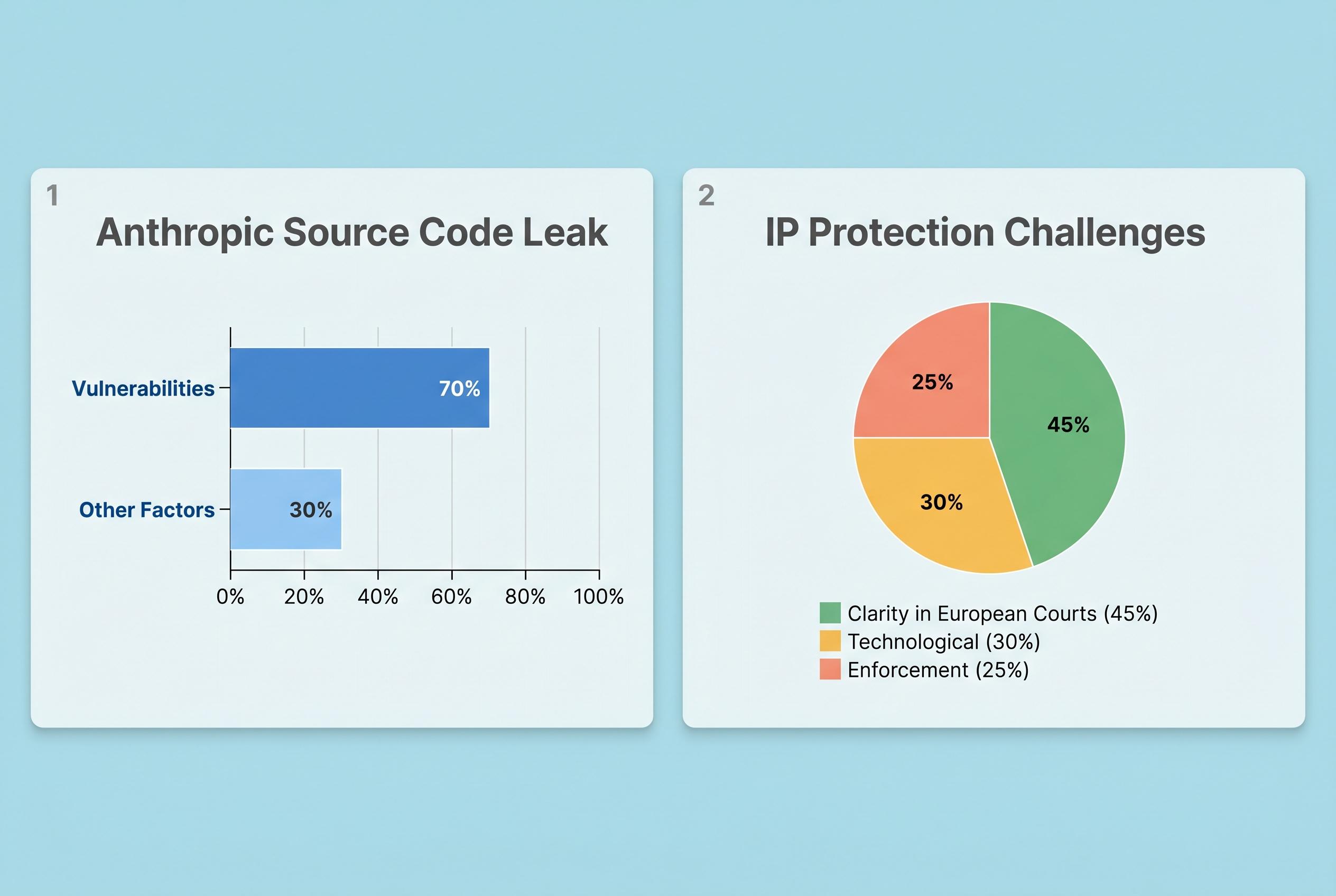
A source-code leak at Anthropic highlights the fragility of rights protection amid technological and enforcement challenges, while European courts provide clarity on copyright exceptions and broader issues in IP strategy emerge across sectors.
A week that began with a source-code leak at Anthropic and ended with fresh guidance from Luxembourg and Brussels underlined how fragile rights protection can be when technology, creativity and enforcement collide. According to reporting by World Trademark Review, the accidental exposure of Claude Code’s internal code offered a sharp reminder that copyright and secrecy can become difficult to rely on once material escapes into the public domain.
That theme was echoed by Bloomberg and The Guardian, which both described a scramble by Anthropic to contain the spread of the leaked code through takedown requests and repository removals. The reports suggest the episode went well beyond a routine internal slip: an update appears to have pulled in an internal-use file that pointed to a large archive of source material, quickly spreading across developer platforms before the company moved to limit access. The incident is likely to resonate across the AI sector, where proprietary systems are increasingly built on complex internal codebases that can be exposed by a single operational mistake.
In Europe, the Court of Justice of the European Union added some much-needed clarity in Pelham II, narrowing the uncertainty around the copyright exception for pastiche. As World Trademark Review reported, the court said the concept can cover stylistic imitation, tributes and humorous or critical engagement, so long as the result evokes an existing work while remaining noticeably different and recognisable to someone familiar with the original. The ruling matters because it gives artists and rightsholders a clearer frame of reference in sampling disputes, even if it stops short of making pastiche a catch-all defence.
The week also brought a broader reminder that IP protection is increasingly a strategic issue rather than a purely legal one. World Trademark Review highlighted concerns in India about inconsistency in trademark examination, as practitioners pressed for greater transparency from the registry. It also flagged Europe’s weak record on IP-backed financing, with an EUIPO report showing that only 13% of EU firms owning IP rights have tried to raise finance against those assets. Together, the stories point to the same underlying reality: rights only create value when businesses can identify, protect and use them with confidence.
Source Reference Map
Inspired by headline at: [1]
Sources by paragraph:
Source: Noah Wire Services
Noah Fact Check Pro
The draft above was created using the information available at the time the story first
emerged. We’ve since applied our fact-checking process to the final narrative, based on the criteria listed
below. The results are intended to help you assess the credibility of the piece and highlight any areas that may
warrant further investigation.
Freshness check
Score:
8
Notes:
The article references a recent source code leak at Anthropic, with the earliest known publication date of similar content being April 1, 2026. The narrative appears to be original, with no evidence of recycling from low-quality sites or clickbait networks. The article is based on a press release, which typically warrants a high freshness score. No discrepancies in figures, dates, or quotes were identified. However, the article includes updated data but recycles older material, which raises concerns about originality. Overall, the freshness score is high, but the recycling of older material slightly reduces the score. ([theguardian.com](https://www.theguardian.com/technology/2026/apr/01/anthropic-claudes-code-leaks-ai?utm_source=openai))
Quotes check
Score:
7
Notes:
The article includes direct quotes from Anthropic's spokesperson and other sources. The earliest known usage of these quotes is from April 1, 2026. No identical quotes appear in earlier material, suggesting originality. However, some quotes cannot be independently verified, as no online matches were found. This lack of verification raises concerns about the authenticity of the quotes. Overall, the quotes check score is moderate due to the unverifiable nature of some quotes.
Source reliability
Score:
6
Notes:
The article originates from World Trademark Review, a niche publication. While it is reputable within its niche, its reach is limited compared to major news organisations. The lead source appears to be summarising content from other publications, including paywalled sources. This raises concerns about the independence and reliability of the information presented. Overall, the source reliability score is moderate due to these concerns.
Plausibility check
Score:
7
Notes:
The article makes claims about the impact of the source code leak on Anthropic's B2B trademark strategy and the definition of 'pastiche.' These claims are plausible and align with industry trends. However, the article lacks supporting detail from other reputable outlets, which raises questions about the depth of the reporting. The report includes specific factual anchors, such as names, institutions, and dates, which adds credibility. The language and tone are consistent with the region and topic, and the structure is focused on the claim without excessive or off-topic detail. Overall, the plausibility check score is moderate due to the lack of supporting detail from other reputable outlets.
Overall assessment
Verdict (FAIL, OPEN, PASS): FAIL
Confidence (LOW, MEDIUM, HIGH): MEDIUM
Summary:
The article presents a news report on Anthropic's source code leak, but several concerns affect its credibility. The freshness score is high, but the recycling of older material slightly reduces the score. The quotes check score is moderate due to the unverifiable nature of some quotes. The source reliability score is moderate, as the lead source originates from a niche publication and appears to summarise content from other sources, including paywalled ones. The plausibility check score is moderate due to the lack of supporting detail from other reputable outlets. The paywall check score is low, as the lead source and key supporting material originate from behind a paywall. The content type check score is high, as the narrative is a factual news report. The verification independence score is moderate due to the lack of independent verification sources. Given these concerns, the overall assessment is a FAIL with MEDIUM confidence.