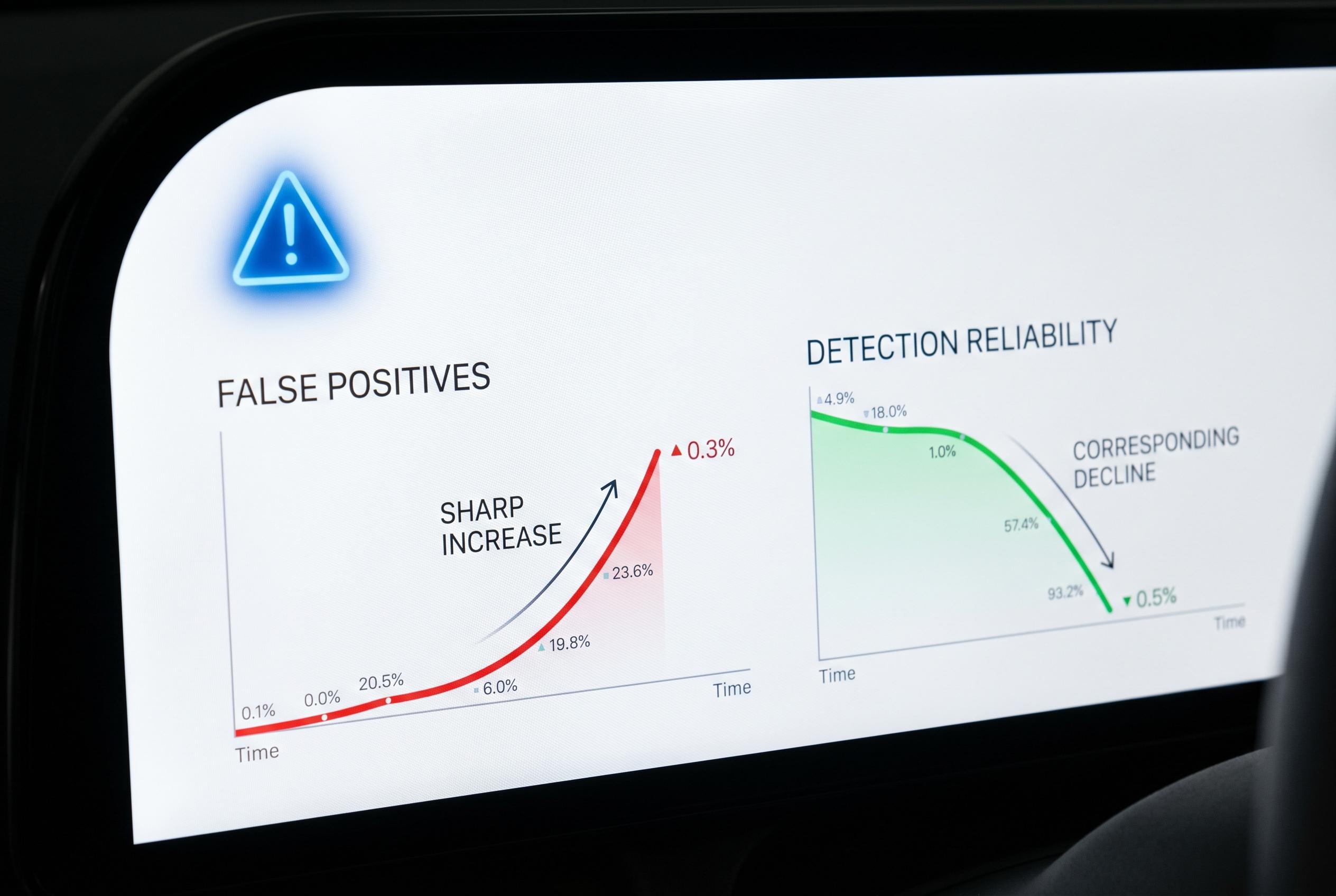
As AI writing tools move from novelty to routine workplace software, the question of who wrote a piece of text has become more fraught. Gallup said in February that half of U.S. employees now use AI in some form at work, a sharp rise that helps explain why schools, publishers and employers are increasingly leaning on detection software to police authenticity. But the tools meant to separate human writing from machine-generated prose can be unreliable, and their mistakes can carry real consequences. According to the original explainer, a false positive occurs when genuine human writing is wrongly labelled as AI-generated, leading to disputed grades, rejected submissions or damaging accusations.
That concern is not abstract. Research cited by AI education and detection specialists suggests that detector performance varies widely and often falls short of the confidence implied by marketing claims. A Stanford study found especially high false-positive rates for some tools when evaluating non-native English writing, while other independent assessments have suggested that the problem is more widespread than some vendors acknowledge. The central issue is that many detectors are built to spot statistical patterns, so ordinary human text can be flagged if it happens to resemble the kind of wording associated with machine output.
The problem is compounded by the pace of change in generative AI itself. As newer models become more fluent, detectors can lag behind, and small adjustments to sensitivity settings can change the result. OpenAI discontinued its own AI Classifier in 2023 after acknowledging weak performance, a sign of how hard the task remains. In education, where the stakes are often high, universities and teachers have been warned against treating detector output as standalone proof of misconduct, especially when writing mixes human drafting, quoted material and paraphrased sections.
That caution is reinforced by recent comparative testing. A University of Chicago study, as reported by TechLearning, found major differences between commercial and open-source systems, with some tools performing well and others producing large error rates. GPTZero, for example, struggled when AI text had been altered to look more human, while other systems were more resilient. The broader lesson is that AI detection may still have a role as one signal among many, but it is not a dependable arbiter on its own, particularly when a false accusation could affect a student’s record, a worker’s reputation or a business’s editorial judgement.
Source Reference Map
Inspired by headline at: [1]
Sources by paragraph:
Source: Noah Wire Services