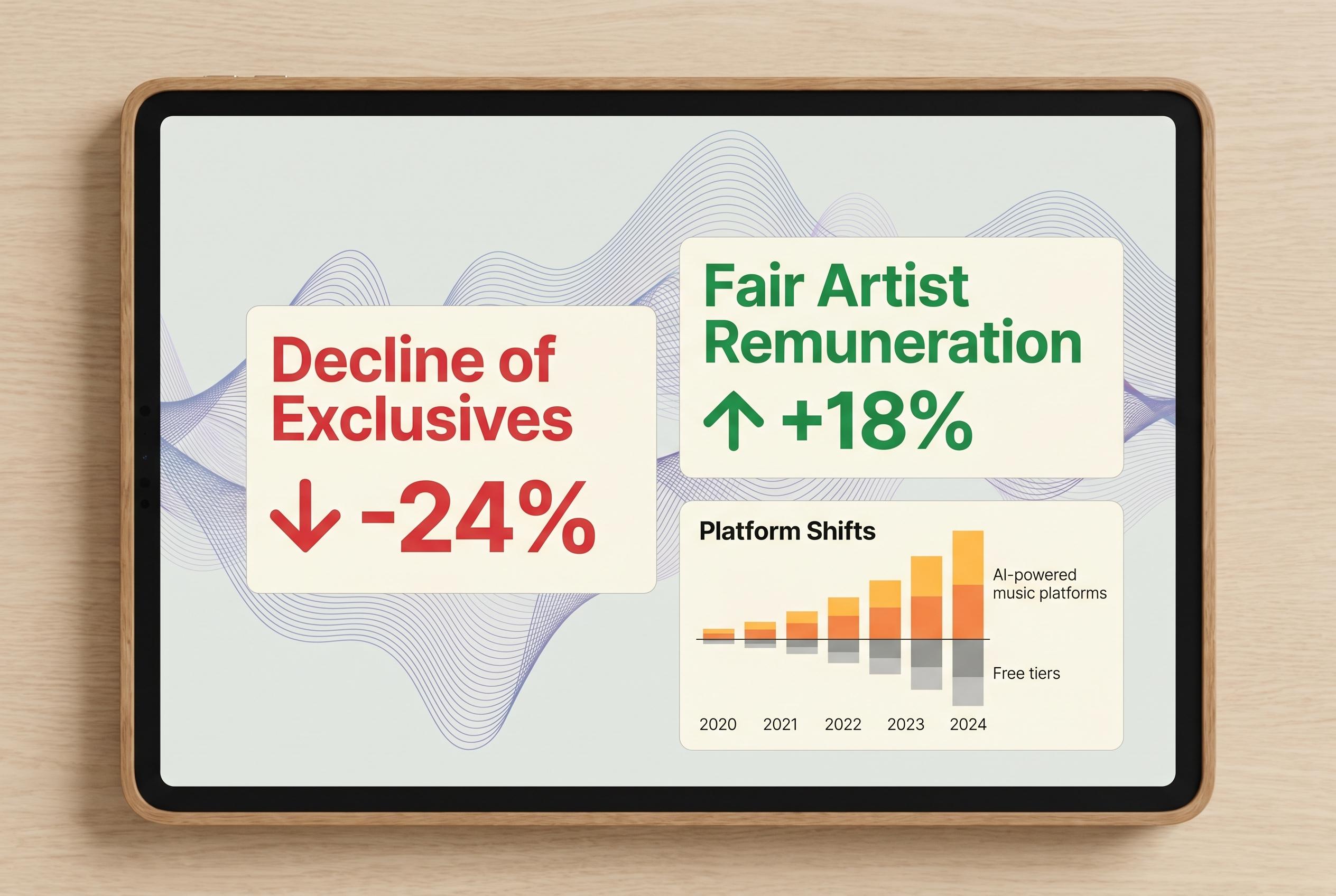
Apple Music’s vice-president Oliver Schusser has argued that streaming has lost some of the scarcity that once made new releases feel like events, saying the retreat from exclusives has made it harder for albums to land with the same impact. In an interview on Billboard’s "On the Record" podcast, he also defended Apple Music’s decision to remain one of the few major services without a free tier, casting paid access as a fairer model for artists and songwriters.
Schusser said the old race to lock up exclusive releases once gave platforms a clearer identity, but that labels have since stepped back from the practice. He suggested the industry’s Friday release cycle no longer carries the same sense of anticipation it once did, except for a handful of blockbuster acts. That view comes at a time when Apple Music still presents itself as a curated service, with editorial lists such as its 100 Best Albums ranking helping shape listening habits rather than relying solely on algorithmic discovery.
He was equally blunt about ad-supported streaming, describing "free" music as a mistake that depresses what listeners are willing to pay and what rights-holders can earn. Apple Music has no free tier, unlike rivals that use ad-supported listening as an on-ramp to subscriptions. The point is not just commercial, Schusser said, but cultural: he compared music to television and film, arguing that artists should not be expected to hand over their work without proper monetisation.
The discussion also turned to the company’s technical bets, especially spatial audio and Dolby Atmos. Schusser said Apple wanted a format that ordinary listeners could notice and that would work broadly across devices, not just inside Apple’s own ecosystem. He contrasted that approach with lossless audio, which he said does not deliver over Bluetooth, limiting its usefulness as wireless listening has become the norm.
AI was the newest pressure point. Schusser said more than a third of Apple Music’s incoming supply is now fully AI-generated, even though actual listening remains tiny, at below 0.5% of usage. He said Apple has built in-house detection tools and has introduced AI disclosure flags for labels and distributors, while warning that fraud remains a bigger concern than AI itself. That caution appears well founded: Billboard recently reported the removal of Kanye West and Ty Dolla $ign’s "Vultures 1" from Apple Music after FUGA said the album had been delivered through automated processes that breached its agreement.
Schusser said Apple wants the wider industry to decide what counts as AI-generated music, and to include artists and songwriters in that discussion rather than leaving it to companies alone. The broader picture is still unsettled, with old catalogue releases continuing to circulate across streaming services and labels experimenting with different release strategies, but Apple’s message is clear: it wants tighter rules, more disclosure and less tolerance for manipulation.
Source Reference Map
Inspired by headline at: [1]
Sources by paragraph:
- Paragraph 1: [1]
- Paragraph 2: [1], [7]
- Paragraph 3: [1], [5]
- Paragraph 4: [1]
- Paragraph 5: [1], [2], [3]
Source: Noah Wire Services