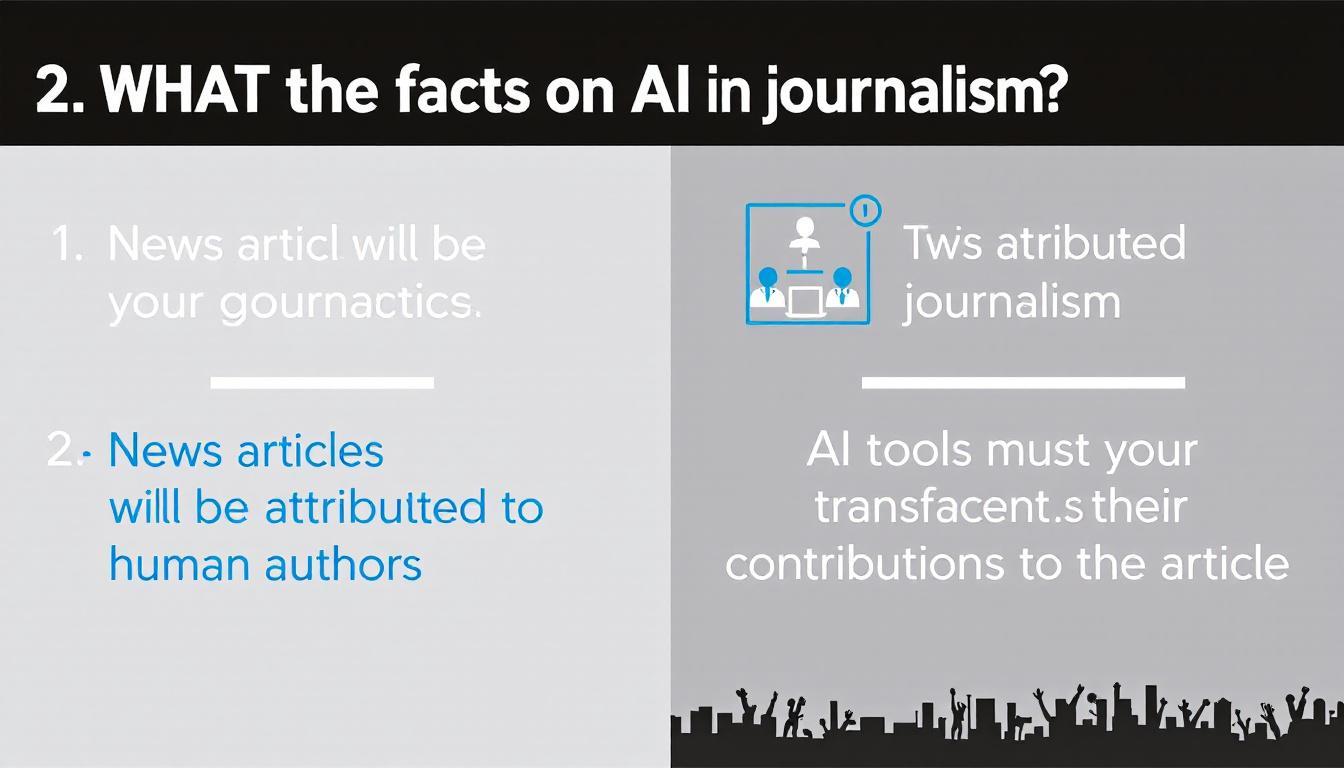
Ars Technica introduces a comprehensive policy defining how AI tools can assist in journalism, reinforcing human oversight and transparency amid industry debates on synthetic content.
Ars Technica has set out a reader-facing policy on generative AI, drawing a clear line between assistance and authorship. In the explanation, the publication says its journalism remains human-written and that AI cannot take the place of the judgement, creativity or originality that editors and reporters bring to their work. According to the policy, any use of AI sits within a supervised workflow, with people making every editorial decision.
The newly published guidance also broadens that principle beyond text. Ars Technica says the rules cover research, source attribution, imagery, audio and video, reflecting an effort to define where machine tools may help and where they may not. The policy says AI-generated material, when used as an example, is separated visually and disclosed as close to the material as possible.
The publication says the standards are not a fresh invention but a formal public explanation of practices that have governed its newsroom since generative AI became available. It added that the point of publishing the policy is to make its internal rules visible to readers rather than asking them to take them on trust. Ars Technica also said it will update the document if its practices change in a material way, with those changes noted on the policy page.
The move comes amid wider media and platform debates over synthetic content and disclosure. Ars Technica itself has recently reported on organisations taking harder lines on AI-generated material, including Bandcamp’s ban on music produced wholly or substantially by AI, while the outlet has also faced scrutiny over its own coverage standards in a separate retracted story earlier this year. Together, those episodes underline how quickly publishers are being forced to turn broad principles about AI into specific newsroom rules.
Source Reference Map
Inspired by headline at: [1]
Sources by paragraph:
Source: Noah Wire Services
Noah Fact Check Pro
The draft above was created using the information available at the time the story first
emerged. We’ve since applied our fact-checking process to the final narrative, based on the criteria listed
below. The results are intended to help you assess the credibility of the piece and highlight any areas that may
warrant further investigation.
Freshness check
Score:
10
Notes:
The article was published on April 22, 2026, and is the earliest known publication of Ars Technica's AI policy. No earlier versions or discrepancies were found. The content is original and not recycled from other sources. The policy is a formal public explanation of existing internal practices, not a fresh invention. No concerns regarding freshness were identified.
Quotes check
Score:
10
Notes:
The article does not contain direct quotes. All statements are paraphrased or original content. No issues with quote verification were found.
Source reliability
Score:
10
Notes:
The article is published on Ars Technica's official website, authored by Ken Fisher, the Editor-in-Chief. Ars Technica is a reputable technology news outlet. No concerns regarding source reliability were identified.
Plausibility check
Score:
10
Notes:
The claims made in the article align with known industry standards and Ars Technica's previous reporting. The policy's emphasis on human authorship and AI oversight is consistent with current discussions in the media industry. No implausible claims were identified.
Overall assessment
Verdict (FAIL, OPEN, PASS): PASS
Confidence (LOW, MEDIUM, HIGH): HIGH
Summary:
The article is an original, self-authored policy statement from Ars Technica, detailing their approach to generative AI. All checks have been passed with no significant concerns identified.