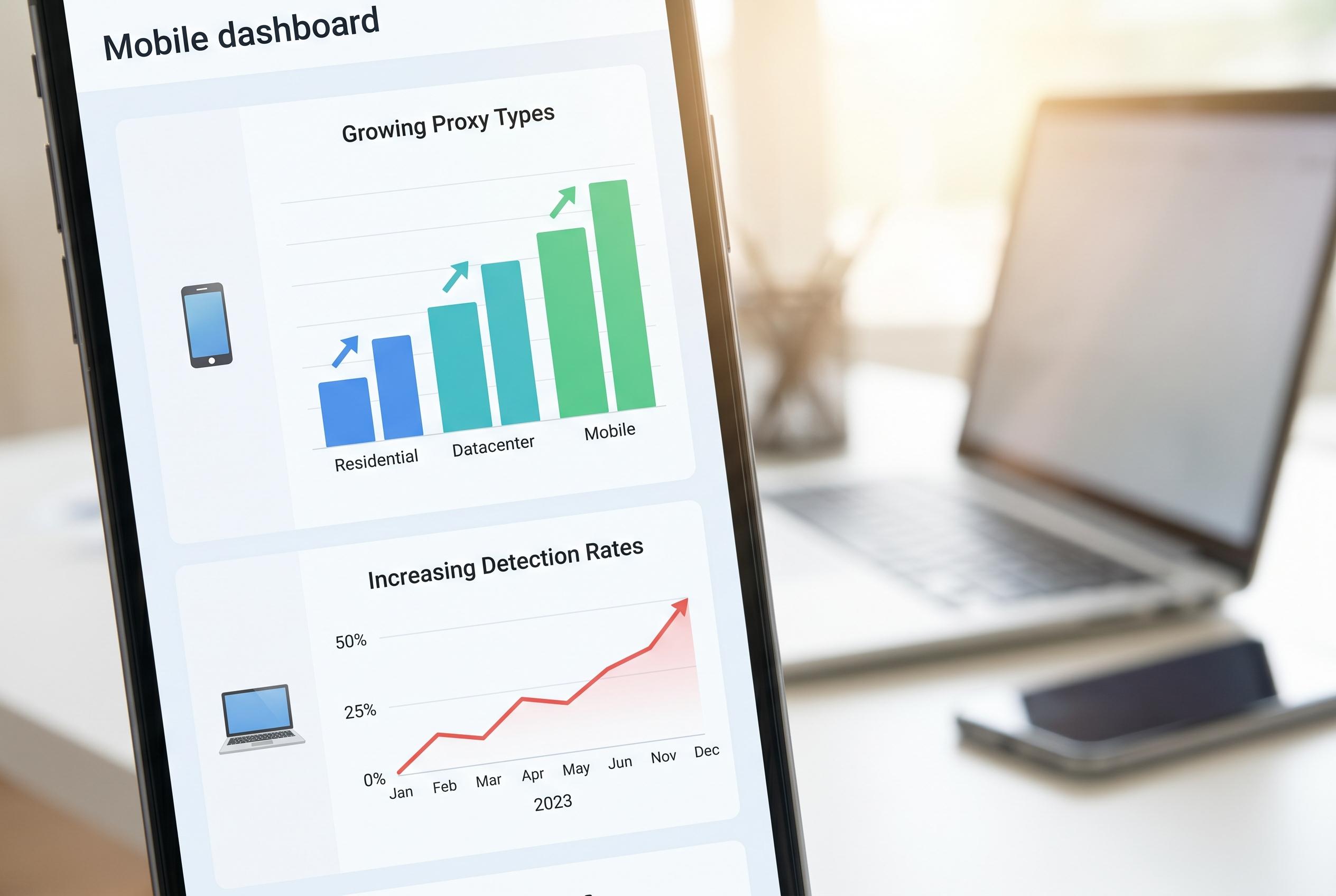
As anti-bot systems become more sophisticated, businesses turn to mobile and rotating proxies to evade detection and scale data collection more effectively, prompting a reshuffle in proxy market strategies.
Web scraping has become a high-stakes game of cat and mouse. For businesses that need to monitor prices, compare inventories or collect market data at scale, the job is no longer just about sending requests; it is about making those requests look ordinary. CNET explains that anti-bot systems now routinely flag repeated traffic from the same IP address, often returning 403 or 429 errors when automation becomes obvious.
That is where proxies come in. Acting as an intermediary, a proxy can route requests through a large pool of different IP addresses so a scraper appears to be many users rather than one machine hammering a site. According to CNET, this can also help with location-specific testing, since some sites adjust prices, stock and shipping options based on geography. The same logic underpins the wider proxy market, with guides from WebHarvy, IEMLabs and Proxy-Seller all stressing anonymity, geo-targeting and request distribution as the main reasons scrapers rely on them.
Not all proxies carry the same weight, however. CNET places mobile proxies at the top of the hierarchy because they use real cellular networks and are usually the hardest to block, followed by residential proxies tied to home internet connections. ISP, or static residential, proxies tend to be faster but somewhat easier to detect, while datacentre proxies are cheapest and most practical for large-scale jobs, even if they are also the most likely to be flagged. TechRadar’s 2026 review reflects that same market split, naming Decodo and Oxylabs among the strongest options for heavy-duty scraping and enterprise use.
Rotation is another important part of the toolkit. Instead of relying on one fixed address, rotating proxies swap IPs automatically, which reduces the chance that repeated activity will be linked to a single source. CNET notes that this can be configured by request or on a timer, though some proxy types are less suited to rotation than others. In practice, the best setup depends on the target site, the volume of data and how aggressively the site polices automation.
Still, proxies are not a universal answer. CNET warns that scraping can create legal and contractual risk if it breaches a site’s terms of service, and it points out that smaller tasks may not justify the cost or complexity. Where a public API exists, that is often the cleaner option. For businesses that do need large-scale collection, the sensible approach is usually to start modestly, test cheaper datacentre routes first and only move up to more expensive residential or mobile infrastructure when the target justifies it.
Source Reference Map
Inspired by headline at: [1]
Sources by paragraph:
Source: Noah Wire Services
Noah Fact Check Pro
The draft above was created using the information available at the time the story first
emerged. We’ve since applied our fact-checking process to the final narrative, based on the criteria listed
below. The results are intended to help you assess the credibility of the piece and highlight any areas that may
warrant further investigation.
Freshness check
Score:
7
Notes:
The article from CNET is dated April 22, 2026, indicating recent publication. However, similar content has been published by other sources, such as IPLocation.net in October 2025 ([iplocation.net](https://www.iplocation.net/proxies-for-web-scraping-the-ultimate-guide-and-tips?utm_source=openai)) and Marketing Scoop in June 2024 ([marketingscoop.com](https://www.marketingscoop.com/tech/proxy/the-ultimate-guide-to-proxy-services-for-web-scraping-in-2023/?utm_source=openai)). This suggests that the topic has been covered extensively in recent months, potentially reducing the originality of the content.
Quotes check
Score:
6
Notes:
The article includes direct quotes from CNET, WebHarvy, IEMLabs, Proxy-Seller, TechRadar, and Scrapeless. While these sources are cited, the absence of direct links to the original content makes it challenging to verify the accuracy and context of these quotes. This lack of transparency raises concerns about the reliability of the information presented.
Source reliability
Score:
5
Notes:
CNET is a reputable source; however, the article heavily relies on external sources without providing direct links or clear citations. This reliance on secondary information without proper verification diminishes the overall reliability of the content. Additionally, the inclusion of lesser-known sources like WebHarvy, IEMLabs, Proxy-Seller, and Scrapeless without clear credibility assessments further weakens the source reliability.
Plausibility check
Score:
6
Notes:
The article discusses the use of proxies in web scraping, a well-established practice. However, the lack of direct links to original sources and the heavy reliance on secondary information without proper verification raises questions about the accuracy and credibility of the claims made. The absence of specific data points or case studies further diminishes the plausibility of the content.
Overall assessment
Verdict (FAIL, OPEN, PASS): FAIL
Confidence (LOW, MEDIUM, HIGH): MEDIUM
Summary:
The article presents information on the use of proxies in web scraping, a topic that has been extensively covered in recent months. However, the heavy reliance on external sources without direct links or clear citations, and the lack of specific data points or case studies, raises concerns about the originality, reliability, and verifiability of the content. The absence of direct links to original sources and the reliance on secondary information without proper verification diminishes the overall credibility of the article.