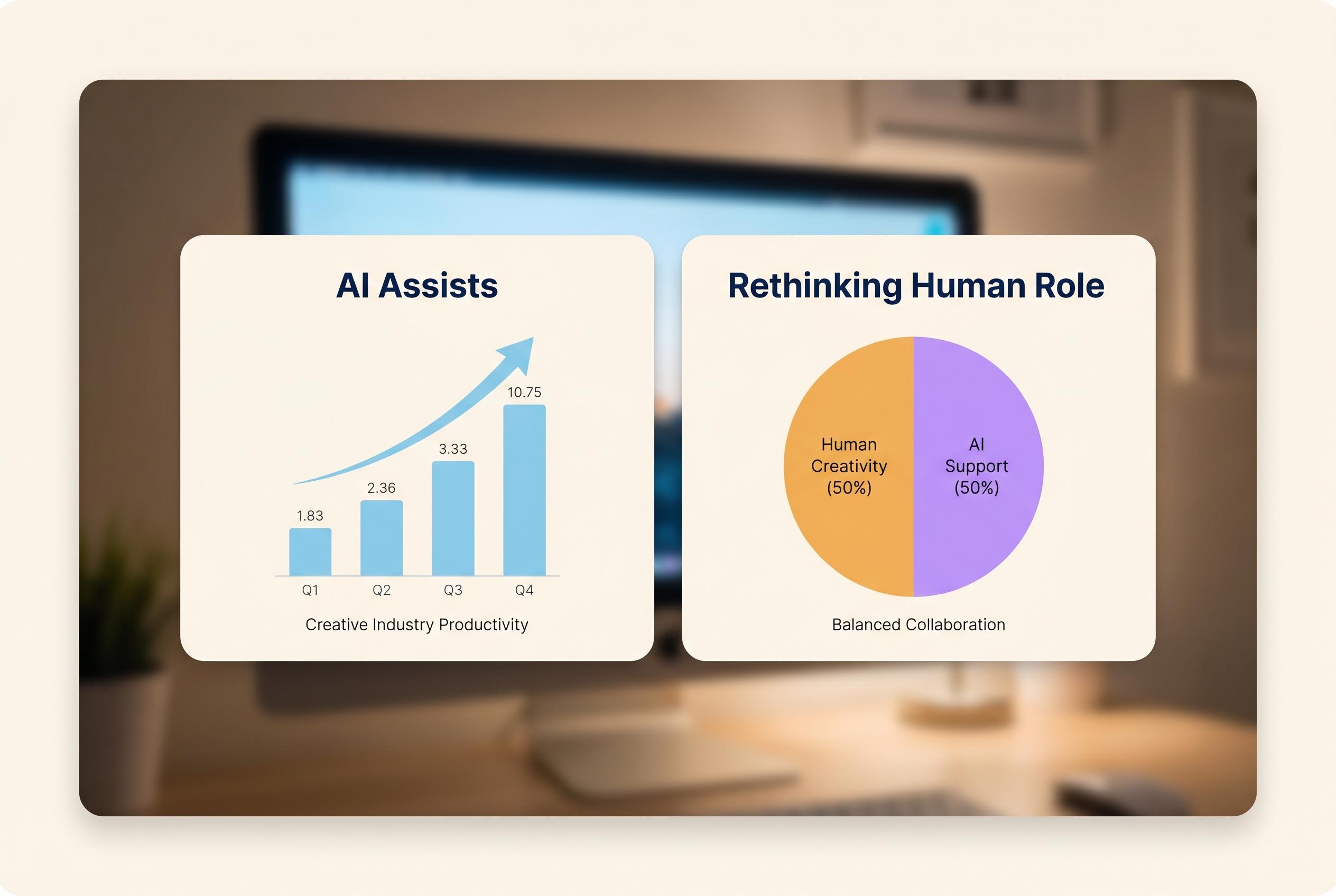
Artificial intelligence has moved from novelty to everyday utility in creative work, and comic writer and commentator Paul Kupperberg’s latest reflections suggest he is less interested in the debate over whether it should exist than in how it is used. Writing on First Comics News, he describes AI as a practical aid for routine tasks such as podcast copy and social media posts, while drawing a clear line around more sensitive uses, especially student essays and other work where the technology can be used to mask a lack of original effort.
That pragmatic view sits alongside a broader shift in the creative industries. Adobe-backed AI film event The Bionic Awards, profiled by Creative Bloq, was presented as evidence that even sceptical creators are beginning to see AI as a tool rather than a threat. A separate Adobe survey reported by TechRadar found that 86% of creators worldwide now use generative AI in their workflow, with large majorities saying it helps them produce work they could not otherwise make. The most common uses were editing, asset generation and ideation.
Kupperberg’s own example is more specific, and more revealing. When preparing interviews for his comic journalism, he says he creates detailed talking points so guests know the scope of the conversation and so repeat appearances can be approached from fresh angles. He recounts one creator joking that a particularly thorough question set had even made him think of an old childhood incident, which Kupperberg takes as confirmation that he had done his homework properly.
He also argues that AI can serve a legitimate editorial purpose when it is used carefully and transparently. In one case, he used the technology to turn a taped interview with writer Elliot S! Maggin into a shorter written piece, but only after setting strict conditions: the guest’s exact words had to be preserved, with no paraphrasing. After obtaining approval from Maggin and making only light copy edits, he published the result as a way of broadening access to the material rather than dressing up automation as authorship.
That approach reflects a wider conversation in research and education. A recent academic review of generative AI noted its growing role in textual production, art and entertainment, while warning about copyright, authorship and the loss of human texture in creative work. Other studies and EU education guidance stress that AI can support learning and productivity, but only if it is paired with clear rules on fairness, transparency, privacy and accountability. Kupperberg’s position, in essence, is that the technology is already embedded in the creative landscape; the real question is whether people use it to shortcut work or to extend what human creators can do.
Source Reference Map
Inspired by headline at: [1]
Sources by paragraph:
- Paragraph 1: [2], [3]
- Paragraph 2: [2], [3]
- Paragraph 3: [1]
- Paragraph 4: [1]
- Paragraph 5: [4], [5], [6], [7]
Source: Noah Wire Services