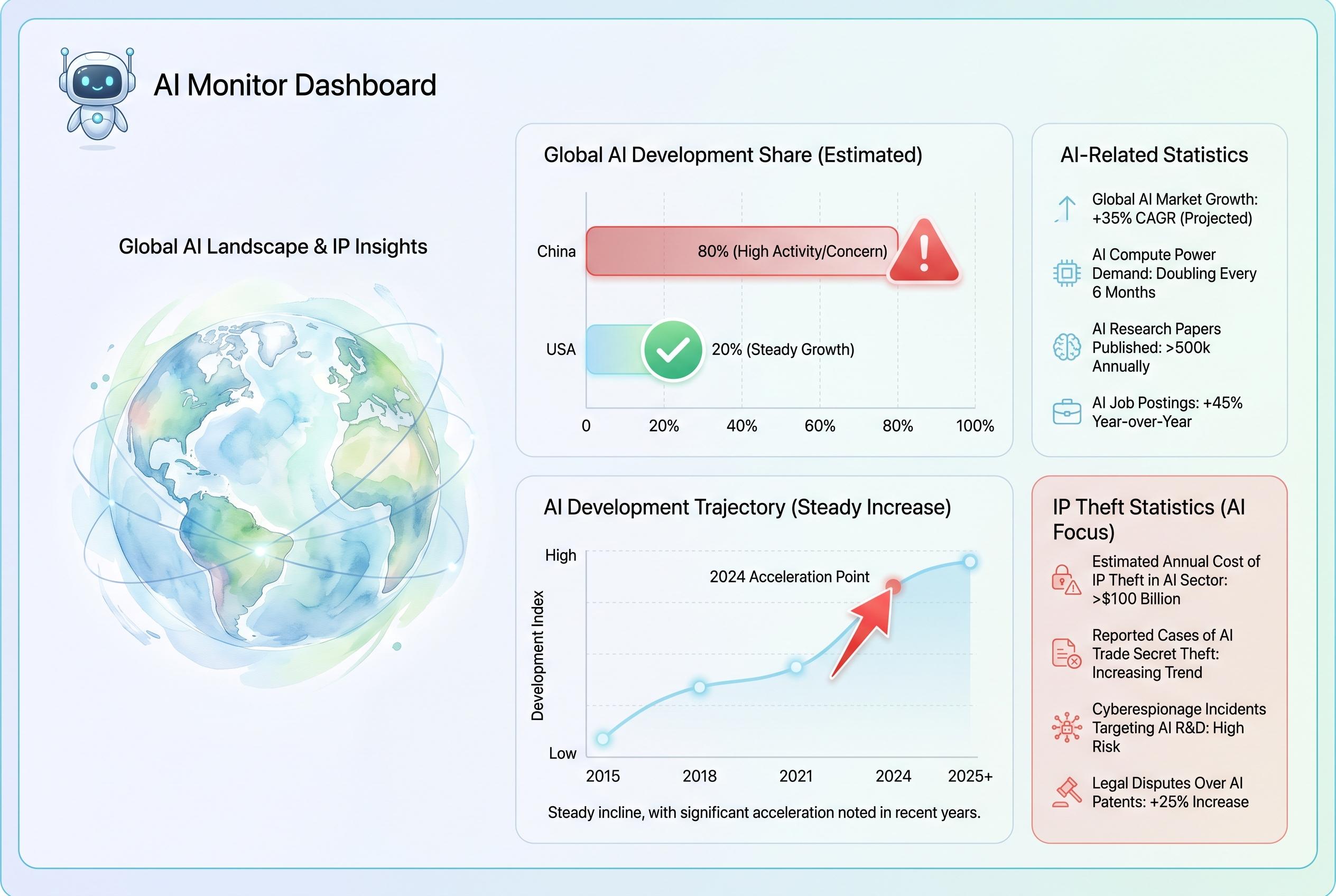
The Biden administration has accused China of large-scale theft of AI intellectual property, highlighting tensions over the use of copyrighted material in AI training and the geopolitics shaping the future of artificial intelligence.
The Trump administration is accusing China of carrying out industrial-scale theft of intellectual property from American AI firms, even as Washington has taken a permissive stance toward the use of copyrighted material to train artificial intelligence systems. According to the Financial Times, the warning was set out in a memo from Michael Kratsios, the White House Office of Science and Technology Policy director, which was circulated across government departments and asked officials to alert AI companies to any foreign attempts to reach sensitive information.
The dispute centres on a practice known as distillation, in which the output of a larger model is used to train a smaller one so it can imitate performance at lower cost. Anthropic has already accused several China-based AI laboratories of using that method, while OpenAI has alleged that DeepSeek relied on distillation to build its open-source model and was effectively trying to free-ride on the work of US companies.
That criticism lands in the middle of a broader and increasingly awkward debate over what counts as fair use in the AI era. Some companies have argued in court and in public that training on copyrighted material is transformative, yet recent reporting has shown how often model output can closely reproduce protected source material. At the same time, the legal status of AI-generated work remains unsettled: the US Copyright Office has said material created without human authorship is not eligible for protection.
The tension is sharpened by the way AI firms protect their own assets. The Washington Post reported that Anthropic has bought, scanned and destroyed millions of books for training purposes, a practice that has drawn scrutiny over how far copyright exceptions should stretch. Separately, the New York Times reported that when Anthropic’s Claude Code source leaked online, the company filed thousands of takedown requests, though a rewritten version on GitHub was treated as transformative and not covered by its claim.
Taken together, the episode shows a sector that wants broad latitude to ingest and learn from others’ material while demanding strong protection for its own code, model weights and outputs. That contradiction is now playing out not just in the courts, but in the geopolitics of AI, where Washington is increasingly casting Chinese rivals as both competitors and alleged thieves.
Source Reference Map
Inspired by headline at: [1]
Sources by paragraph:
Source: Noah Wire Services
Noah Fact Check Pro
The draft above was created using the information available at the time the story first
emerged. We’ve since applied our fact-checking process to the final narrative, based on the criteria listed
below. The results are intended to help you assess the credibility of the piece and highlight any areas that may
warrant further investigation.
Freshness check
Score:
10
Notes:
The article was published on April 23, 2026, and presents new information regarding the Trump administration's accusations against China for industrial-scale theft of AI technology. No earlier publications with substantially similar content were found, indicating high freshness.
Quotes check
Score:
8
Notes:
The article includes direct quotes attributed to the Financial Times, Anthropic, OpenAI, and the New York Times. However, the specific dates of these original publications are not provided, making it challenging to verify the exact timing and context of the quotes. This lack of precise sourcing raises concerns about the accuracy and freshness of the information.
Source reliability
Score:
7
Notes:
The primary source is Gizmodo, a technology news website. While Gizmodo is generally considered reputable within its niche, it is not a major news organisation like the Financial Times or BBC. The article references multiple sources, including the Financial Times, Anthropic, OpenAI, and the New York Times. However, the lack of direct access to these original sources and the absence of specific publication dates for the quotes diminish the overall reliability of the information presented.
Plausibility check
Score:
6
Notes:
The claims about the Trump administration accusing China of industrial-scale theft of AI technology align with ongoing tensions between the U.S. and China over intellectual property and AI advancements. However, the article's reliance on secondary sources without direct access to the original documents or statements introduces uncertainty regarding the accuracy and context of the claims.
Overall assessment
Verdict (FAIL, OPEN, PASS): FAIL
Confidence (LOW, MEDIUM, HIGH): MEDIUM
Summary:
The article presents new information regarding the Trump administration's accusations against China for industrial-scale theft of AI technology. However, the lack of direct access to original sources, absence of specific publication dates for quotes, and reliance on secondary reporting diminish the overall reliability and verifiability of the information. Given these concerns, the content cannot be fully verified, leading to a FAIL verdict with medium confidence.