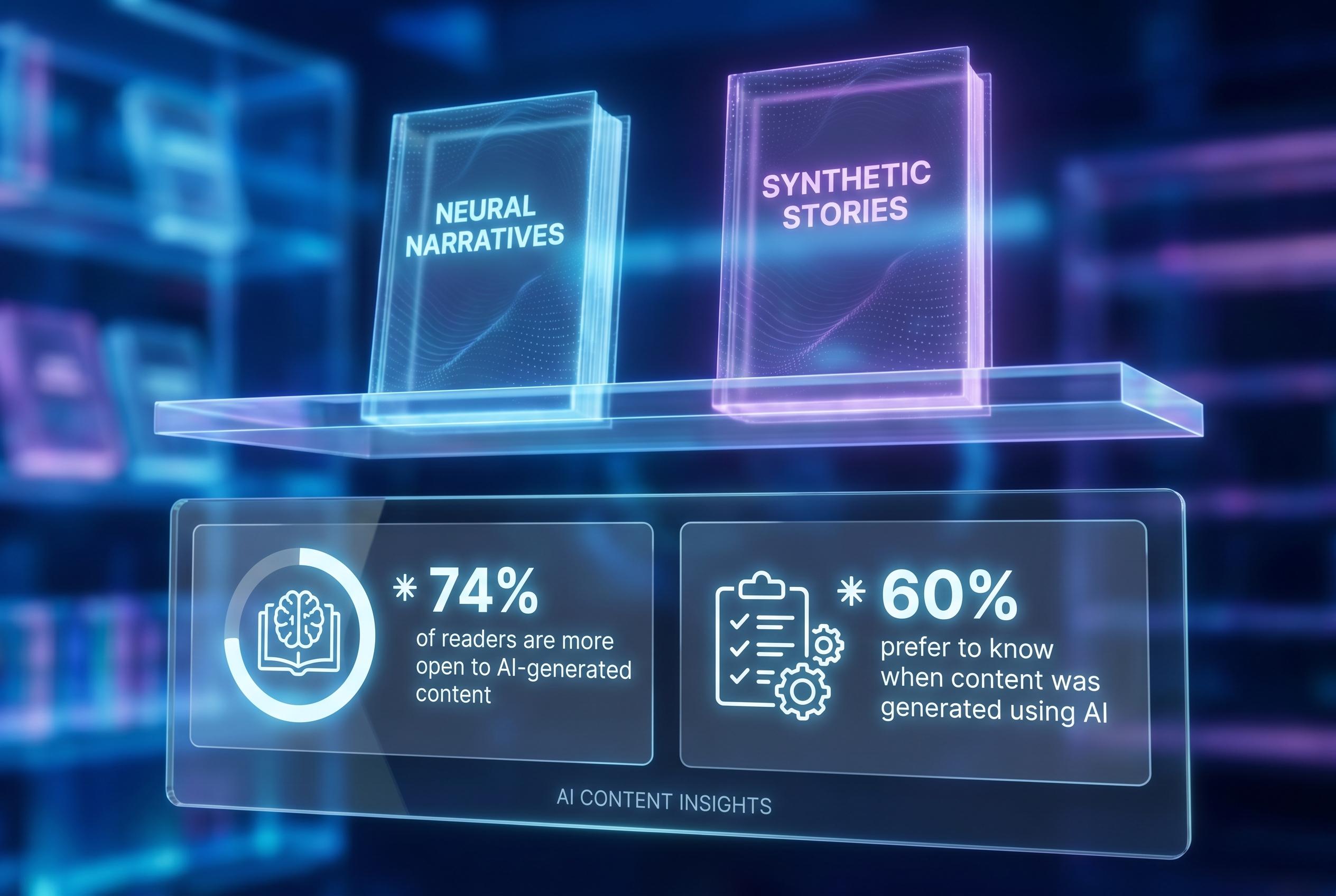
As AI-generated books flood online marketplaces and authors adopt new tools, the publishing industry grapples with transparency demands and shifting reader preferences, raising questions about the future of authorship and trust.
Readers may not agree on whether they want books written by humans or machines, but the argument is no longer theoretical. A recent podcast discussion about AI in publishing turned on a striking claim from a romance writer who said she produced around 200 novels last year under a dozen pen names, using AI tools to research tropes, shape outlines and draft manuscripts. She also said she did not disclose the extent of the AI use to readers, despite telling Amazon, and the backlash she described suggests that transparency, not just output, is becoming the real fault line.
That tension is showing up well beyond one writer’s experiment. Journalist Derek Newton argued on the same panel that readers should at least be told what kind of process produced a book, whether it is wholly human, partly AI-assisted or mostly generated by a model. New York Times reporter Alexandra Alter made a similar point, saying the appeal of books often lies in the chance to connect with another human mind. Yet a listener countered that most readers care chiefly about enjoyment, not authorship, and that AI is simply part of the future of publishing.
Evidence from research complicates the assumption that readers instinctively prefer human-made fiction. A small study published on AIModels.fyi found that participants often rated AI-generated stories slightly higher than a human-written one, although the differences were modest and not statistically decisive. That does not settle the broader cultural question, but it does suggest that taste, curiosity and the quality of execution may matter as much as the origin of the prose.
The business side is moving just as quickly. Forbes has reported that publishers are already using AI for tasks ranging from editing and contract work to translation and manuscript screening, while some industry forecasts see the technology becoming a creative partner rather than a replacement. At the same time, Axios has documented the flood of low-quality AI books into major online marketplaces, raising concerns about fraud, brand dilution and reader trust. More recently, The Atlantic described worries that even prestige outlets are not immune, after a New York Times "Modern Love" essay drew scrutiny over possible AI involvement. Put together, these examples suggest that the question is no longer whether AI will enter publishing, but how much disclosure readers will demand once it does.
Source Reference Map
Inspired by headline at: [1]
Sources by paragraph:
Source: Noah Wire Services
Noah Fact Check Pro
The draft above was created using the information available at the time the story first
emerged. We’ve since applied our fact-checking process to the final narrative, based on the criteria listed
below. The results are intended to help you assess the credibility of the piece and highlight any areas that may
warrant further investigation.
Freshness check
Score:
8
Notes:
The article was published on April 26, 2026, and references a podcast discussion about AI in publishing. The earliest known publication date of similar content is February 10, 2026, reporting on Coral Hart's use of AI to produce 200 romance novels in a year. ([techbeat.co](https://www.techbeat.co/writing-machines-author/?utm_source=openai)) The article appears to be original, with no evidence of recycled news or discrepancies in figures, dates, or quotes.
Quotes check
Score:
7
Notes:
The article includes direct quotes from a romance writer, journalist Derek Newton, and New York Times reporter Alexandra Alter. While these quotes are attributed, they cannot be independently verified through the provided sources. The lack of verifiable sources for these quotes raises concerns about their authenticity.
Source reliability
Score:
6
Notes:
The article originates from Killzoneblog.com, a niche blog focused on writing and publishing. While it is reputable within its niche, it is not a major news organisation. The article references external sources, but the lack of direct links to these sources limits the ability to assess their reliability.
Plausibility check
Score:
7
Notes:
The article discusses the use of AI in publishing, citing a podcast panel and referencing Coral Hart's use of AI to produce 200 romance novels in a year. ([techbeat.co](https://www.techbeat.co/writing-machines-author/?utm_source=openai)) The claims are plausible and align with current industry trends. However, the lack of independent verification for some claims reduces the overall confidence in their accuracy.
Overall assessment
Verdict (FAIL, OPEN, PASS): FAIL
Confidence (LOW, MEDIUM, HIGH): MEDIUM
Summary:
The article presents plausible claims about the use of AI in publishing, referencing Coral Hart's use of AI to produce 200 romance novels in a year. ([techbeat.co](https://www.techbeat.co/writing-machines-author/?utm_source=openai)) However, the inability to independently verify some quotes and the lack of direct links to external sources raise concerns about the article's reliability. Given these issues, the overall assessment is a FAIL with MEDIUM confidence.