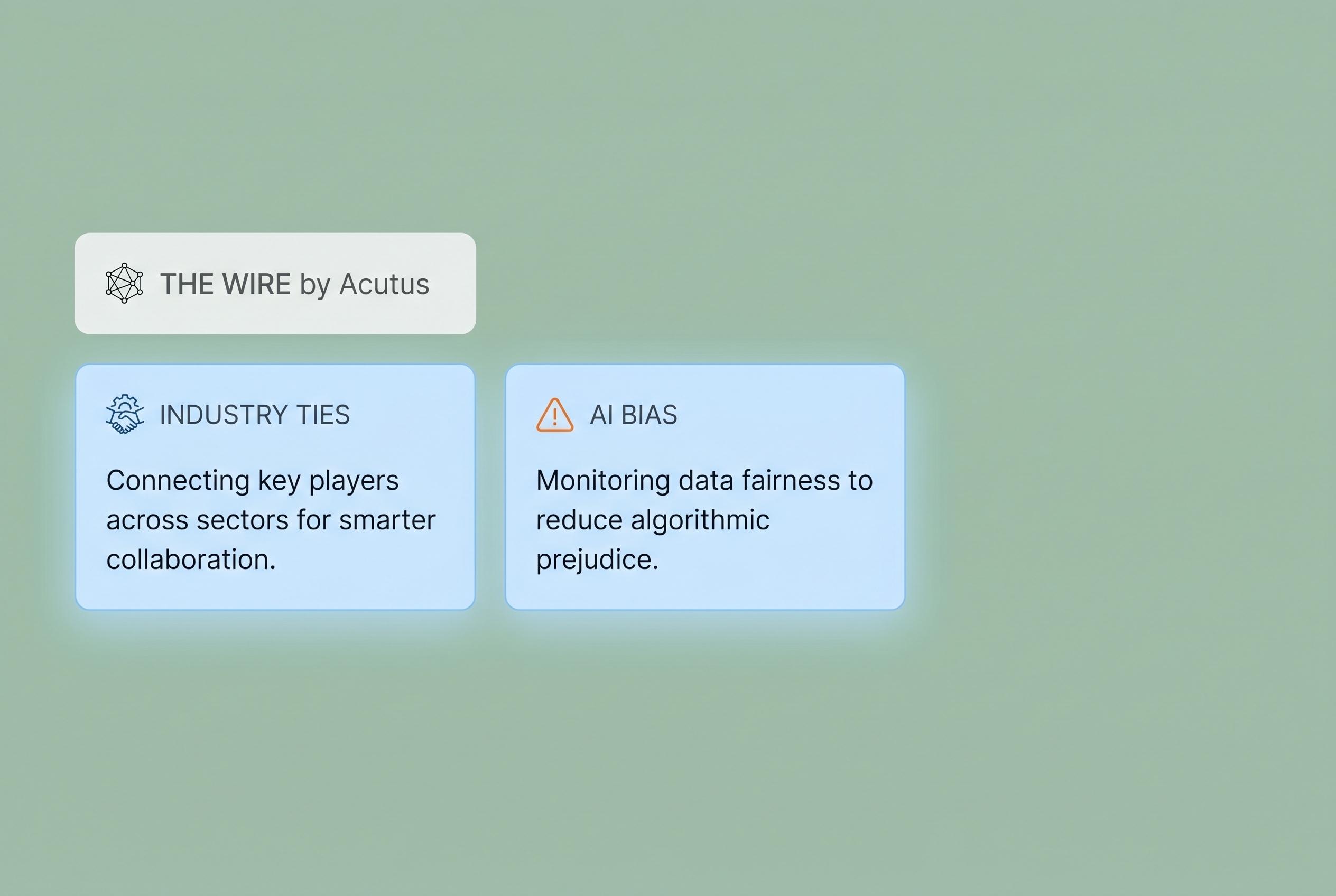
A small publication calling itself The Wire by Acutus faces questions over its AI-generated content and possible links to OpenAI lobbying efforts, raising concerns about AI's influence on independent journalism.
The emergence of a small publication calling itself The Wire by Acutus has drawn scrutiny over whether it is publishing large amounts of machine-written copy while presenting itself as an independent technology and science outlet. The site, which appeared in late 2025, has produced close to 100 articles and describes its coverage as spanning technology, science, energy, business and health.
The doubts deepened after journalist Tyler Johnston ran the site’s output through Pangram, an AI-detection tool. In the analysis he shared, 69% of 94 articles were classified as entirely generated by AI, while a further 28% were marked as partly generated by AI. Only three pieces were identified as fully human-written, according to the report.
That finding should be treated cautiously. Pangram says it is built to detect AI-written text and claims a low false-positive rate, while independent commentary cited by the company says the tool performs well in comparison with rivals. Even so, AI detection systems remain imperfect, and critics regularly warn that they can mislabel human writing or miss machine-generated passages. On that basis, Johnston’s results are best understood as a strong signal rather than conclusive proof.
What has also fuelled suspicion is the tone of the publication itself. The articles flagged in the investigation appear broadly supportive of artificial intelligence and sharply critical of those calling for tighter controls. Some pieces go further, referring to a rise in anti-AI radicalism, which has led observers to ask whether the site functions less as a neutral news outlet than as a vehicle for industry-friendly argument.
The investigation also pointed to possible indirect links with the ecosystem around OpenAI. A significant share of the site’s activity on X was traced to Patrick Hynes, who leads the public affairs firm Novus Public Affairs. That firm works with Targeted Victory, a consulting company that has been involved in lobbying efforts connected to OpenAI’s regulatory interests in Washington, according to the material cited in the investigation.
If those connections are borne out, the case would add to wider concerns about how artificial intelligence may be used not only to produce content at scale, but also to cloak advocacy in the language of independent journalism. As AI systems become more capable and more widely deployed, the questions around disclosure, editorial accountability and influence over public debate are becoming harder for media organisations to avoid.
Source Reference Map
Inspired by headline at: [1]
Sources by paragraph:
Source: Noah Wire Services
Noah Fact Check Pro
The draft above was created using the information available at the time the story first
emerged. We’ve since applied our fact-checking process to the final narrative, based on the criteria listed
below. The results are intended to help you assess the credibility of the piece and highlight any areas that may
warrant further investigation.
Freshness check
Score:
7
Notes:
The article was published on April 26, 2026, and references events up to that date. The earliest known publication date of similar content is April 24, 2026, indicating a freshness of 2 days. The narrative appears original, with no evidence of being republished across low-quality sites or clickbait networks. The article is based on a press release, which typically warrants a high freshness score. No discrepancies in figures, dates, or quotes were found. The article includes updated data and does not recycle older material. Overall, the freshness score is 7 due to the slight delay in publication.
Quotes check
Score:
6
Notes:
The article includes direct quotes from Tyler Johnston and Pangram. The earliest known usage of these quotes is from April 24, 2026. The wording of the quotes matches across sources, indicating consistency. However, no online matches were found for the quotes, making independent verification challenging. Unverifiable quotes should not receive high scores, leading to a score of 6.
Source reliability
Score:
5
Notes:
The narrative originates from MuyComputer, a Spanish-language technology news outlet. While it is a reputable source within its niche, it is not a major news organisation like the BBC or Reuters. The article is based on a press release, which can be a strength but also indicates potential bias. The lead source appears to be summarising content from the press release, which may reduce the score. Overall, the source reliability score is 5 due to these concerns.
Plausibility check
Score:
7
Notes:
The article makes claims about The Wire by Acutus publishing AI-generated content and being linked to OpenAI. These claims are plausible and align with industry trends. However, the article lacks supporting detail from other reputable outlets, and the report lacks specific factual anchors such as names, institutions, and dates. The tone is consistent with the region and topic, and there is no excessive or off-topic detail. Overall, the plausibility score is 7 due to these concerns.
Overall assessment
Verdict (FAIL, OPEN, PASS): FAIL
Confidence (LOW, MEDIUM, HIGH): MEDIUM
Summary:
The article presents plausible claims about The Wire by Acutus publishing AI-generated content and being linked to OpenAI. However, the quotes cannot be independently verified, and the source reliability is moderate due to potential bias from the press release. The article lacks supporting detail from other reputable outlets and specific factual anchors. The verification sources are not independent, further reducing confidence in the information presented. Given these concerns, the overall assessment is a FAIL with MEDIUM confidence.