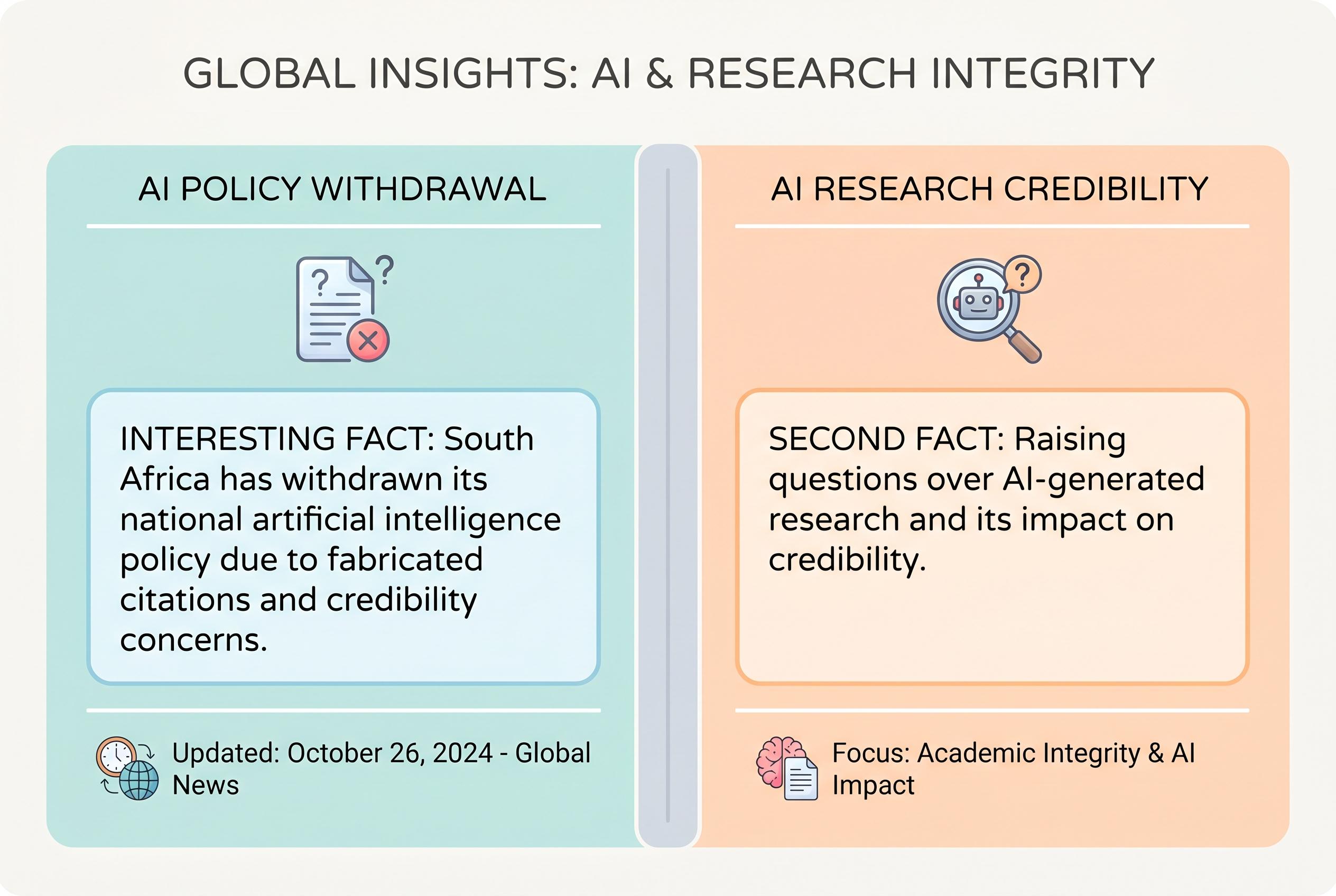
South Africa’s communications and digital technologies minister, Solly Malatsi, has withdrawn the country’s draft National Artificial Intelligence Policy after an internal review confirmed that its reference list included fictitious sources, deepening scrutiny of how the document was prepared and verified.
The move follows reporting by News24 at the weekend that exposed apparently fabricated research cited in the policy, including academic journals that did not exist. In a statement released on Sunday, Malatsi said the discovery was not a minor drafting error but one that had damaged the credibility of the entire proposal. He said the department had failed to meet the standard expected of an institution responsible for steering South Africa’s digital policy agenda, and added that the most likely explanation was the use of AI-generated citations that were not properly checked. He also promised consequences for those involved in drafting and quality assurance.
According to the Department of Communications and Digital Technologies, the draft policy had been published on 10 April for a 60-day public comment period, following Cabinet approval on 25 March 2026. The policy was intended to strengthen the state’s ability to regulate and adopt AI responsibly while also encouraging local innovation, job creation and wider access to AI skills. It had been positioned as part of a broader effort to improve public services, expand participation in the digital economy and support a more human-centred approach to emerging technology.
The withdrawal comes as debate over the draft was already intensifying. Business Day reported that companies had raised questions about the policy’s completeness and clarity, while other coverage noted that the proposal sketched out a wide-ranging governance structure, including a National AI Commission, an AI Ethics Board and an AI Insurance Superfund modelled on the Road Accident Fund. At ITWeb’s AI Summit 2026 this week, DCDT deputy director-general Mlindi Mashologu said the framework was designed to balance innovation with inclusion, technological progress with ethics and cultural preservation. Parliament’s communications committee chair, Khusela Diko, has separately urged Malatsi to withdraw the draft amid credibility concerns, underscoring the political pressure now surrounding the policy process.
Source Reference Map
Inspired by headline at: [1]
Sources by paragraph:
- Paragraph 1: [2], [3]
- Paragraph 2: [1], [2]
- Paragraph 3: [3], [5]
- Paragraph 4: [4], [5], [6], [7], [1]
Source: Noah Wire Services