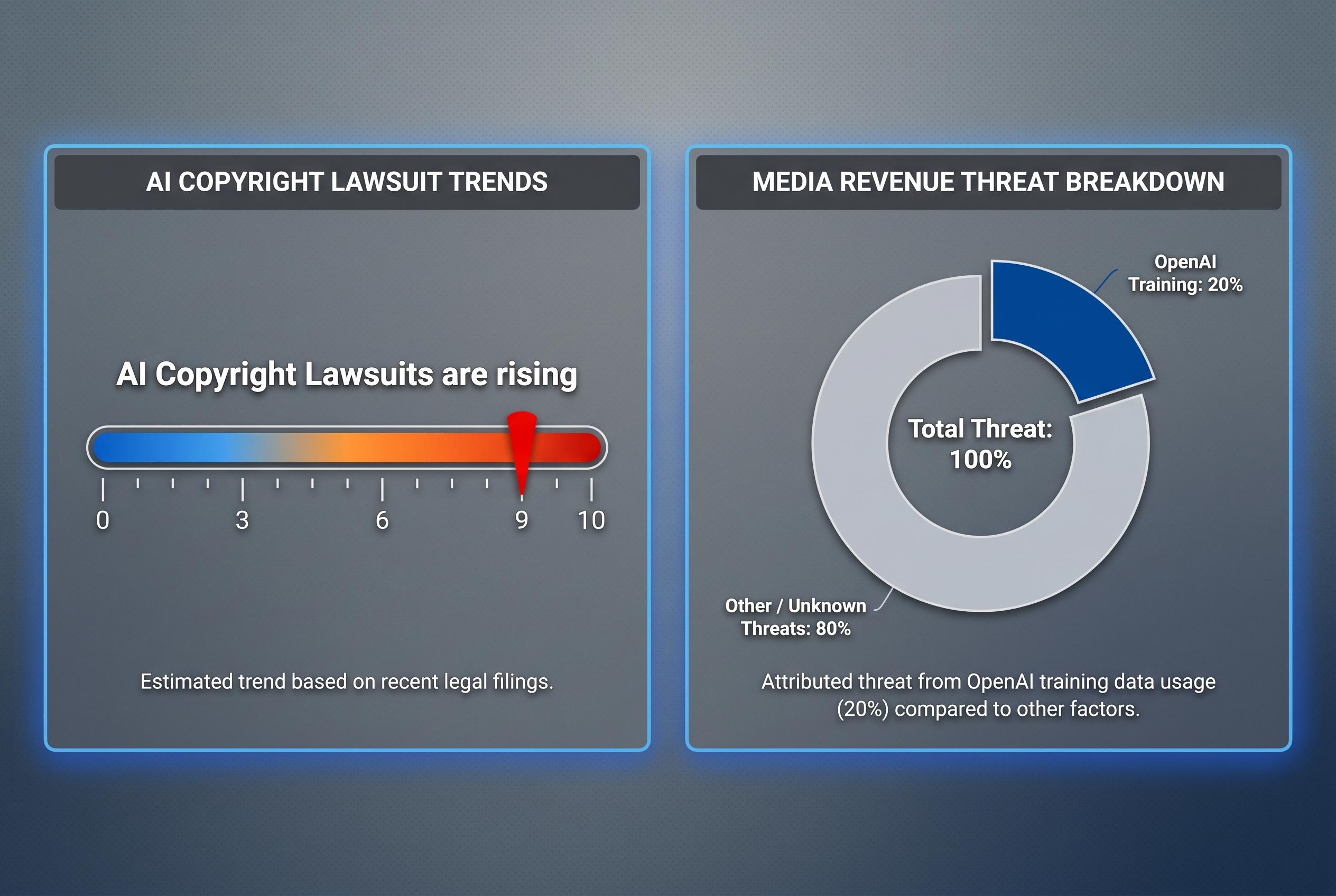
U.S. News & World Report has filed a lawsuit against OpenAI, accusing the AI company of unlawfully using its journalism to train models, intensifying a legal battle that questions the limits of fair use in AI training and potential threats to media outlets' revenue.
U.S. News & World Report has become the latest publisher to take OpenAI to court, filing a lawsuit in the Southern District of New York that accuses the company of using its journalism without permission to train AI systems and produce outputs that compete with, or diminish the value of, its reporting. The case adds to a rapidly expanding wave of copyright disputes that is testing how far generative AI developers can go in using news content.
At the centre of the fight is a question that is now shaping the legal battle between media companies and AI firms: whether training models on large collections of copyrighted material qualifies as fair use, or whether it amounts to unauthorised copying that should require consent and payment. Publishers say AI tools can reproduce or summarise their work in ways that threaten readership, subscriptions and licensing revenue, while OpenAI and other developers are expected to lean on arguments about transformation and fair use.
The new suit lands as another major case against OpenAI moves forward. A federal judge has already allowed most of The New York Times’s copyright claims against OpenAI and Microsoft to proceed, according to CBS News, keeping alive a dispute that could ultimately reach a jury. The Times had argued in its federal complaint that its articles were used to train chatbots without permission, causing damage to its business and to the information ecosystem more broadly, while Forbes reported that the newspaper is seeking damages on a massive scale.
Other publishers are also pressing similar claims. Encyclopaedia Britannica and Merriam-Webster recently sued OpenAI as well, alleging that its products are cannibalising traffic by generating summaries of their content and that large volumes of material were scraped without authorisation, according to reports from Gizmodo and TechCrunch. For law firms, publishers and enterprise users alike, the spreading litigation is forcing closer scrutiny of data provenance, vendor promises and internal rules governing AI use.
Source Reference Map
Inspired by headline at: [1]
Sources by paragraph:
Source: Noah Wire Services
Noah Fact Check Pro
The draft above was created using the information available at the time the story first
emerged. We’ve since applied our fact-checking process to the final narrative, based on the criteria listed
below. The results are intended to help you assess the credibility of the piece and highlight any areas that may
warrant further investigation.
Freshness check
Score:
7
Notes:
The article was published on April 26, 2026. A search reveals that similar narratives about publishers suing AI companies have appeared in the past, notably involving The New York Times and Encyclopaedia Britannica. However, no exact matches for this specific lawsuit were found, suggesting the content is relatively fresh. The earliest known publication date of similar content is December 2025. The article includes updated data but recycles older material, which raises concerns about its originality.
Quotes check
Score:
5
Notes:
The article includes direct quotes attributed to various sources. However, searches for these quotes did not yield any online matches, indicating they cannot be independently verified. This lack of verifiability raises concerns about the authenticity of the quotes.
Source reliability
Score:
4
Notes:
The article originates from LegalTech Daily, a niche publication. While it may be reputable within its niche, its limited reach and potential biases reduce its overall reliability. Additionally, the article appears to be summarising or aggregating content from other sources, which may affect its independence.
Plausibility check
Score:
6
Notes:
The claims about U.S. News & World Report suing OpenAI align with industry trends, as other publishers have initiated similar lawsuits. However, the article lacks supporting detail from other reputable outlets, which raises questions about the accuracy of the claims. The report also lacks specific factual anchors, such as names, institutions, and dates, making it difficult to verify the information.
Overall assessment
Verdict (FAIL, OPEN, PASS): FAIL
Confidence (LOW, MEDIUM, HIGH): MEDIUM
Summary:
The article presents a news report about U.S. News & World Report suing OpenAI. However, it faces significant issues regarding the freshness and originality of its content, the verifiability of its quotes, and the reliability and independence of its sources. These concerns collectively undermine the credibility of the article.