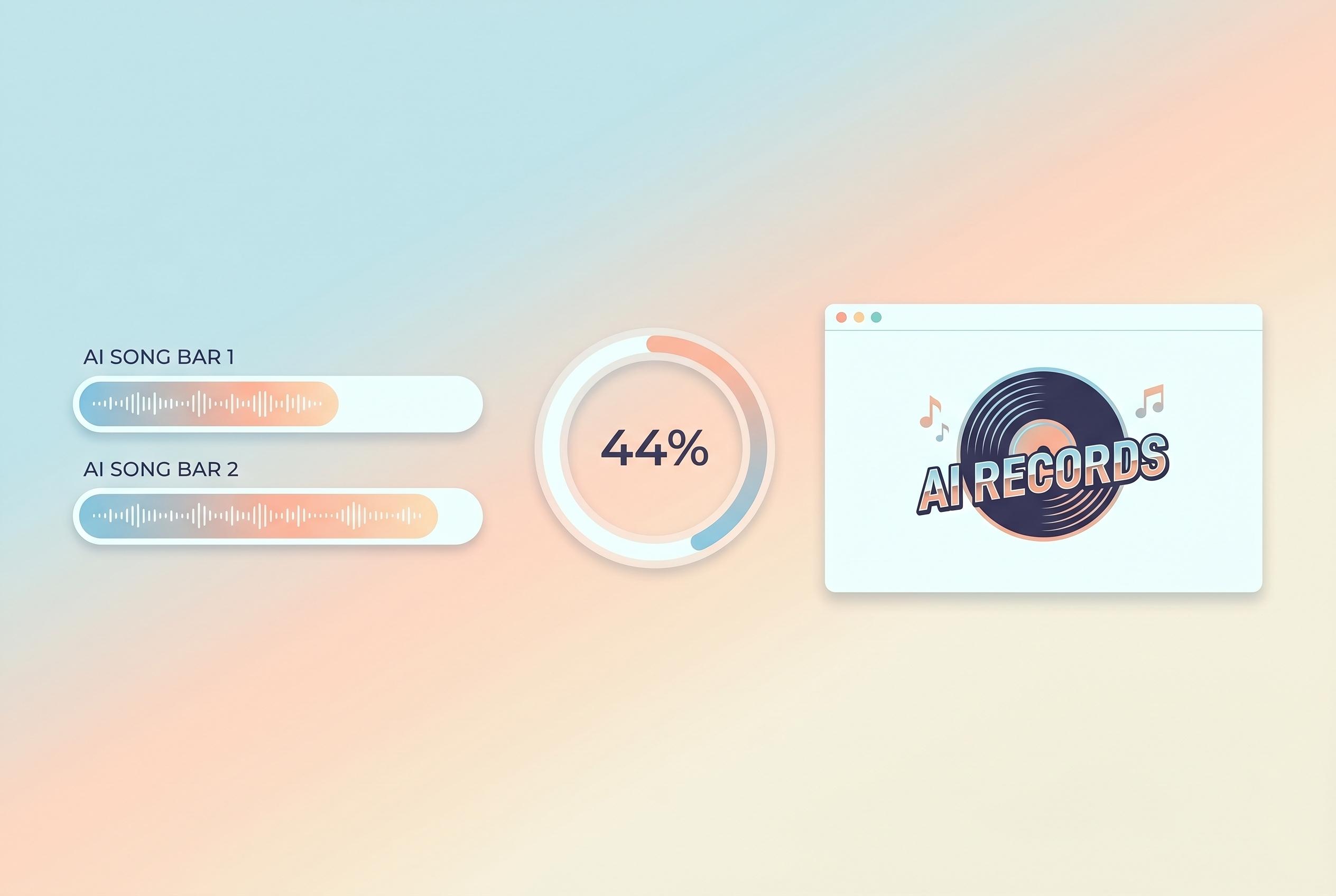
Deezer says artificial intelligence is now responsible for nearly half of the new music uploaded to its service each day, a sharp rise that underlines how quickly generative tools are reshaping streaming. According to the French platform, around 75,000 fully AI-made tracks arrive daily, equivalent to 44% of all new uploads, even though they account for only a small share of listening.
That imbalance has become the central concern. Deezer says fully AI-generated tracks make up just 1% to 3% of total streams, and that 85% of those plays are flagged as fraudulent and stripped of royalties. In other words, the company argues that much of the new material is not behaving like ordinary music consumption at all, but more like a vehicle for spam or streaming manipulation.
The latest figures also show how fast the volume has accelerated. Deezer launched its AI detection tool in January 2025, when it was identifying about 10,000 such tracks a day. That rose to 30,000 by September, then 50,000 in November, 60,000 in January 2026 and now roughly 75,000, according to the company. Deezer said it began labelling fully AI-generated music in June 2025 and later expanded the system so that detected tracks are excluded from algorithmic recommendations and editorial playlists.
The platform has also tried to frame the issue as one of transparency and artist protection rather than simple content moderation. Its chief executive, Alexis Lanternier, said AI-generated music was no longer a marginal phenomenon and urged the wider industry to respond by safeguarding creators’ rights and making the listening experience clearer for users. Deezer says it has also stopped storing hi-res versions of tracks it identifies as fully AI-made and is licensing its detection technology to other firms.
The broader streaming industry remains divided on how to respond. Deezer says its research found that 97% of 9,000 listeners across eight countries could not tell the difference between AI-made and human-made songs, while 80% wanted such music to be clearly labelled and 52% believed it should not appear alongside human tracks in charts. Other services are moving in different directions: Qobuz plans to label AI content, Bandcamp has banned it, and Spotify has announced policies aimed at reducing low-quality or misleading AI uploads, but has not adopted Deezer’s tagging approach. The pace of change suggests the bigger question is no longer whether AI can make music, but how platforms will cope with an almost unlimited supply of synthetic tracks competing for attention, legitimacy and revenue.
Source Reference Map
Inspired by headline at: [1]
Sources by paragraph:
- Paragraph 1: [2], [3]
- Paragraph 2: [2]
- Paragraph 3: [2], [3], [4], [5]
- Paragraph 4: [2], [3]
- Paragraph 5: [1], [2], [3], [6], [7]
Source: Noah Wire Services