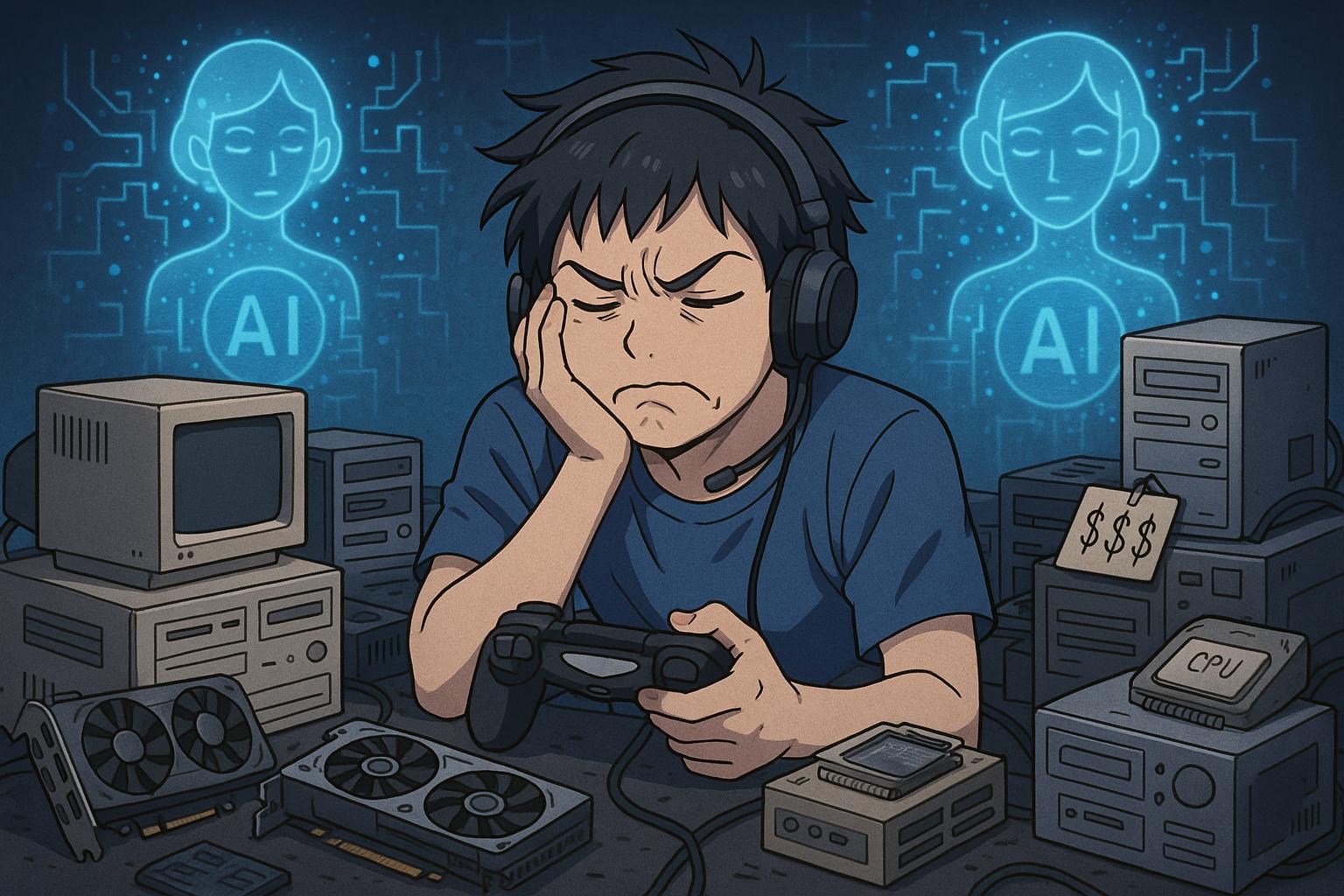
Lately, a sense of disillusionment has spread among PC hardware enthusiasts. The once palpable excitement surrounding product launches has diminished, replaced by a wave of disappointment regarding the latest offerings from tech giants Nvidia, AMD, and Intel. Gamers are increasingly recognising that the landscape of PC hardware has shifted dramatically, signalling a new era that is unlikely to improve in the foreseeable future.
Historically, each new generation of CPUs and GPUs brought significant performance leaps, encouraging gamers to upgrade regularly. However, recent releases have left much to be desired. Nvidia's Blackwell GPUs, for example, have not provided the expected enhancements, while AMD’s Ryzen 9000 series seems little more than a rebranding of the previous generation. Similarly, Intel’s Arrow Lake desktop CPUs, instead of marking a step forward, have fallen short in gaming performance compared to the 14th Gen Core CPUs. Many industry observers are now noting that Moore's Law may be waning, suggesting that substantial generational improvements are becoming relics of the past.
This decline in raw performance gains has been accompanied by a notable shift towards AI-assisted enhancements. Nvidia’s RTX 50 series has prominently featured AI technologies, including Multi Frame Generation (MFG), which has sparked mixed reactions. While such AI-driven techniques can enhance frame rates, they bring their own challenges; high latency and occasional visual artifacts have marred the experience in demanding titles, as highlighted during a live review of Nvidia's RTX 5060, where the performance was inconsistent, particularly in graphically intensive games. As companies like AMD and Intel also adopt AI capabilities, the trend appears to be firmly established, even as many developers and consumers grapple with the ramifications of relying on software-based improvements rather than pure hardware advancements.
The market dynamics have also changed significantly, with the GPU space increasingly dominated by a triopoly of Nvidia, AMD, and Intel. This concentration of power raises concerns about pricing and competition. Initially, more contenders in the market seemed promising, but the reality of the situation is troubling. With each company carving out its own segment—Nvidia holding the high-end, AMD in the mid-range, and Intel catering to budget-friendly options—there is less incentive to price competitively. Nvidia's supremacy, exemplified by their RTX 5090 model, goes unchallenged, allowing them to maintain high prices. Meanwhile, AMD and Intel’s strategies appear similarly focused on profit, which may ultimately disadvantage gamers who find themselves paying inflated prices for limited performance gains.
Concerningly, the erosion of Manufacturer’s Suggested Retail Prices (MSRPs) has become a troubling trend. Many GPUs are currently selling for 30-40% above MSRP due to persistent supply chain challenges and market inflation. This price inflation has roots in several factors—including unrealistic pricing strategies from manufacturers and the growing prevalence of scalpers—creating a marketplace where consumers may feel compelled to pay exorbitant prices for new releases. The risk of future "paper launches," where products are publicly announced but not adequately stocked, looms large, leaving consumers frustrated with limited options.
As a consequence of these trends, there is a growing inclination among gamers to explore pre-owned hardware. With the relative lack of compelling new products and spiralling prices, options from the previous generation that still offer commendable performance are increasingly appealing. Although there are inherent risks in purchasing used components, including the need for careful vetting, the potential savings are considerable. This approach not only holds financial advantages but also presents an environmentally beneficial alternative, especially as the cycle of constant upgrades begins to seem less justified.
The landscape of PC gaming hardware is undergoing a profound transformation. With generational improvements dwindling, the increasing reliance on AI-driven performance enhancements, and a rising trend towards the purchase of pre-owned components, gamers must adapt to this new reality. Rather than resisting these changes, embracing them may lead to a more rewarding experience, aligning expectations with the current state of the industry.
Reference Map
- Paragraphs 1, 2, 4, 6, 7
- Paragraph 3
- Paragraph 4
- Paragraph 4
- Paragraph 5
- Paragraph 5
- Paragraph 6
Source: Noah Wire Services